Why This Fails Locally
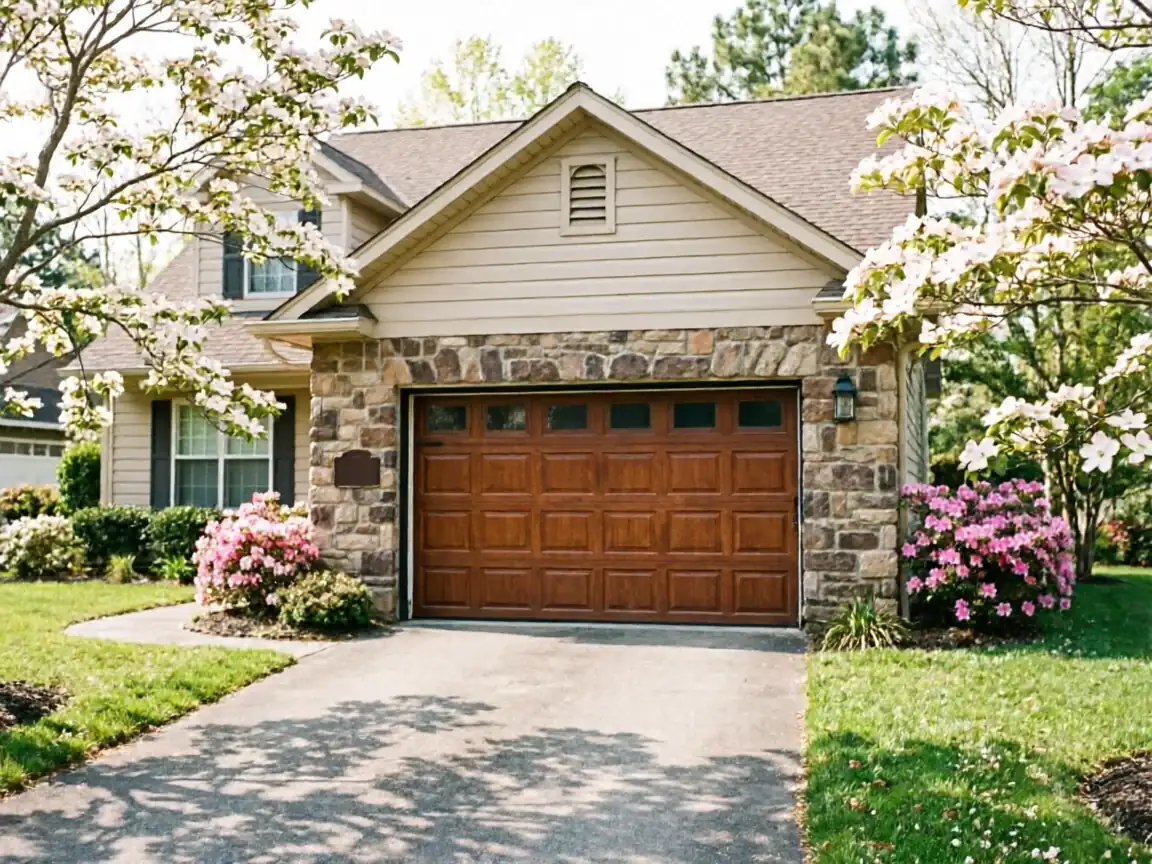
A door built around 2003 is now closing in on twenty years of cable cycles, and that's exactly the age where galvanized strands start fraying at the drum end rather than snapping clean. Add the cold-moderate climate swings this part of Georgia gets - cable sheathing contracts in a hard overnight frost and loosens its grip on the drum groove - and you get the slow unraveling that shows up as one or two popped strands before a full break. This isn't a Douglasville-stock problem, where original doors are older and have usually already had at least one cable swap. In Villa Rica, a lot of these are still running their first set of cables, original to the house, and homeowners don't expect a 20-year-old part to be the failure point yet. It is.
Where This Job Goes Sideways
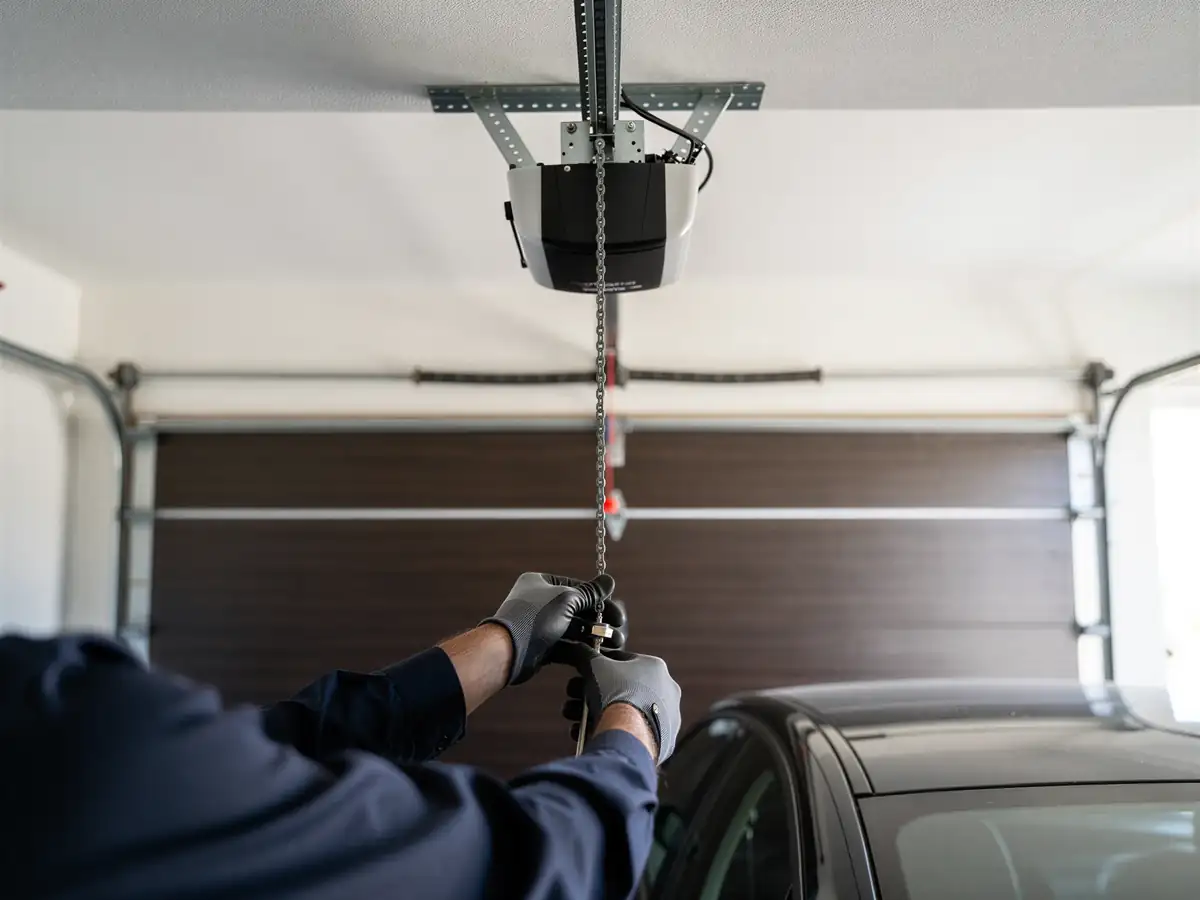
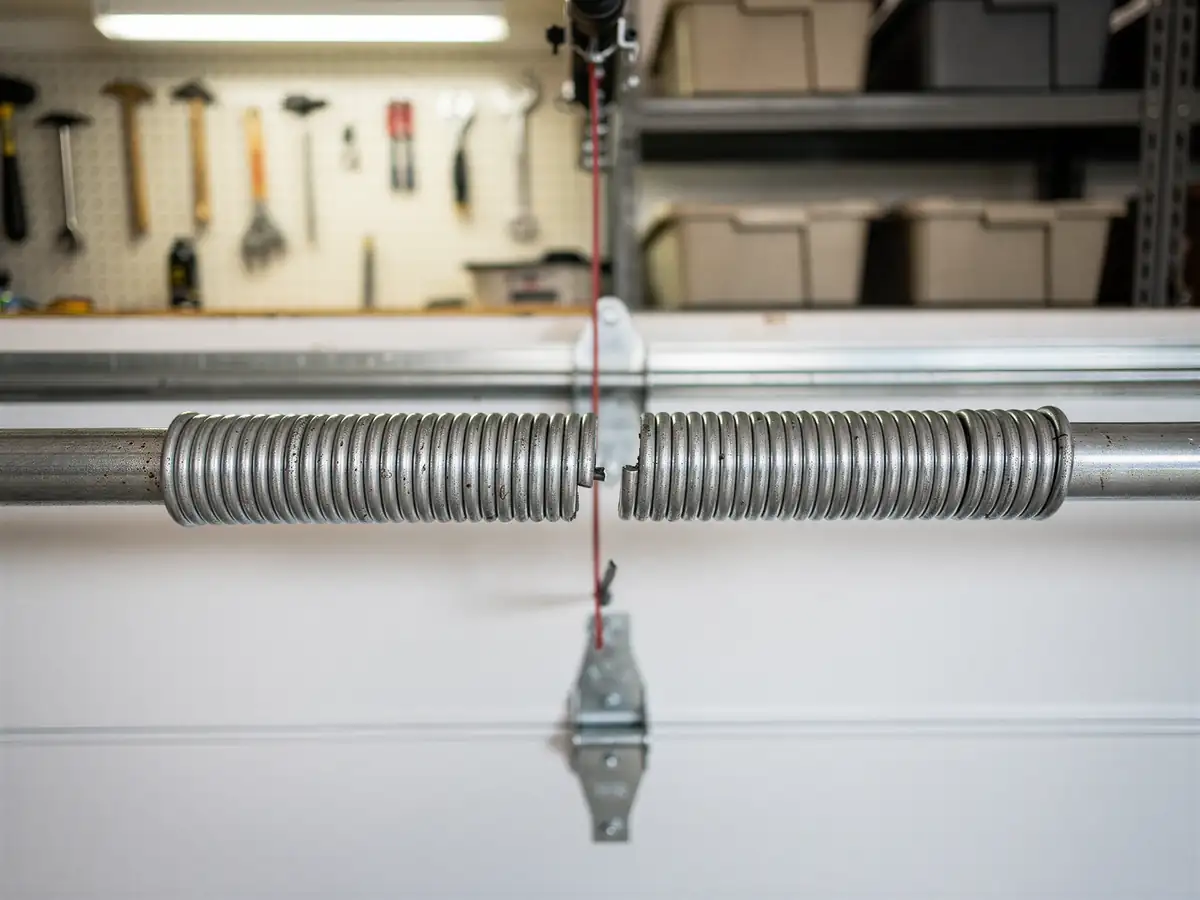
The usual mess we find on these newer builds is a cable that's jumped the drum groove but the door still looks mostly fine sitting still - until someone hits the opener and one side drops while the other holds. On a standard torsion system from this era, that uneven pull can bend the bottom bracket or crack a panel corner if it runs more than once. We also see DIY reattachments where someone's re-looped the cable around the drum by hand without resetting spring tension first - that's a fast way to end up with a hand or finger near a loaded spring. If the drum itself has walked off the shaft, a cable swap alone won't fix it; the drum needs to be reset and the spring re-tensioned to match, which is a different job than just running new cable.
What the Repair Takes
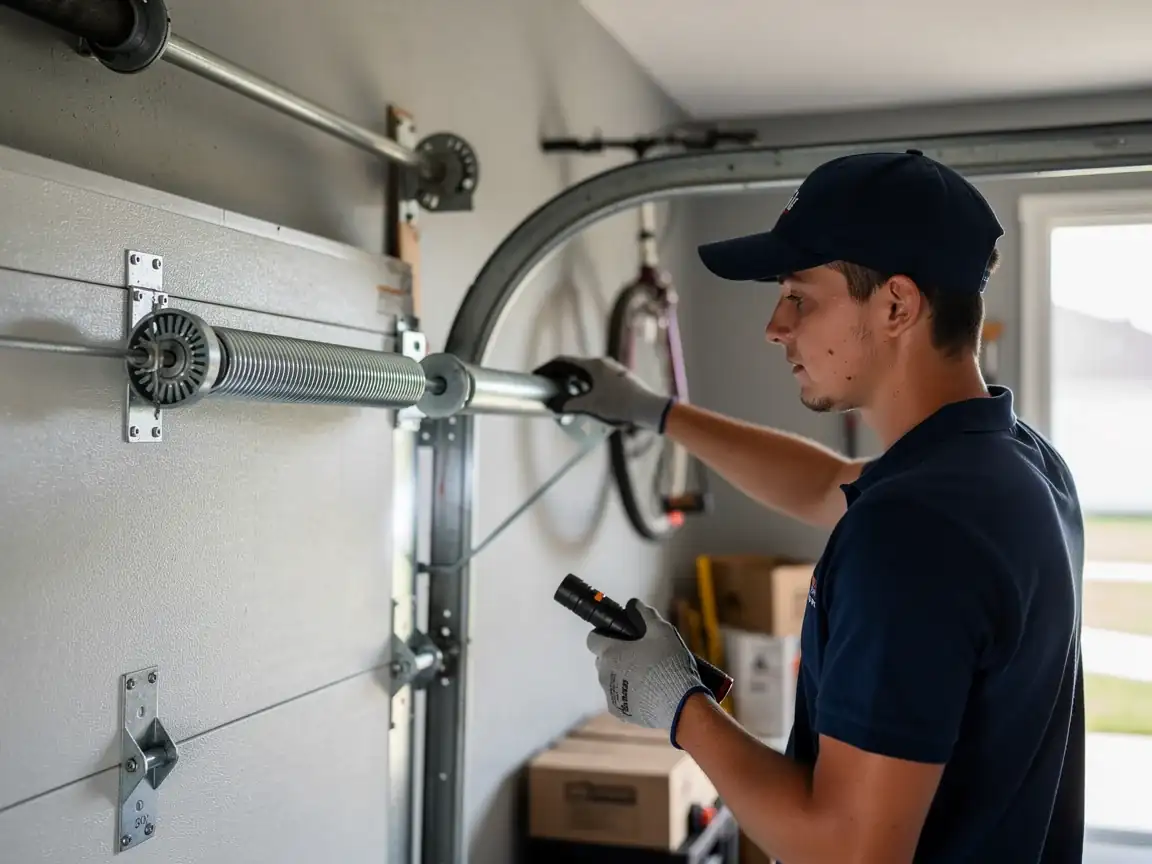
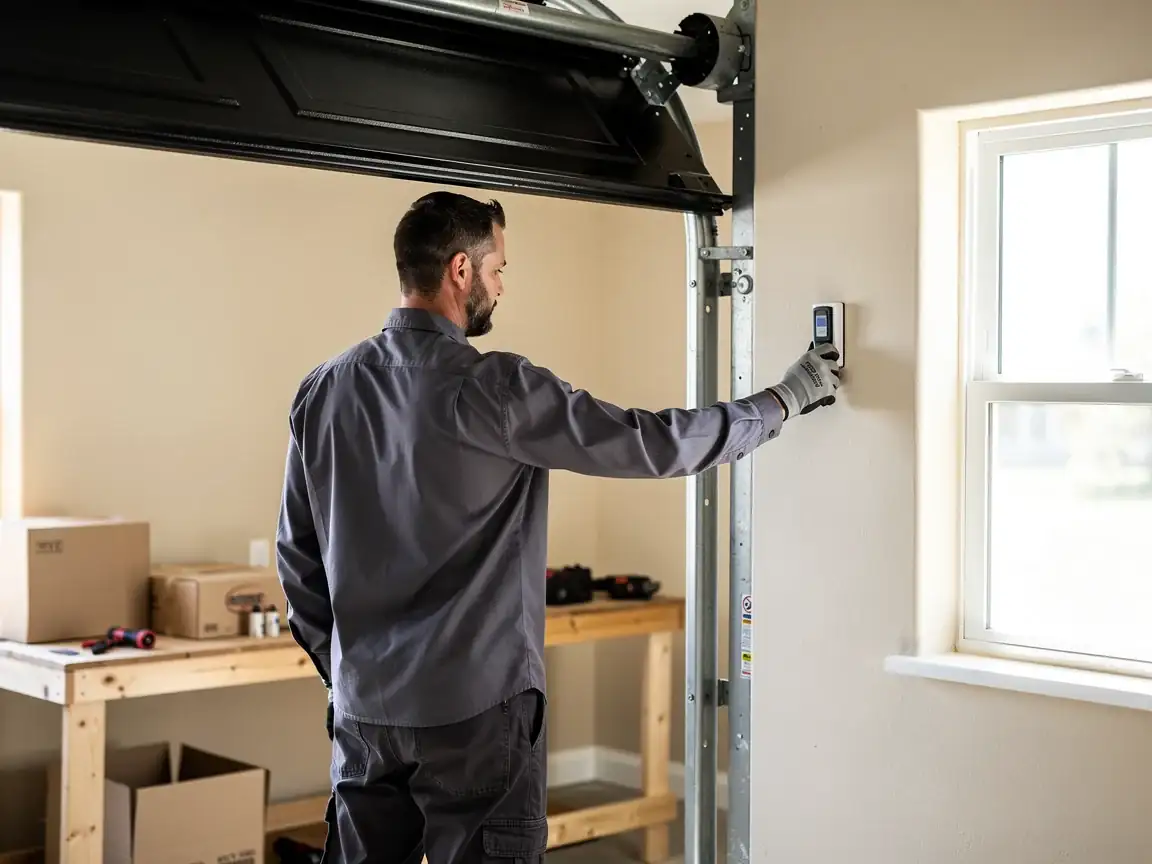
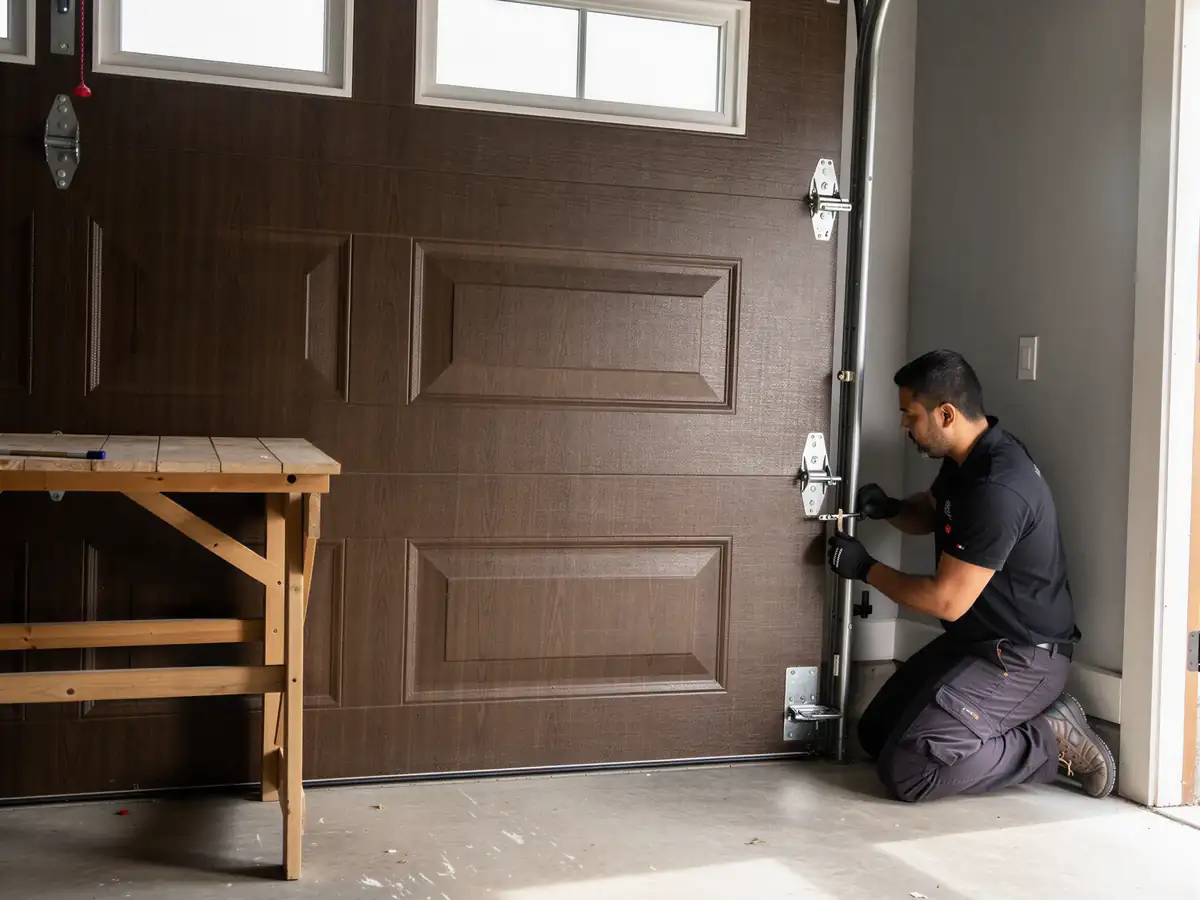
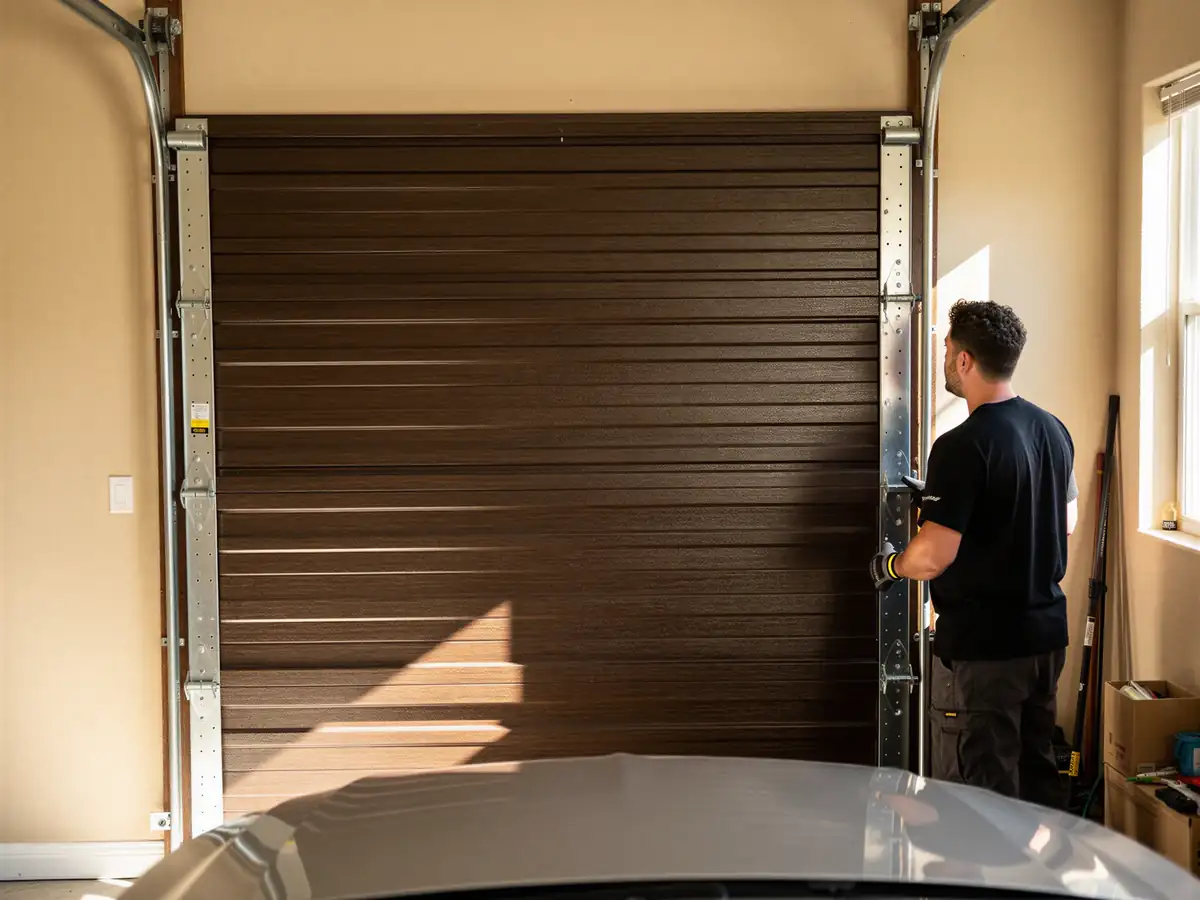
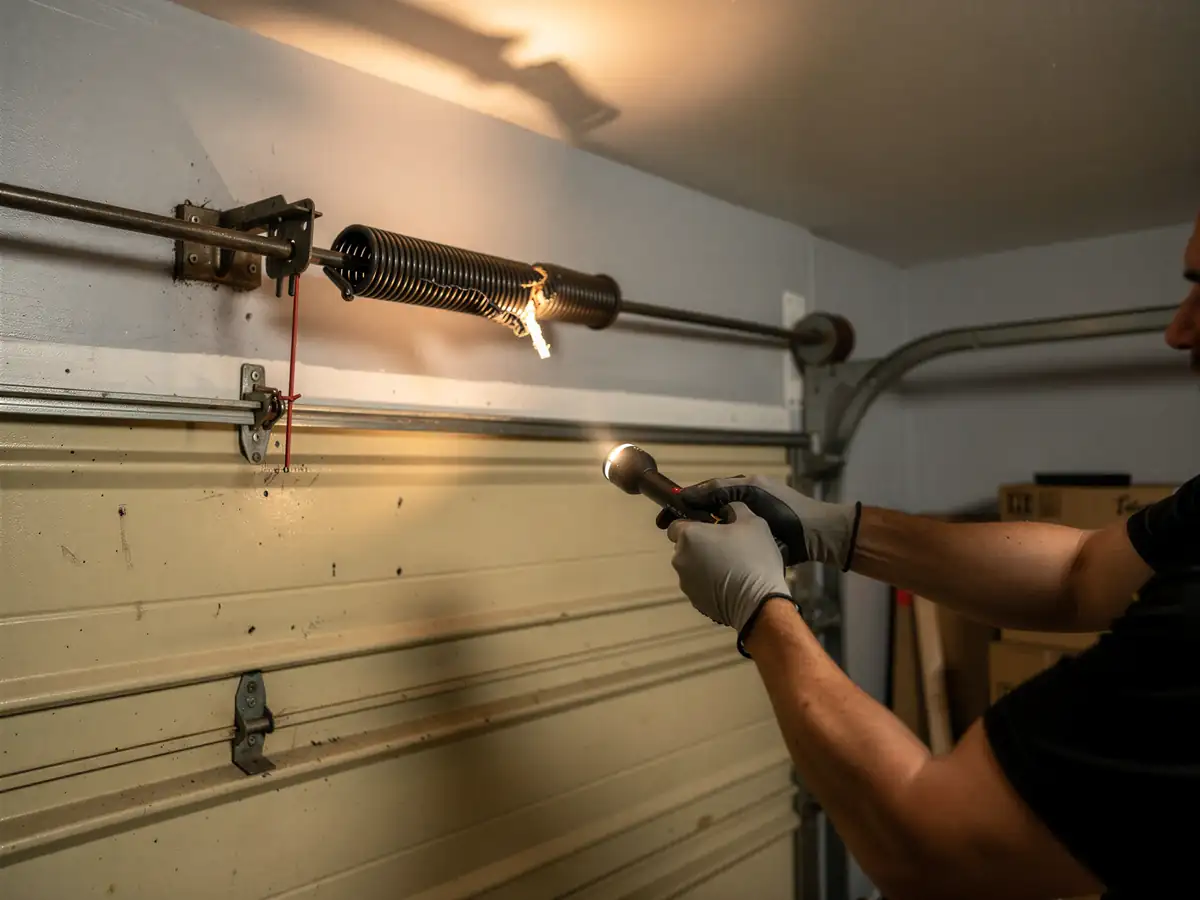
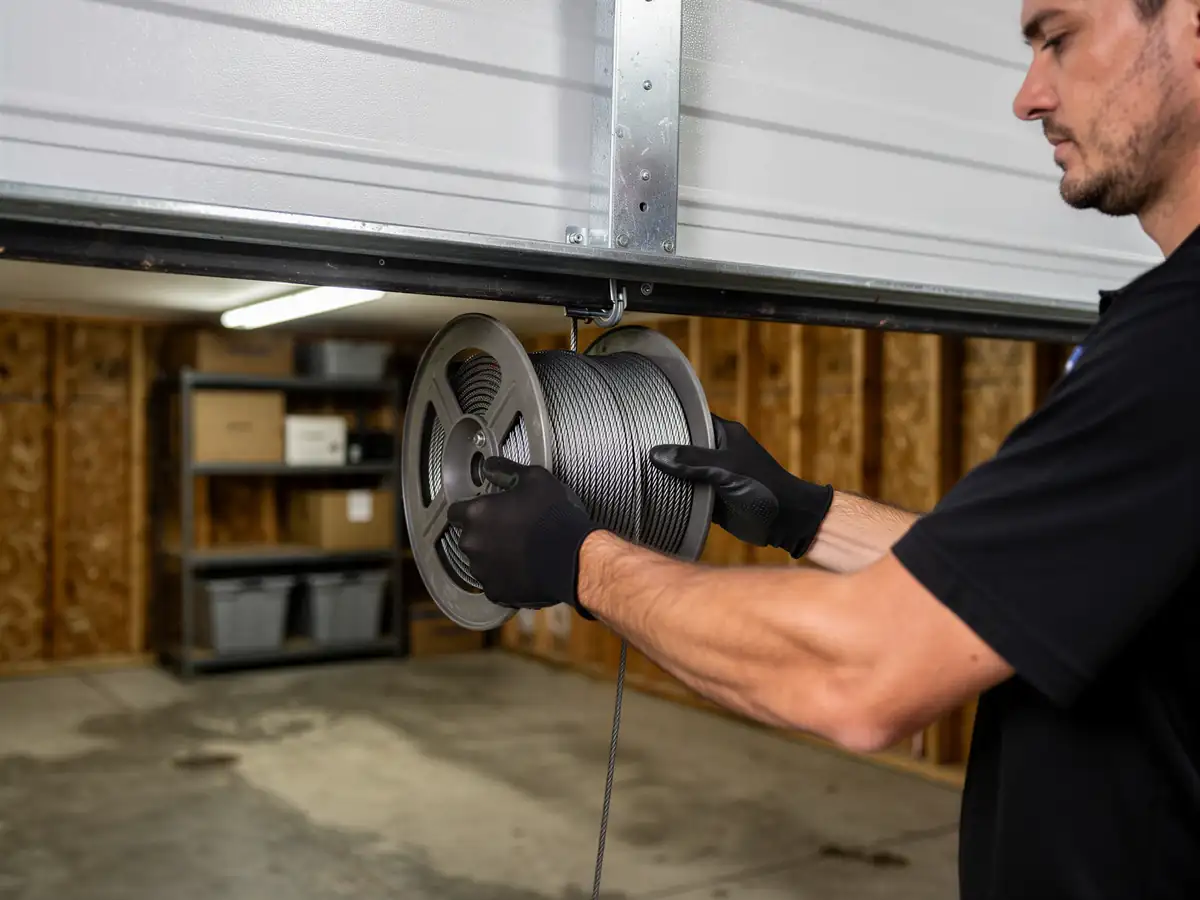
First we lock the door down and release spring tension completely - never touch a cable with the spring still loaded. Then we pull both lift cables, even the one that hasn't failed yet, because a cable that's twenty years old and under the same stress as its broken twin is close behind it. We check the drums for wear or wobble, measure for the correct cable length and gauge for the door's actual weight rather than guessing off the old part, and seat the new cables with even wraps on both drums. Last step is re-tensioning the spring and running the door through a full open-close cycle to check it tracks level on both sides, not just that it moves. If the bottom brackets or rollers show wear from the uneven running before the cable gave out fully, we'll flag that separately rather than bundle it into the cable price without telling you.
What You Are Seeing
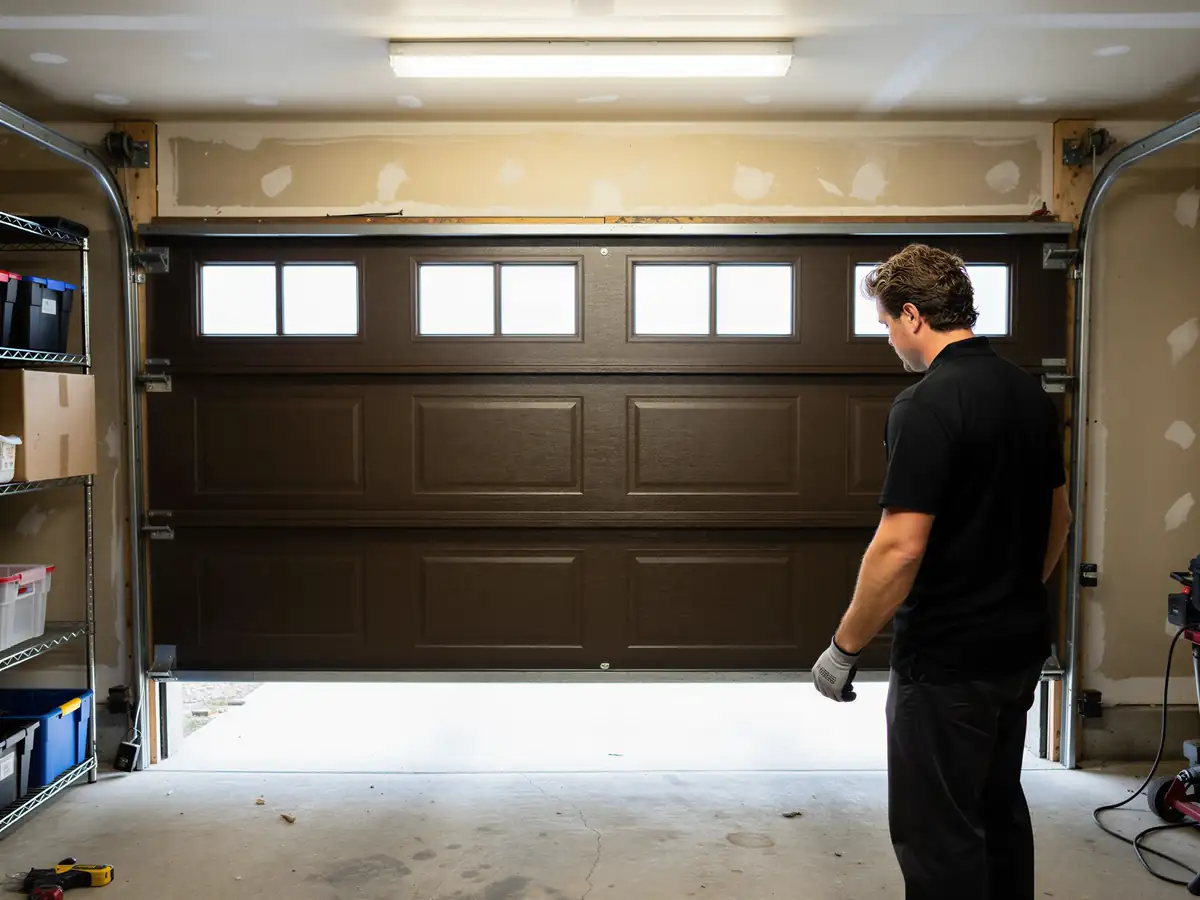
A snapped cable usually announces itself: the door drops hard on one side, sometimes all the way to the floor, and won't move on the opener without grinding. Frayed cable gives more warning - thin wire strands poking out near the drum, a door that looks slightly tilted when closed, or a faint popping sound as the last strands give way one at a time. If the cable's jumped the drum but hasn't broken, you'll see the door hang crooked even at rest, with one bottom corner lower than the other. None of these are safe to force through with the opener. A door with a failed or failing cable under spring tension can swing or drop unpredictably, and that's the point to call rather than keep testing it.