Why This Fails Locally
Most houses across this service area went up between 1966 and 2004
With the median build year sitting at 1994. That matters for springs because torsion springs are rated for a set number of open-close cycles, usually somewhere around 10,000, and a door built in the early 90s has had three decades to burn through that rating whether anyone replaced the spring or not.
Across the 14 named communities we cover
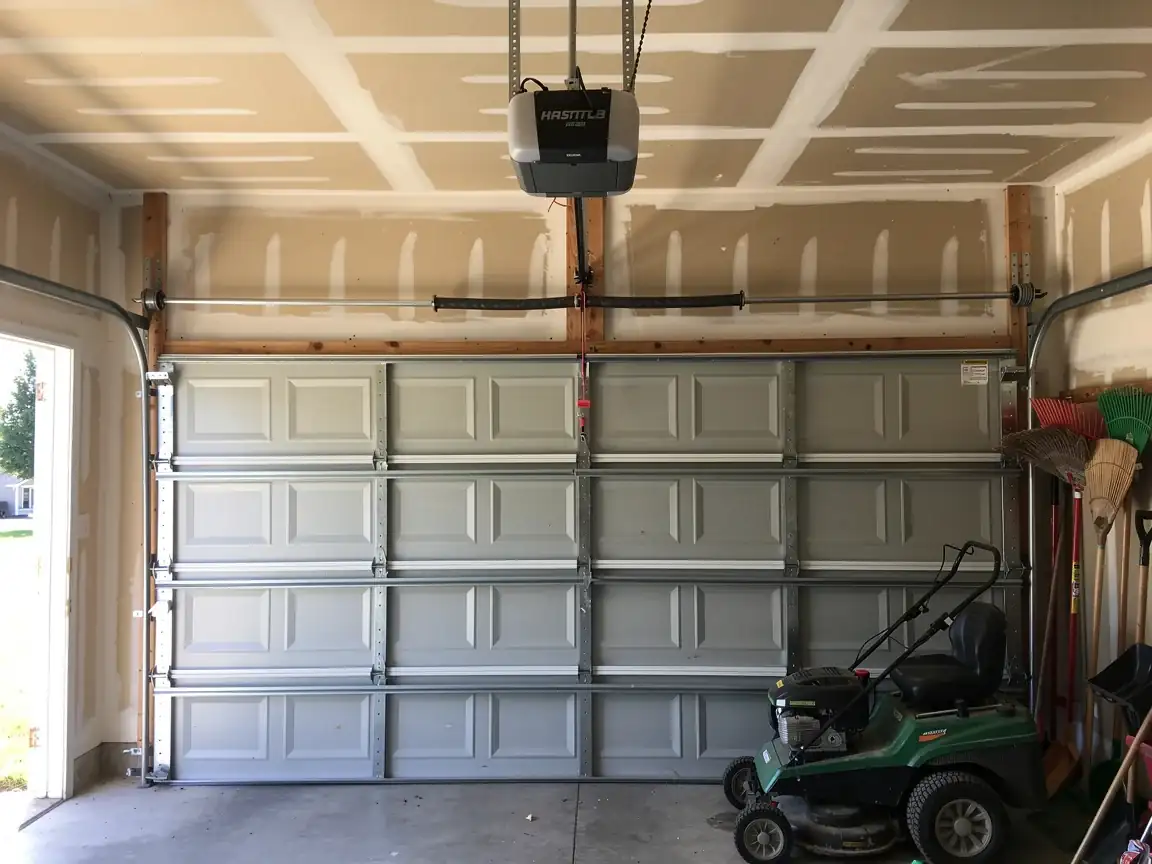
From Lithia Springs four miles out to Tyrone at nineteen, the bulk of that stock is 1980s and 90s construction. That's a specific generation of garage door hardware: steel torsion springs on a single center shaft, often the builder-grade spring that came with the house and was never upgraded.
The climate band here is cold-moderate, not deep-freeze and not mild year-round
That swing matters more than people think. Steel expands and contracts with temperature, and a spring that's already near the end of its cycle life loses tension faster through cold mornings than it would in a climate that stays warm. The combination of aging original hardware and seasonal temperature swings is why spring calls cluster in certain months across this whole area, not just one town in it.
What You Are Seeing
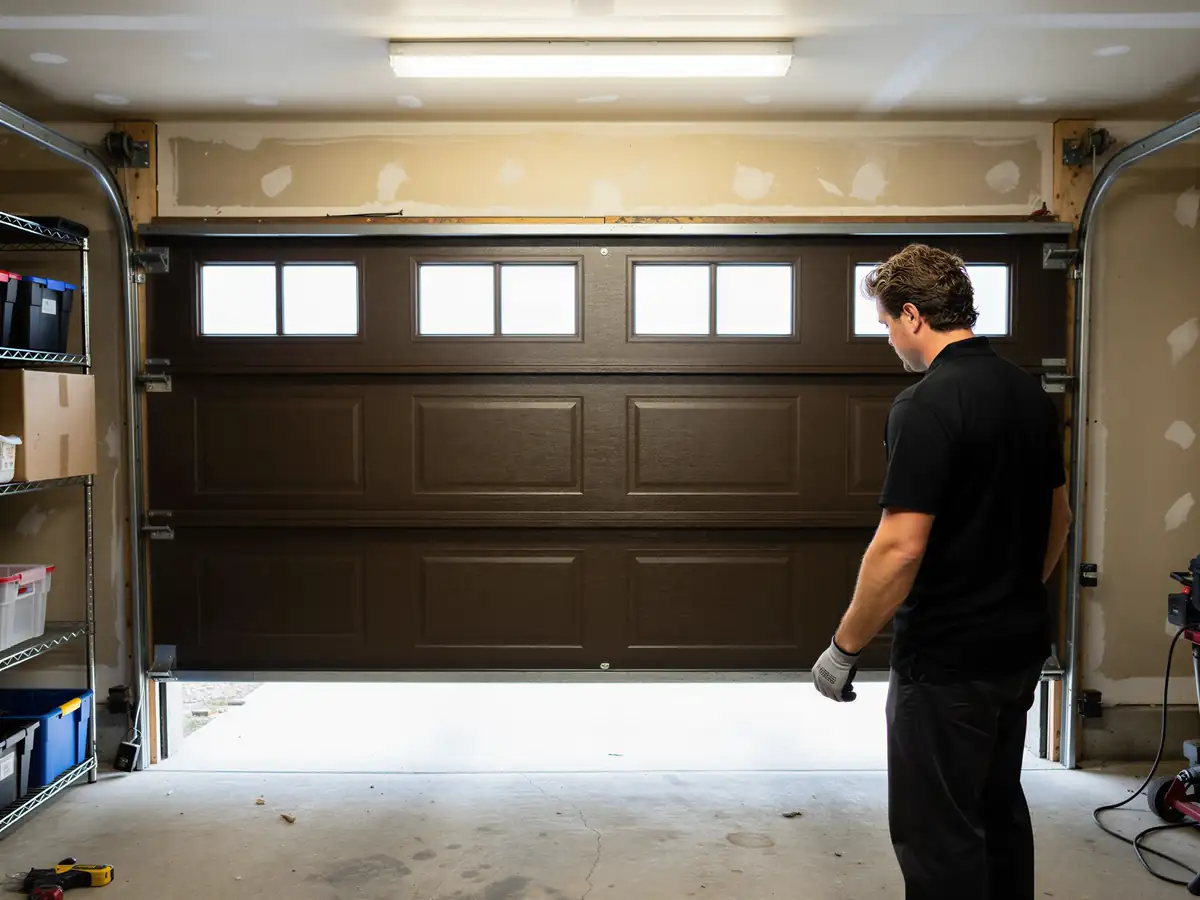
A door that won't lift, or lifts a few inches and stops, is the most common sign. If you pull the manual release and the door drops on its own instead of staying roughly put, the spring has lost its tension or snapped outright.
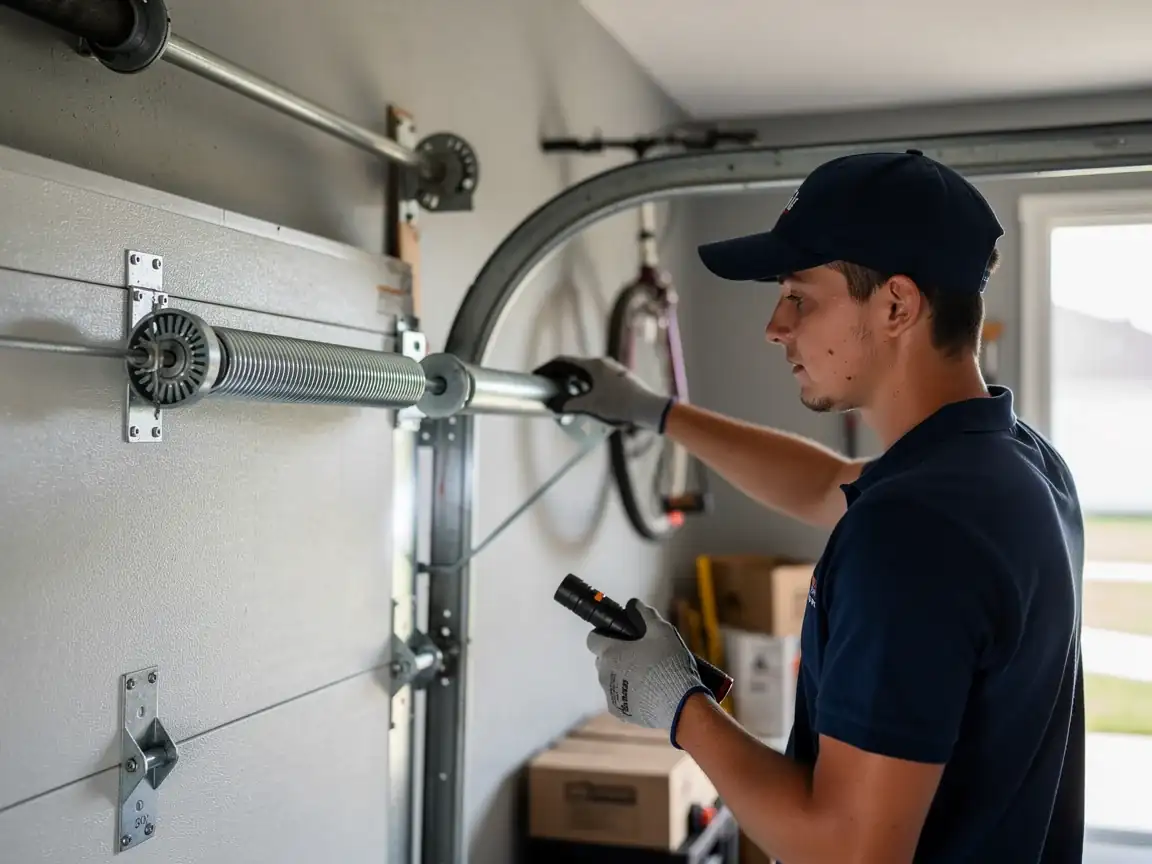
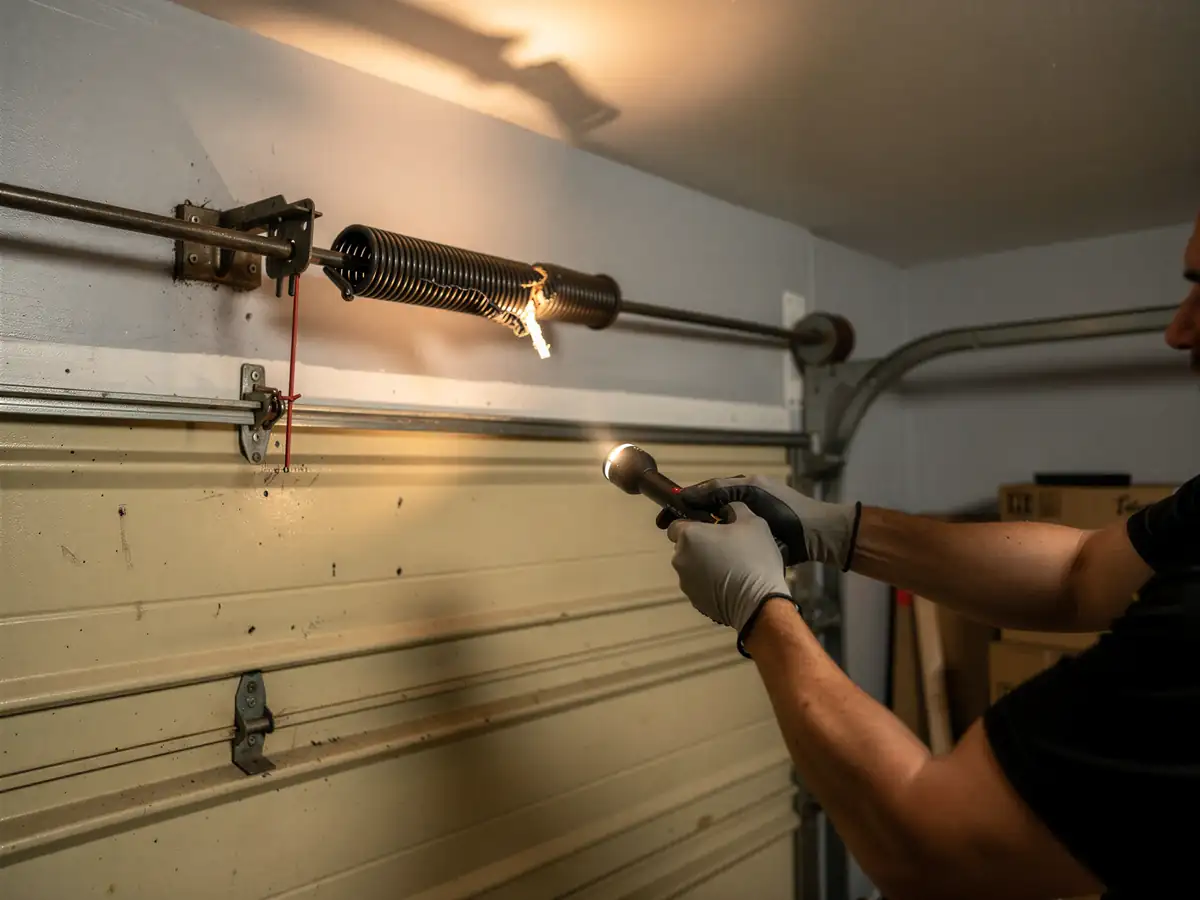
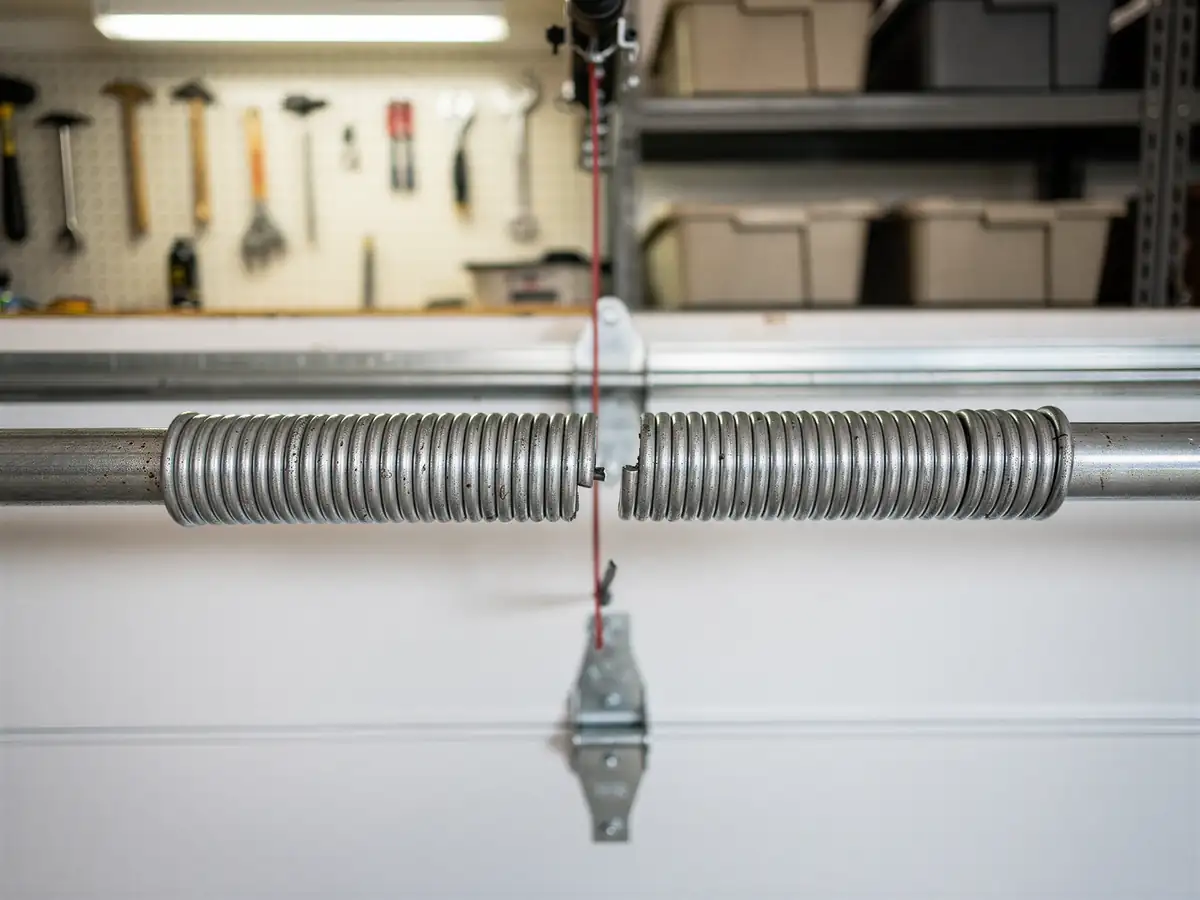
A loud bang from the garage, often described as a gunshot sound, is usually the spring itself failing under load. You'll sometimes see the gap in the coil from outside if you look at the shaft above the door.
An opener that strains, reverses mid-cycle, or trips its breaker on every attempt is also a spring symptom, not an opener problem. The motor is doing a job the spring is supposed to share, and it can't carry that weight alone for long before something else gives out - a stripped gear, a worn drive, or a burned-out capacitor.
Can You Do This Yourself
We'll say this plainly: don't. A wound torsion spring under tension is storing enough force to break a bone or worse if it unwinds in your hands, and the tools to do it safely - winding bars, a vice grip clamp, a correctly sized socket - aren't things most garages have sitting around.
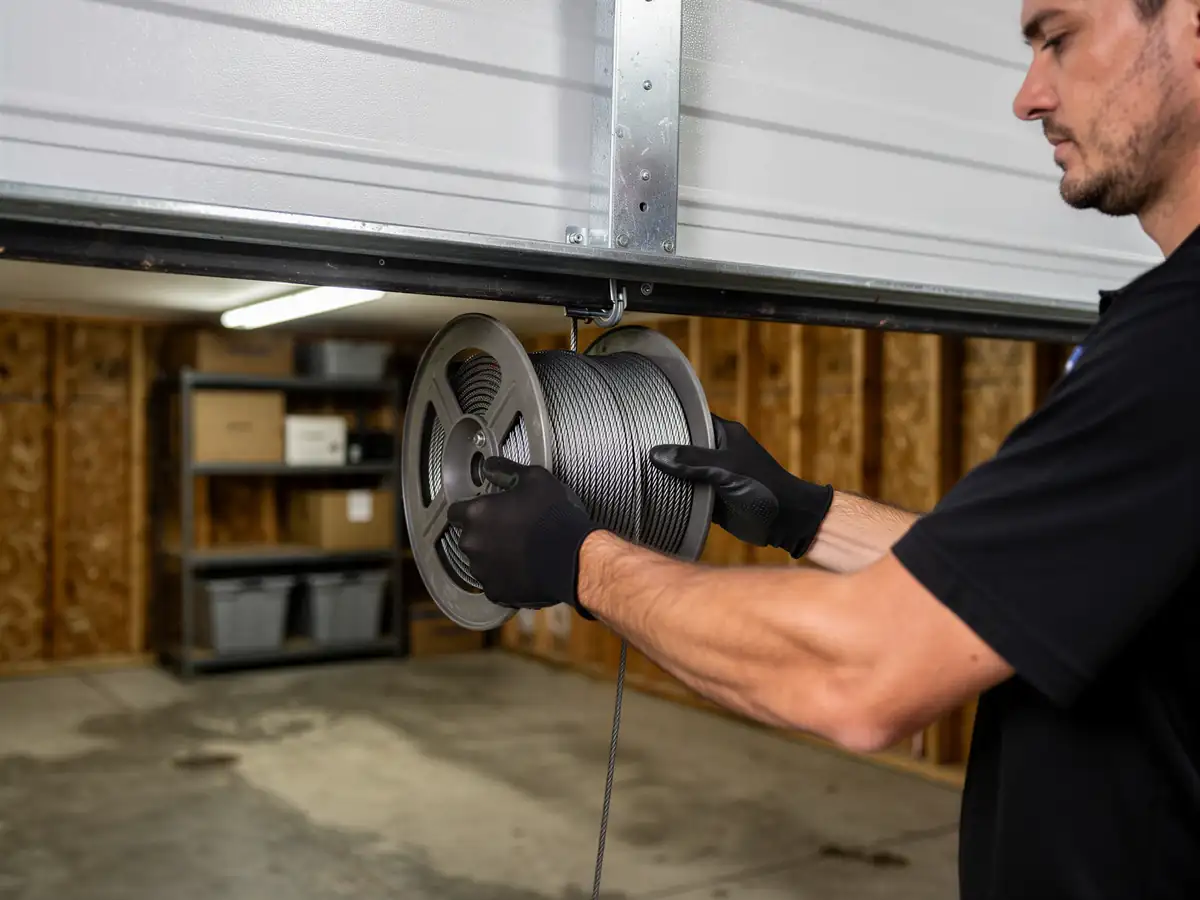
What you can safely check yourself is whether the problem is actually the spring. Look at the cable condition, check whether the door is unbalanced on one side versus the other, and note whether the noise happened suddenly or built up over weeks. That's useful information for whoever you call.
The honest limitation here: if your door is a double-wide with two springs and only one has failed, replacing just the broken one is a short-term fix. The second spring is usually close behind it in age and cycle count, and most jobs end up doing both at once rather than sending a truck back out in a few months for the other side.
What the Repair Takes
A standard torsion spring replacement is a shaft-off job
The old spring gets unwound under control, removed, and replaced with a spring matched to the door's weight and track drop, then wound back to the correct number of turns. Getting that spec wrong is the single biggest cause of a door that's hard to lift or slams down fast, so matching the spring to the actual door matters more than matching it to whatever was there before.
Most of this service area's 24,043 owner-occupied houses
Out of roughly 67,263 households total, have a single door and a straightforward single or double spring setup - nothing exotic, no custom track work needed in the typical case.
- 24,043 owner-occupied
- 67,263 households
With a median household income of $73,889 across the area
Most owners here treat a broken spring as a repair to get handled the same week, not a project to put off. A door that's stuck shut isn't just an inconvenience - it's a security gap and, for a lot of houses, the main way a car gets in and out.
- $73,889 median household income