Douglasville homes from the 1980s and 90s building boom are hitting spring and opener failure age. We diagnose the real cause before we quote a repair.
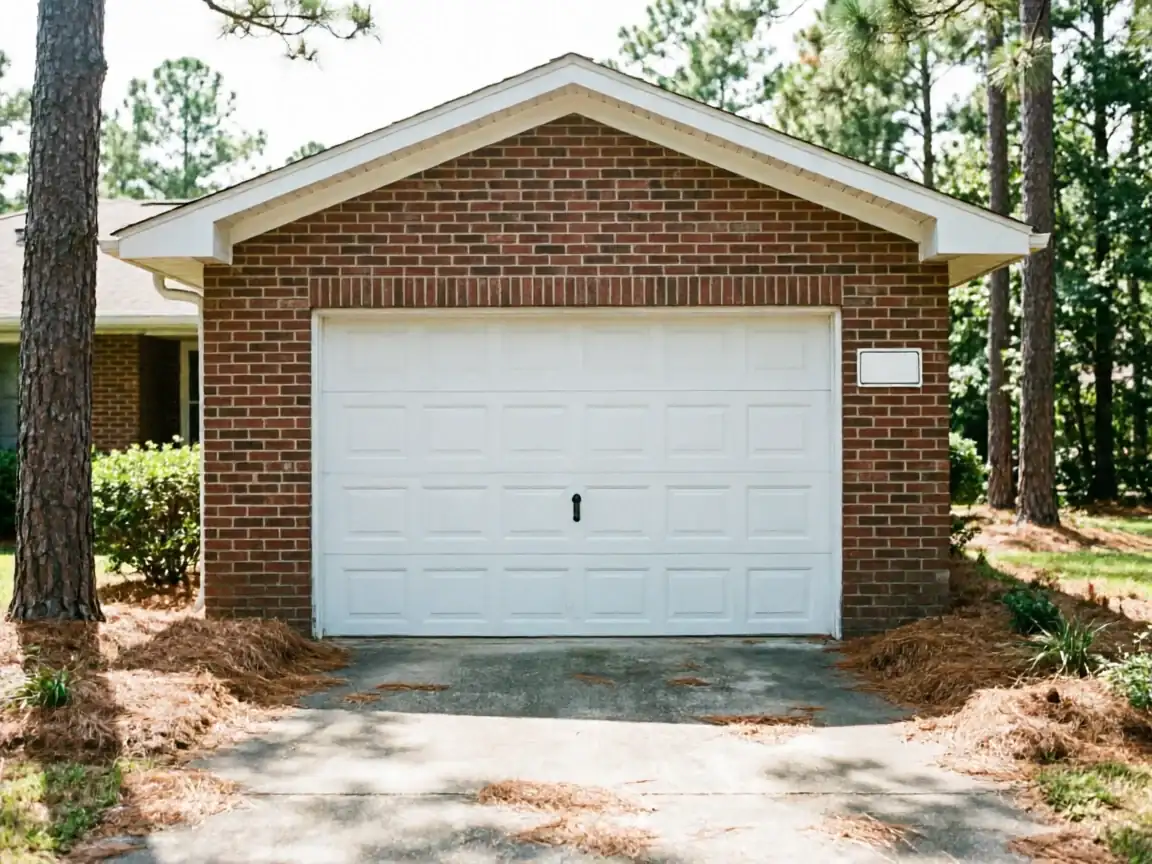
Most houses across the Douglasville service area went up between 1966 and 2004, with the heaviest concentration dating to the 1980s and 90s across the 14 communities we cover, from Lithia Springs and Austell out to Powder Springs and Hiram. That matters because a torsion spring has a rated cycle life, and a door installed when a subdivision was framed in 1988 is now thirty-plus years into a part that was never meant to last that long. Openers from that same era are worse off - older chain-drive units with aging capacitors and worn gear sets.\n\nDouglasville also sits in a cold-moderate climate band, which is a different stress than either a hard freeze or a mild coastal winter. Steel contracts in a cold snap and expands back on a warm afternoon, and that repeated swing fatigues a spring faster than steady weather would. A spring that's wound to the edge of its rated life doesn't fail on the worst day of winter - it fails on an ordinary Tuesday when the temperature finally tips it over. We see the same pattern across the owner-occupied houses in this area: original hardware, original spring, no maintenance history, and a sudden hard stop.
What You Are Seeing
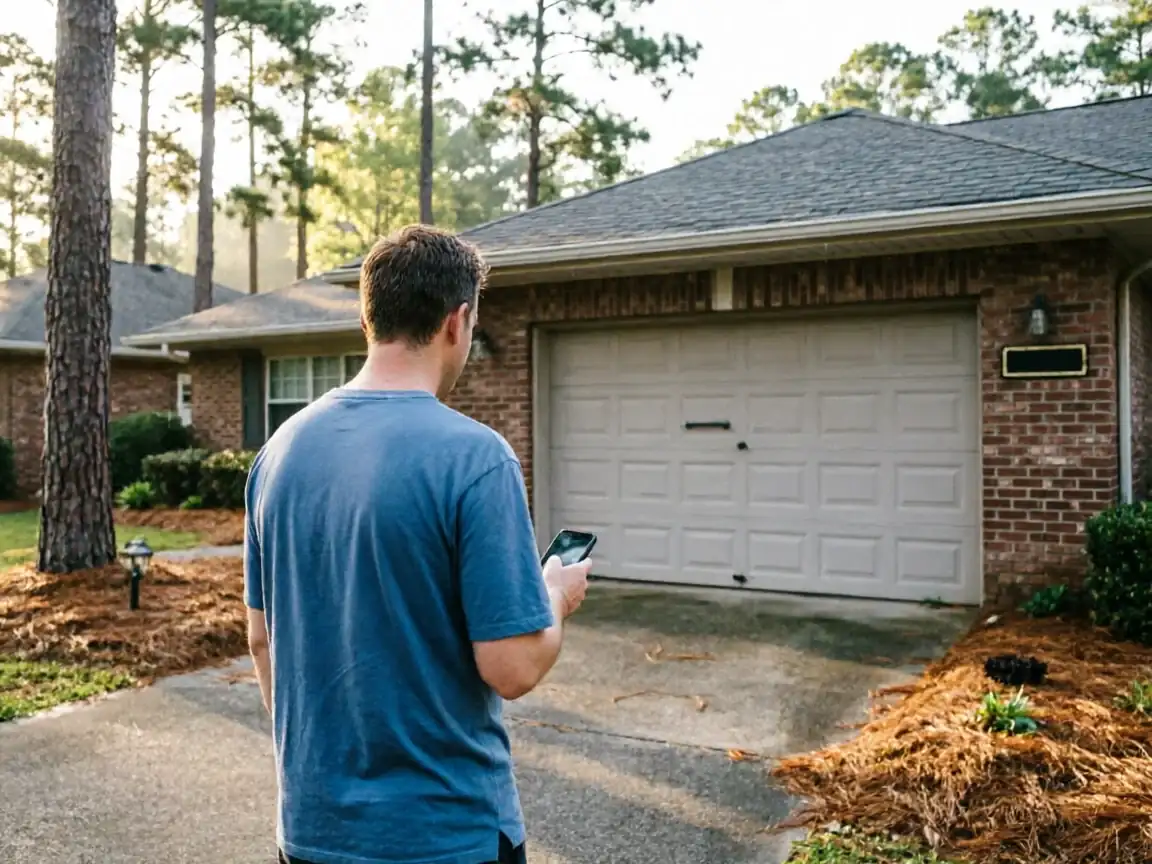
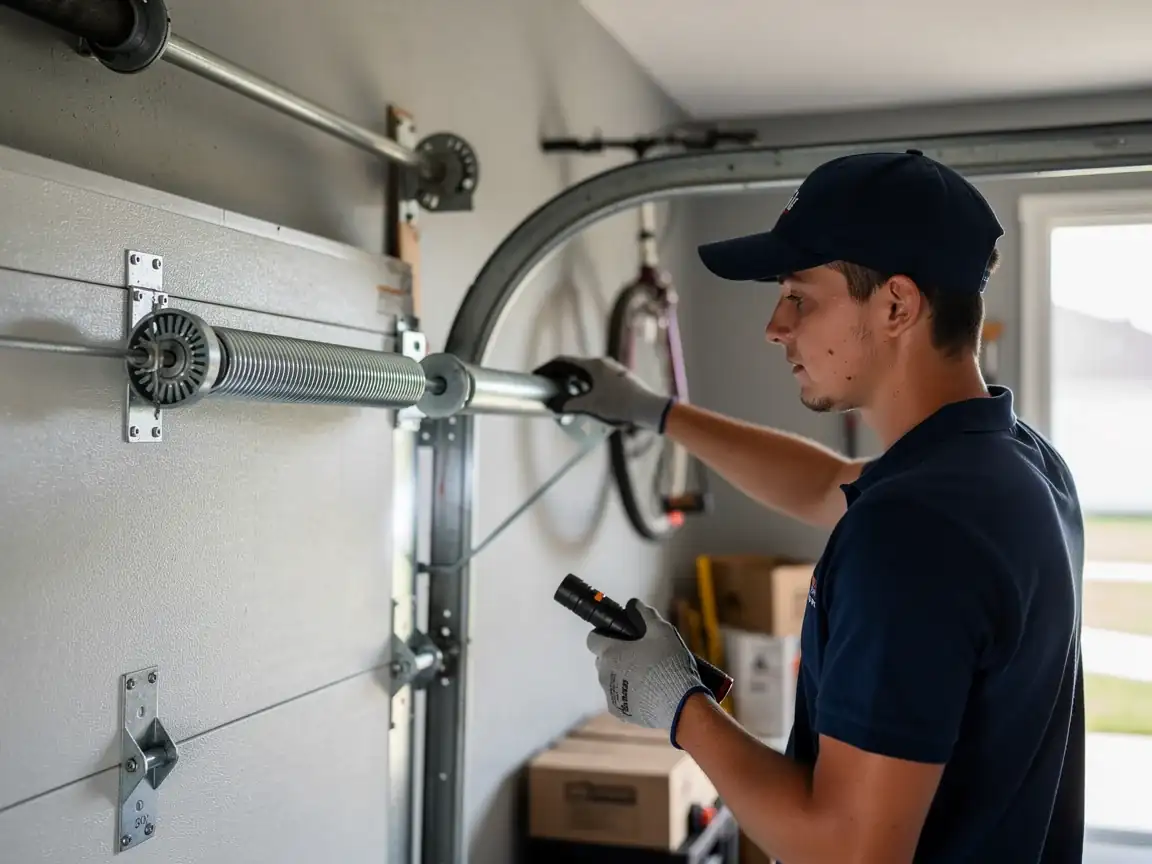
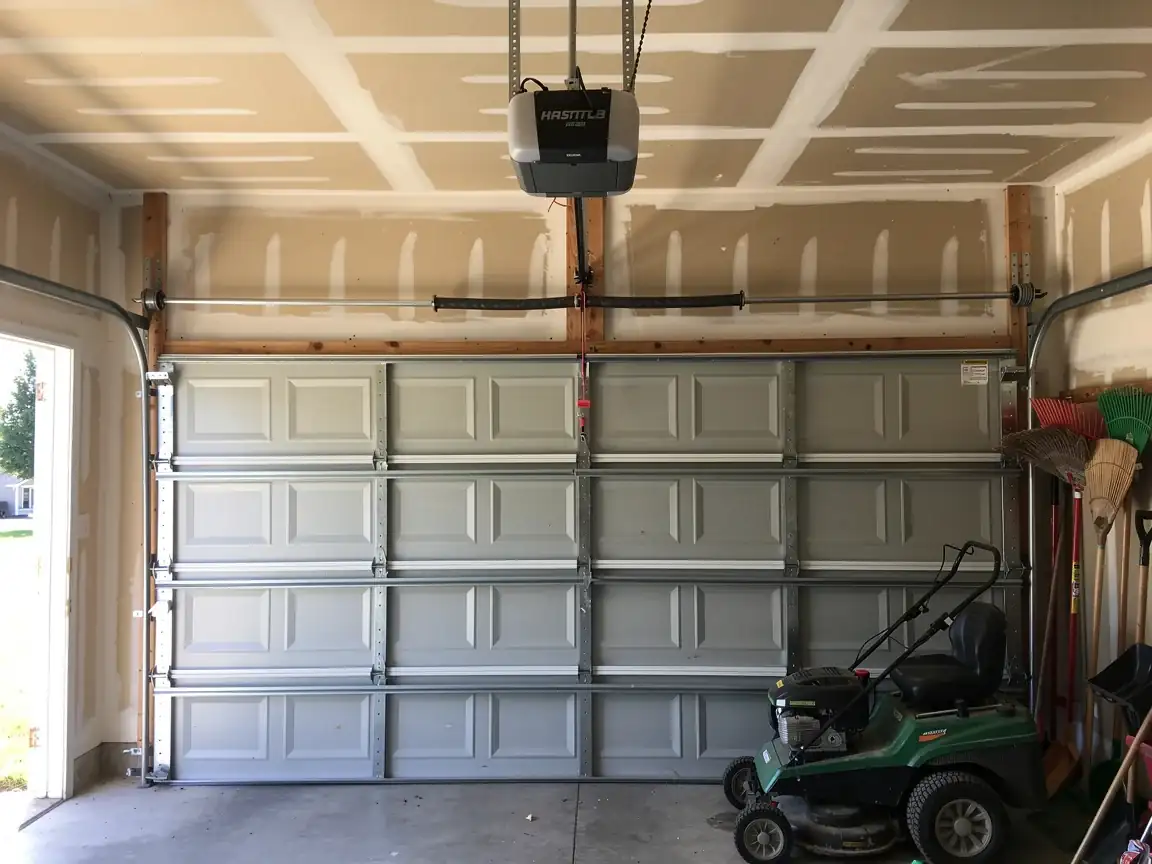
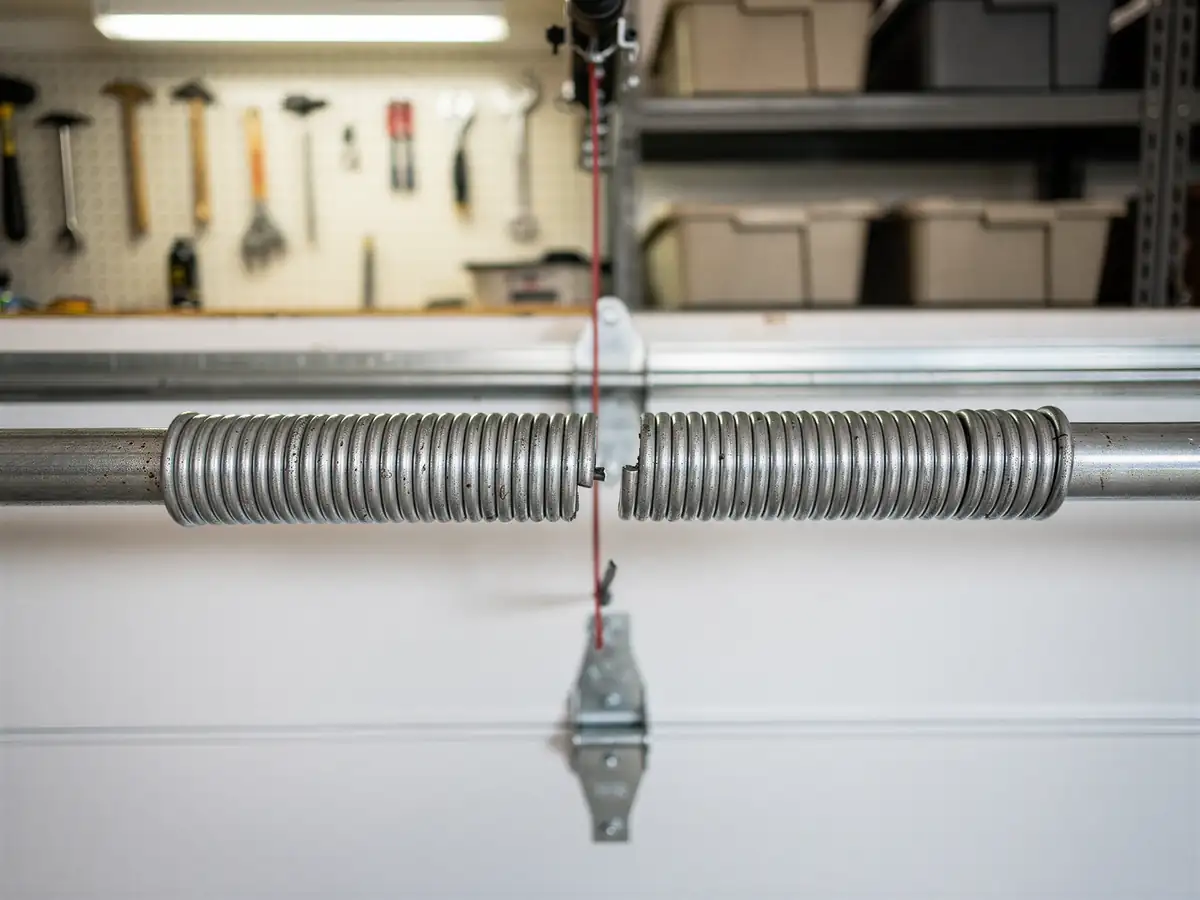
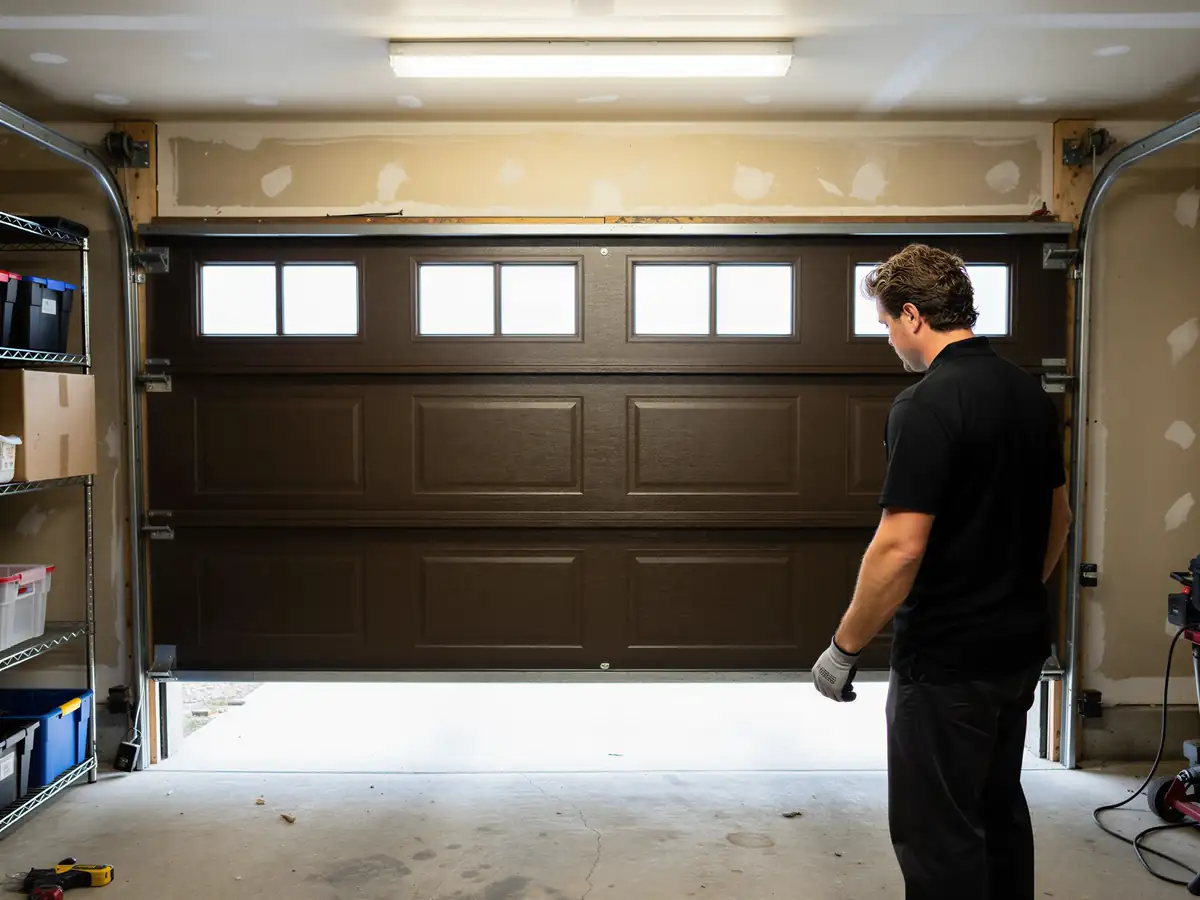
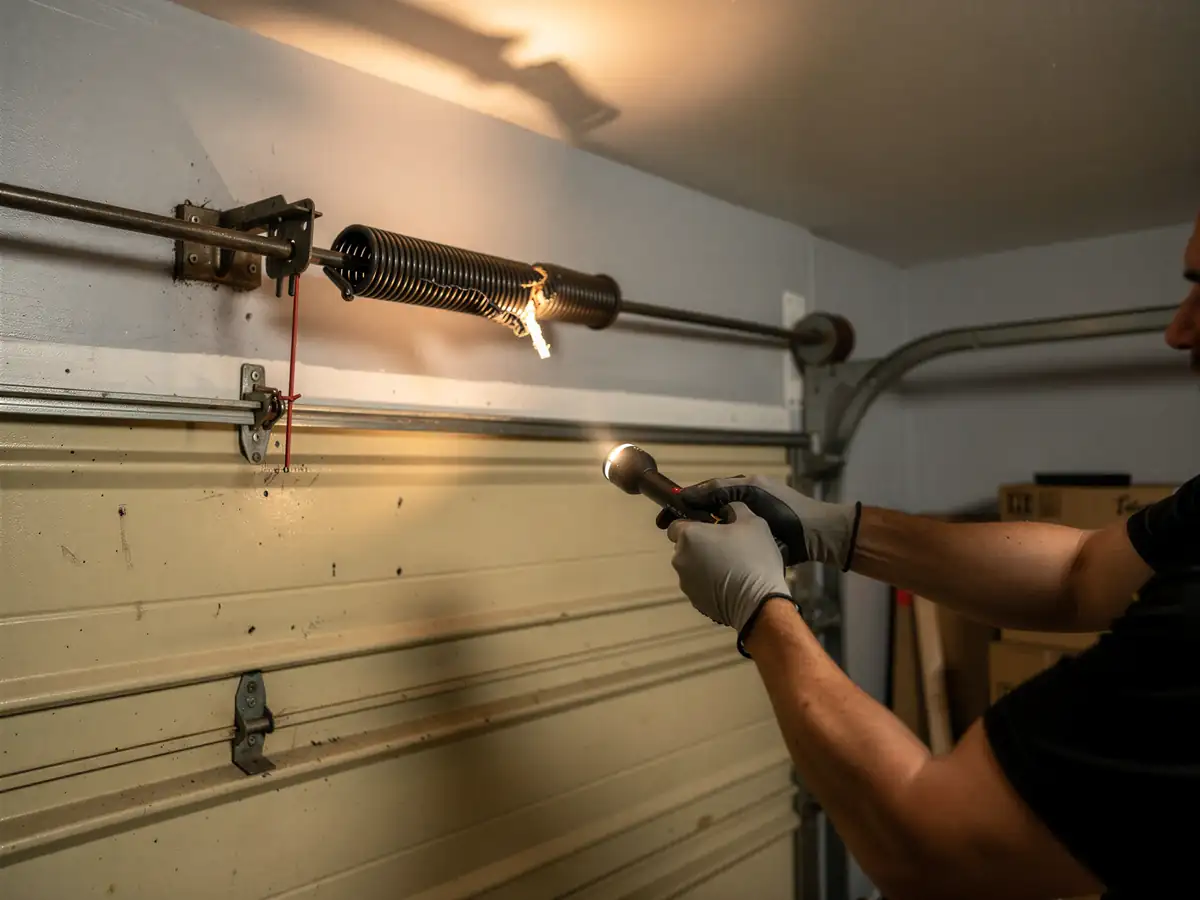
The door won't lift, or it lifts six inches and stops. Sometimes there's a bang from the garage before it quits - that's the spring letting go under tension, not the opener breaking. Other times the opener motor hums but the door doesn't move at all, which usually means the spring already failed quietly and the opener has been straining against dead weight for days or weeks before it finally gives up.\n\nOn older torsion setups common in houses built through the 1990s, you'll also see a visible gap in the spring coil above the door, or one cable hanging loose where it used to be taut. If the door is uneven - one side higher than the other when it's halfway up - that's usually one spring on a double-spring system holding while the other has already broken. None of these are opener problems even though the opener gets blamed first, since it's the part making noise when the real failure is the spring assembly above the door.
Can You Do This Yourself
A torsion spring is wound under enough tension to break a bone or worse, and we don't recommend anyone without the winding bars and experience open that assembly. That's the honest limit here - this isn't a YouTube Saturday project, and we won't pretend otherwise.\n\nWhat you can safely check first: pull the manual release and see if the door moves freely by hand when it's disconnected from the opener. If it's heavy or won't stay up on its own, that confirms a spring issue rather than an opener issue, and you've saved yourself a wasted opener repair call. You can also look at the cables and the coil gap from a safe distance - don't touch them - just to have an idea what you're dealing with before we get there. Beyond that diagnostic step, the winding, the cable swap, and the balance check all need the right bars and clamps, and doing it without them is how people get hurt.
What the Repair Takes
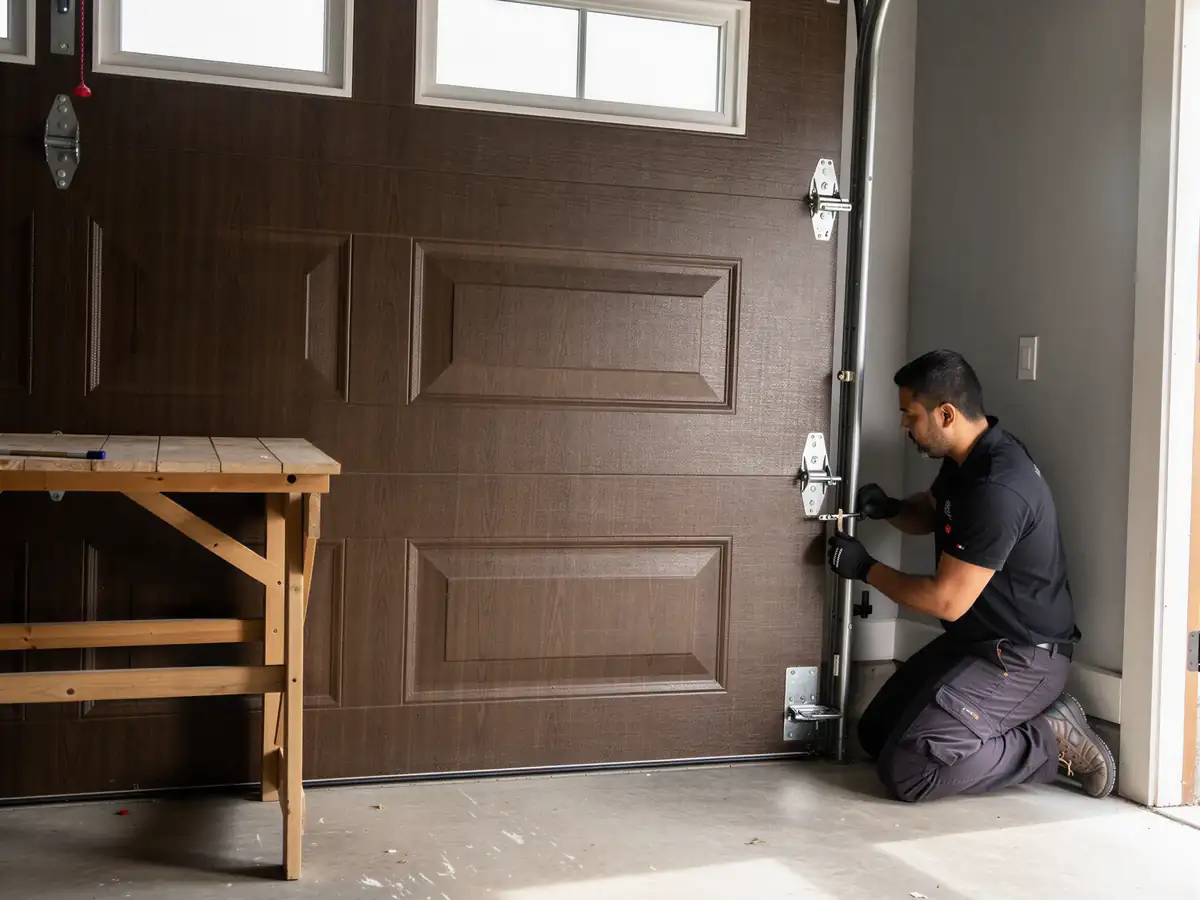
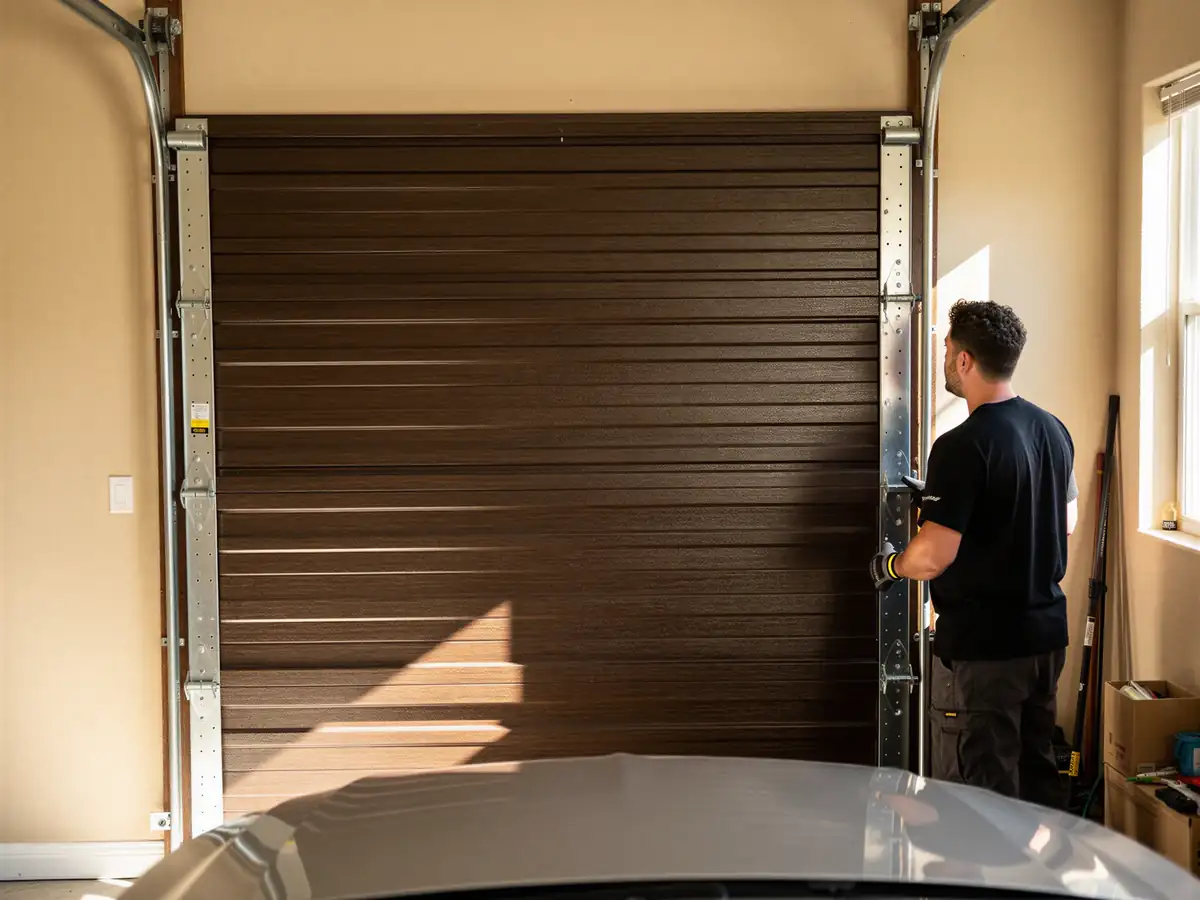
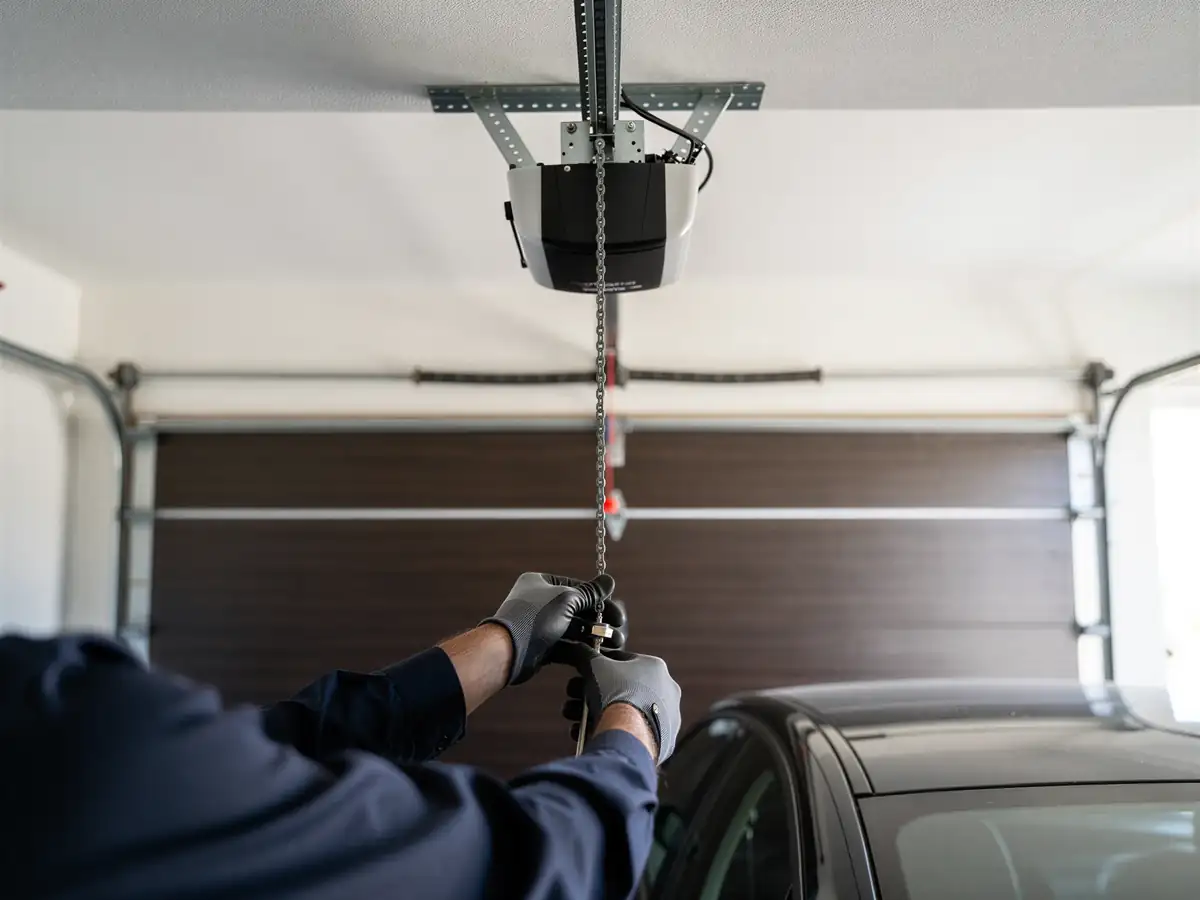
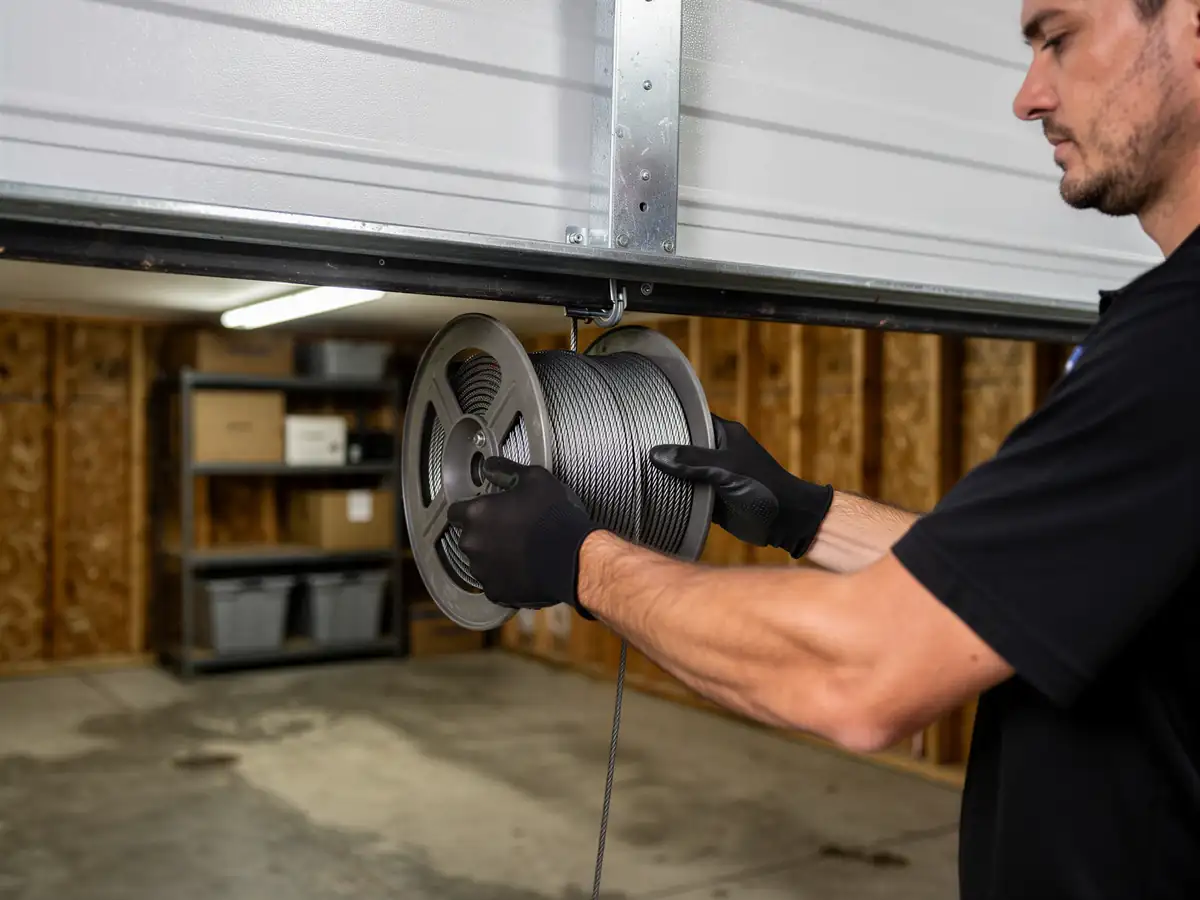
Most spring jobs on the doors common to this area are a same-visit fix: we match the spring to the door's weight and wind size, swap both springs if the door is old enough that the second one is close behind, and check the cables and rollers while the door's open since those wear on the same timeline as the spring. On a double-spring door it's rarely worth replacing one and leaving the other at the same age - if one went, the other is close.\n\nIf the opener itself has also failed - not uncommon on a unit that's been straining against a broken spring for a while - we'll tell you straight whether it's worth repairing or whether a replacement opener makes more sense given the unit's age. We balance the door after any spring work, since an unbalanced door puts the same strain back on a new spring that killed the old one. We don't stock every obscure part for every opener model from the 1980s and 90s, so on rare older or discontinued units there can be a short wait on a specific part - we'll tell you that up front rather than after the fact.
How it works
From “it’s stuck” to “it’s fixed”
01
Tell us what’s wrong
Describe the symptom - won’t open, loud bang, opener runs but the door won’t move.
02
On-site diagnosis
A technician tests the door under power and by hand and finds what actually failed.
03
Clear, up-front plan
You get the fix that’s needed and what drives the cost - before any work starts.
04
Repaired & tested
The repair is done, the door is set true and tested, and the work area left clean.
Not sure which repair your door needs in Douglasville, GA? Describe what it’s doing - every job starts with a diagnosis.
Torsion springs fail on a cycle count, not a calendar date. A spring installed when your house was built in the 1980s or 90s has been opening and closing for decades, and the cold-to-warm swings here add extra metal fatigue each winter. It holds right up until it doesn't - there's rarely a slow warning sign.
Is it the spring or the opener?
Disconnect the opener with the manual release and lift the door by hand. If it's heavy, uneven, or won't stay up, the spring is the problem, not the opener. If it lifts light and smooth by hand but the opener won't run it, that points to the opener or its wiring instead.
Do you work in areas near Douglasville too?
Yes, we cover Douglasville and the surrounding communities including Lithia Springs, Austell, and Powder Springs. The housing stock and climate pattern that drives spring failure here is consistent across that whole area, since most of it was built in the same building boom.
Can I just replace one spring on a double-spring door?
You can, but we generally don't recommend it. If one spring failed from age, the second one on the same door is nearly always close behind, wound and cycled the same number of times. Replacing both at once costs less than two separate visits and avoids a second breakdown weeks later.
Ready to get your garage door sorted?
Tell us what it’s doing and where you are in Douglasville - we’ll take it from there.