How That Shows Up in the Door
Tyrone's housing stock sits later than most of the service area
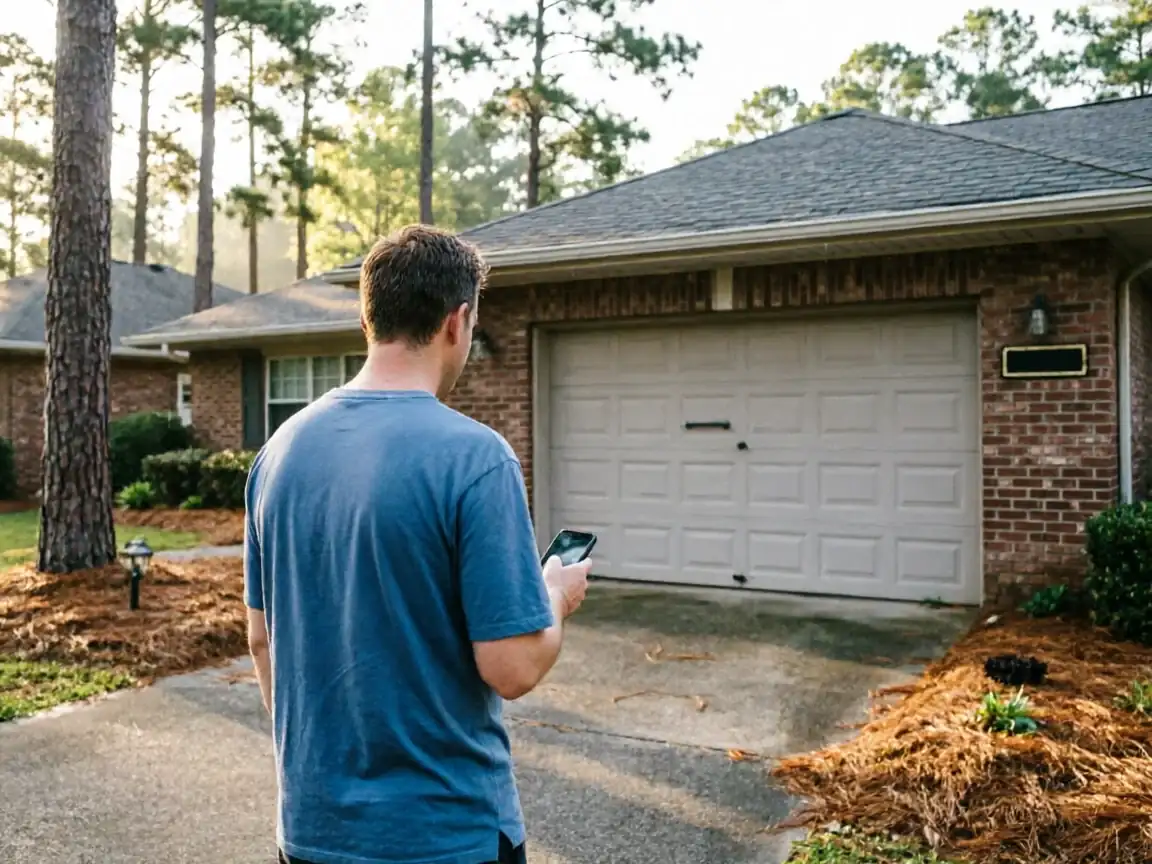
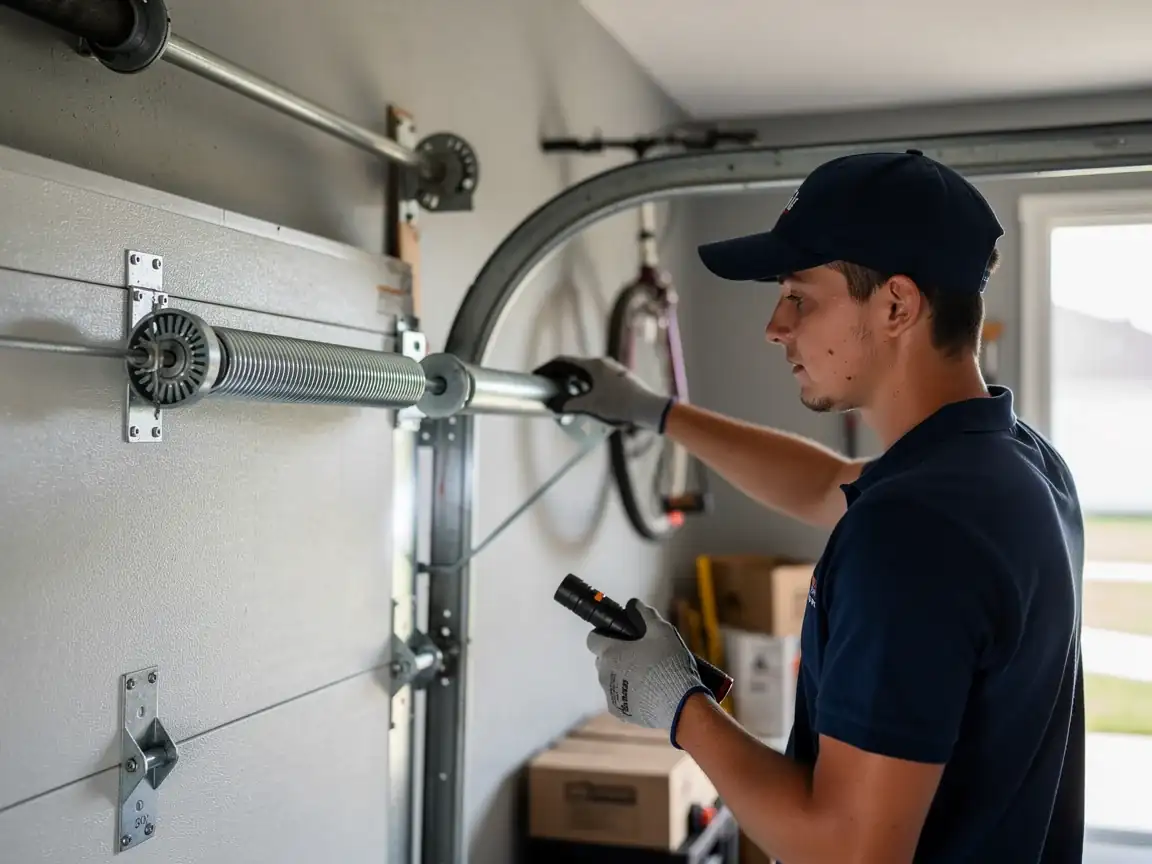
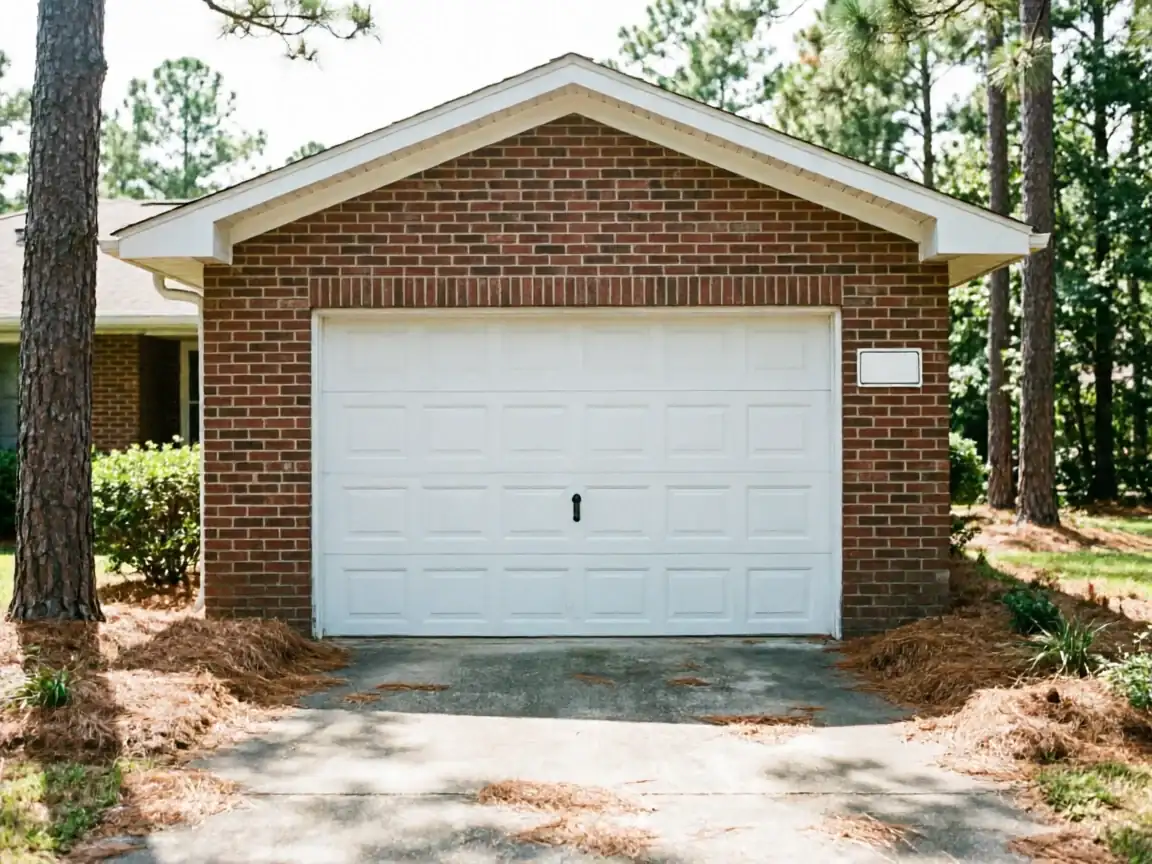
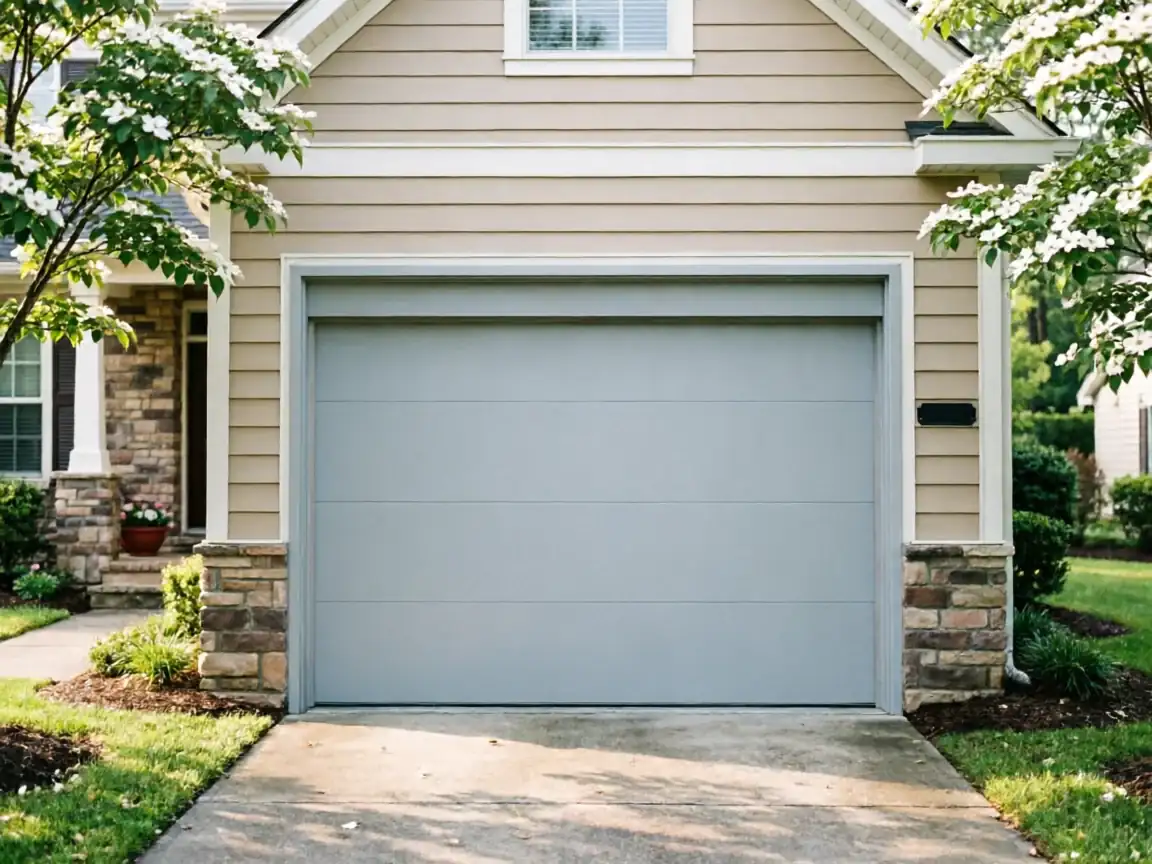
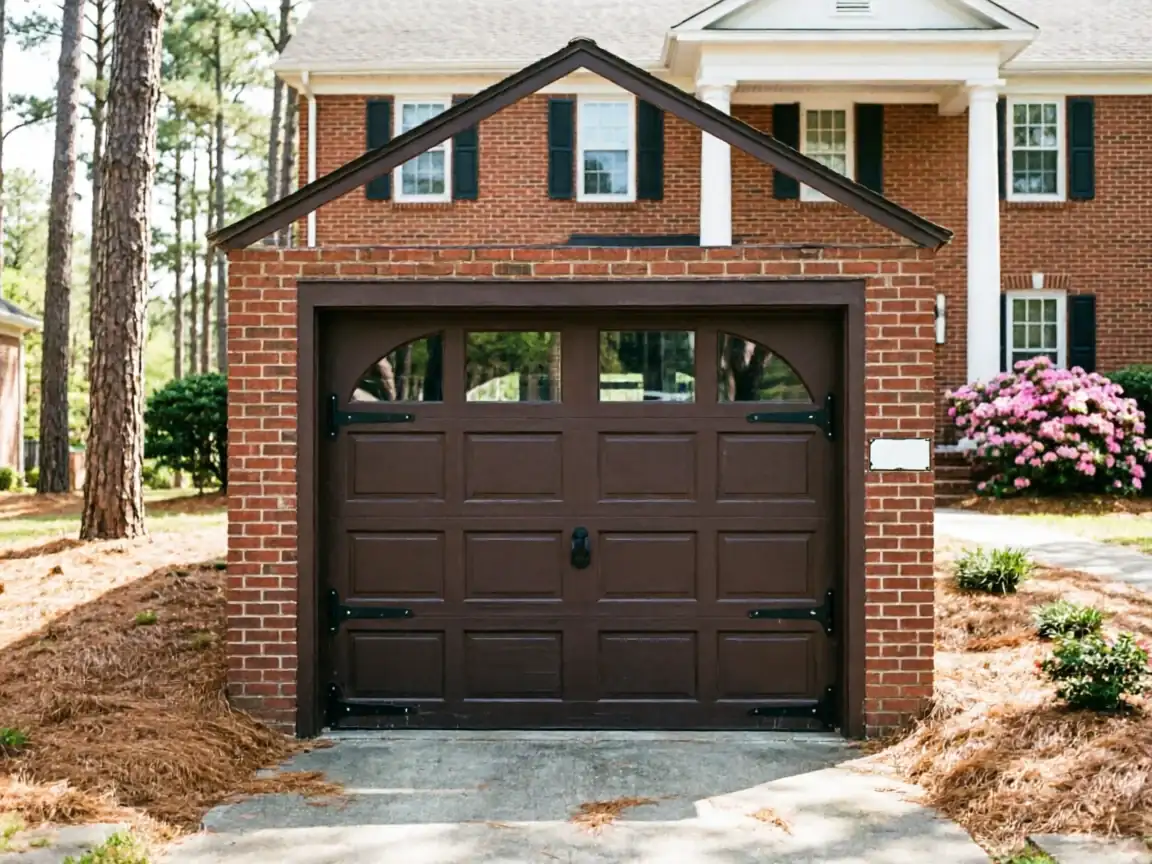
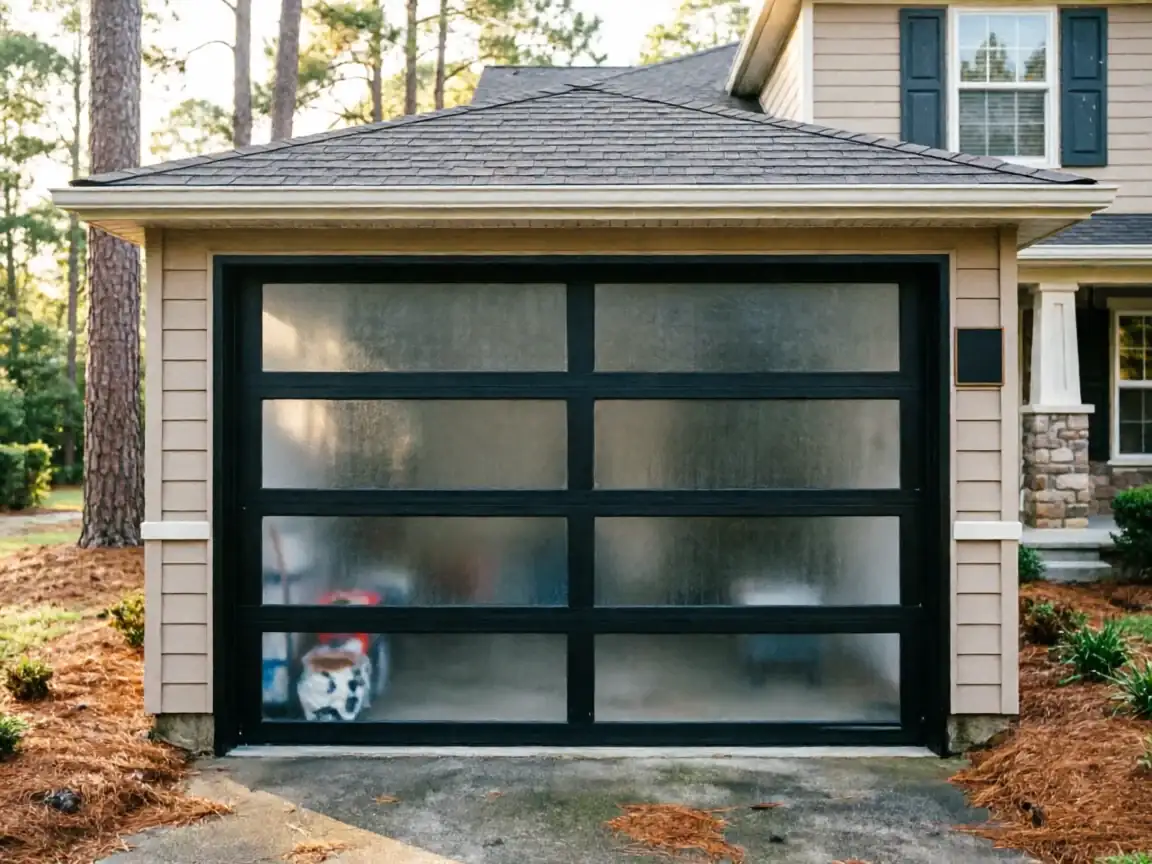
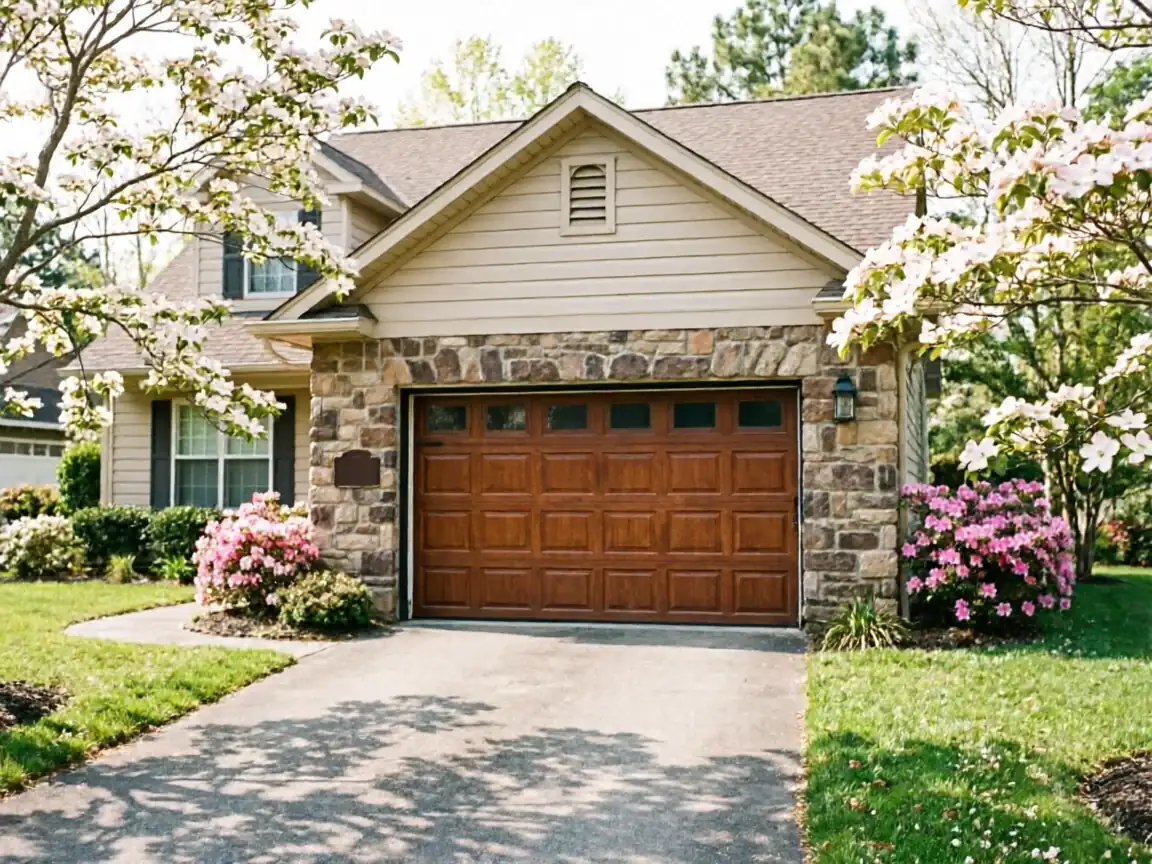
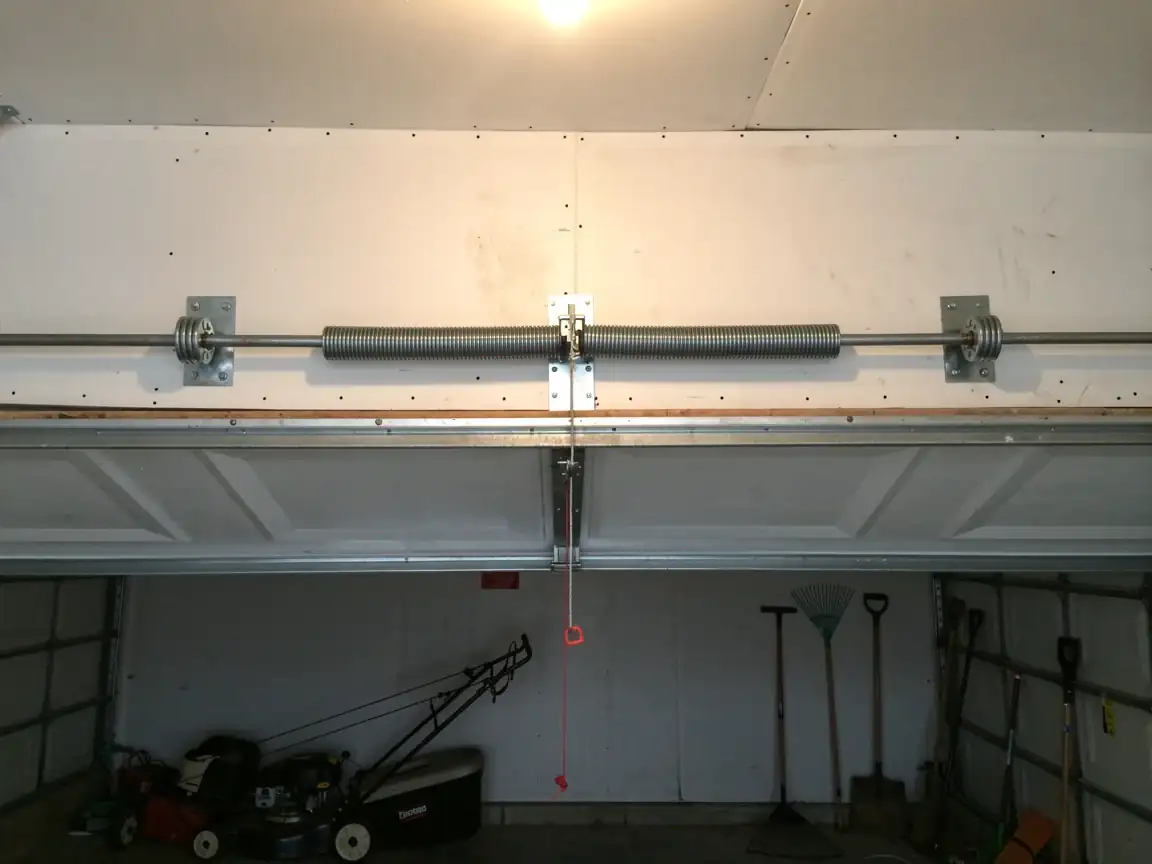
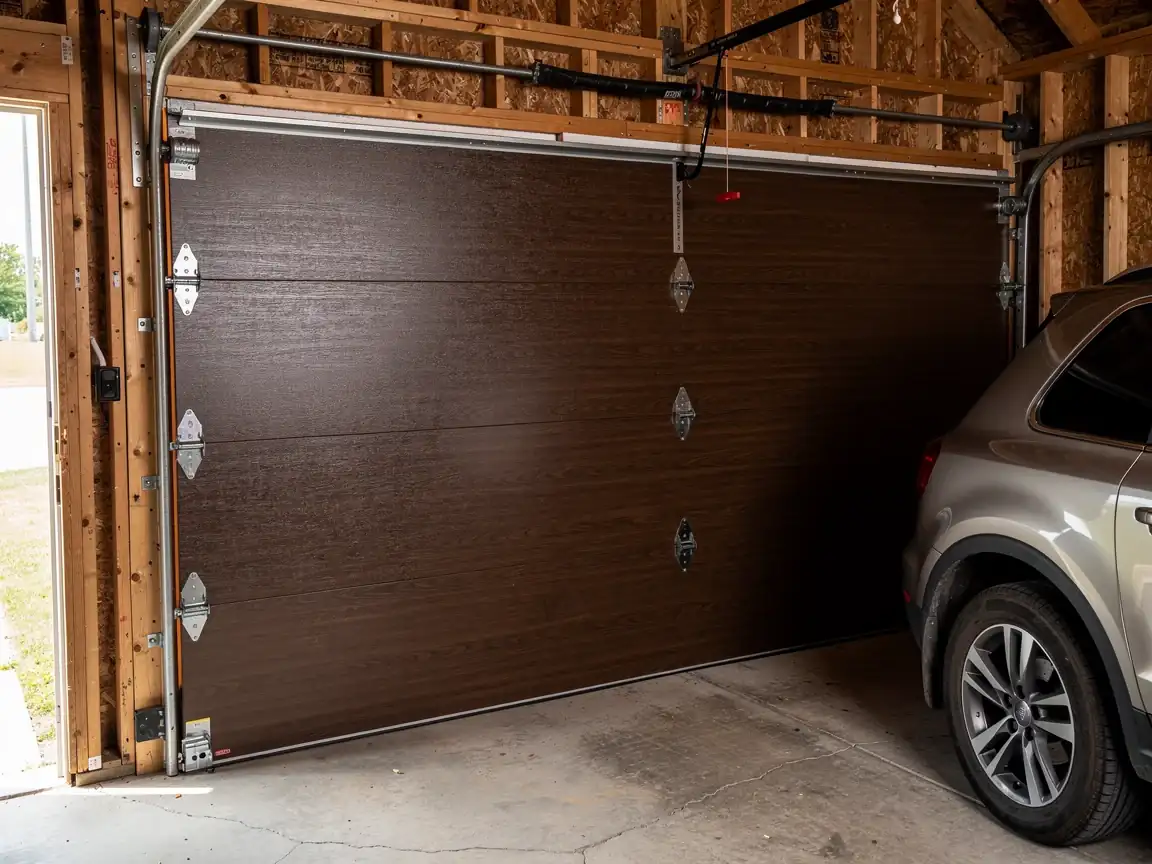
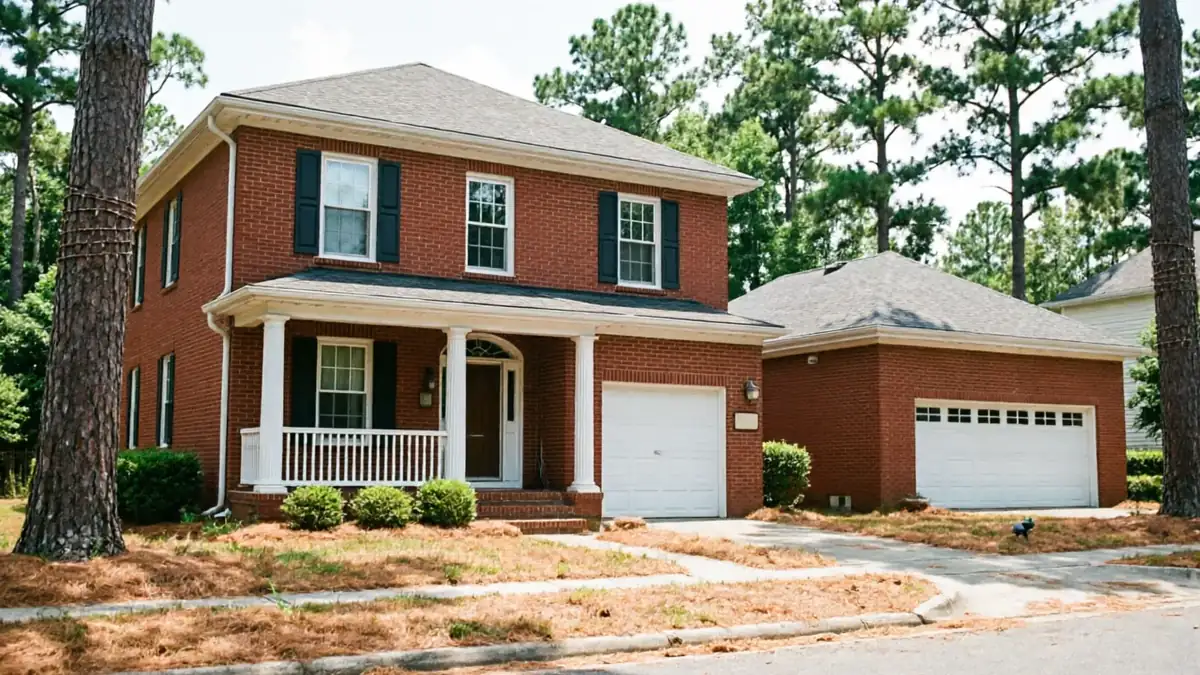
The median build year here is around 2000, compared to the mid-1990s median across the wider territory, and that gap matters more than it sounds like it should. A house built in 2000 almost never has the old side-mounted torsion hardware you'd find on a 1970s build. Instead you're looking at standard center-mounted torsion springs over the header, factory steel sectional doors, and openers that are old enough now to be on their second or third logic board but young enough that parts are still stocked rather than hunted down.
What fails in these houses is predictable
The spring itself, worn after two decades of cycles, the plastic idler pulleys that were cheap even when new, and openers whose circuit boards finally give up around the 18-20 year mark. We don't see the brittle, repainted-six-times wood panel doors that show up on older stock closer to Douglasville. We see steel and insulated steel, mostly in good shape structurally, just tired in the moving parts. Cold-moderate winters put ordinary stress on these springs and seals, nothing dramatic, just steady wear that catches up with a door built around the turn of the millennium right about now.
- 20 year
What We Do Not Do
We don't keep a crew or a truck stationed in Tyrone. We run out of Douglasville, about 19 miles away, and that's worth saying plainly rather than letting a website imply otherwise. If you need a same-day emergency call at 6 a.m., be upfront with us about the drive and we'll tell you honestly whether that's realistic that day.
We also don't try to repair a spring system that's one failure away from a second failure. If a door built around 2000 has a worn spring and a opener board that's also failing, patching the spring and leaving the opener is a false economy - you're paying a trip charge twice. We'll tell you when replacement beats repair instead of running up a bill on a door that's past the point of fixing piece by piece. And we don't install doors we haven't inspected the opening for first; header width and headroom vary enough across Tyrone's housing that a quote over the phone isn't a real quote.
The Calls We Get From Here
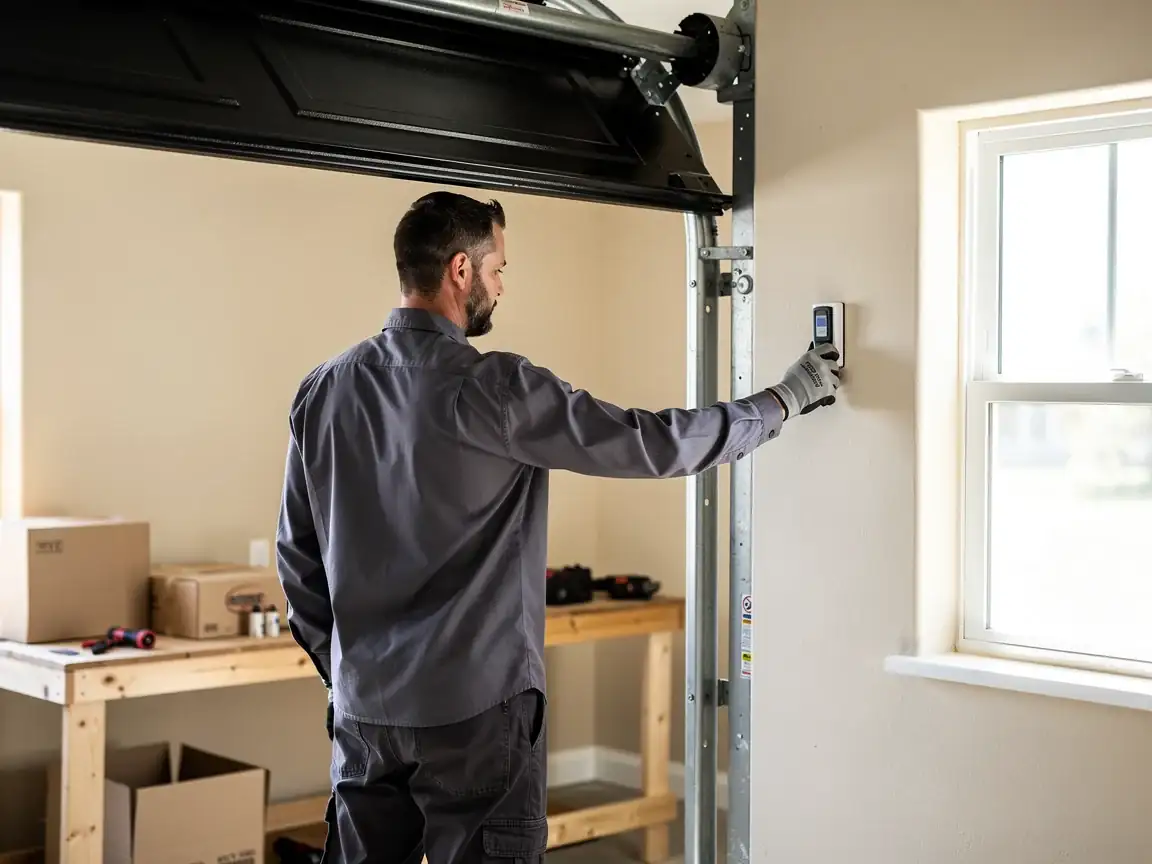
The calls from Tyrone skew toward openers more than the older parts of our territory do. A door built in 2000 is right in the window where the original opener - chain or belt drive, often a mid-range consumer unit - is reaching the end of its service life. We get calls for openers that run but don't fully close, openers that reverse for no reason, and the occasional dead logic board after a storm.
Spring calls still come in, just later in the life of the door than elsewhere. A torsion spring rated for a certain cycle count lasts about as long as it lasts regardless of the house around it, and 2000-era doors are now hitting that number. We also get cable and roller calls - standard wear, nothing specific to the area, just the normal mileage on a door in regular daily use for two decades. Household incomes in Tyrone run well above the service-area median, and we see that reflected in the calls: more owners asking to replace an aging opener with a newer, quieter unit rather than patch the old one, since the cost difference against twenty more years of the same board isn't large.
The Houses Here
With roughly 2,879 households in Tyrone, this is a smaller pocket than the service area as a whole
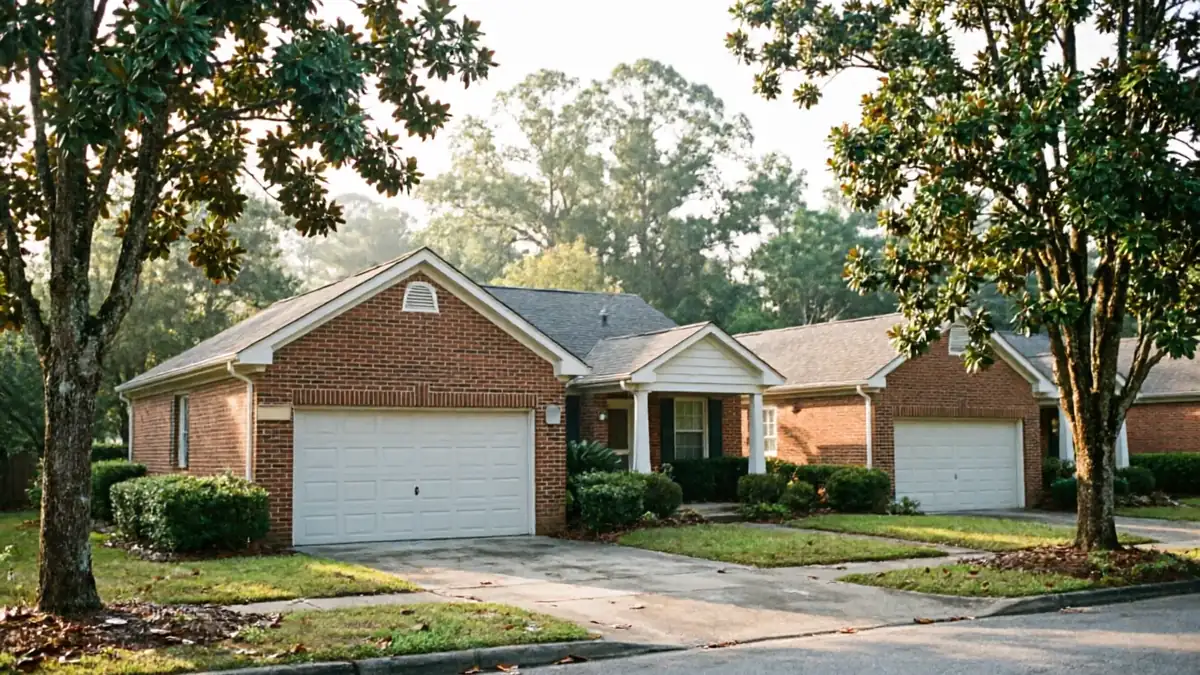
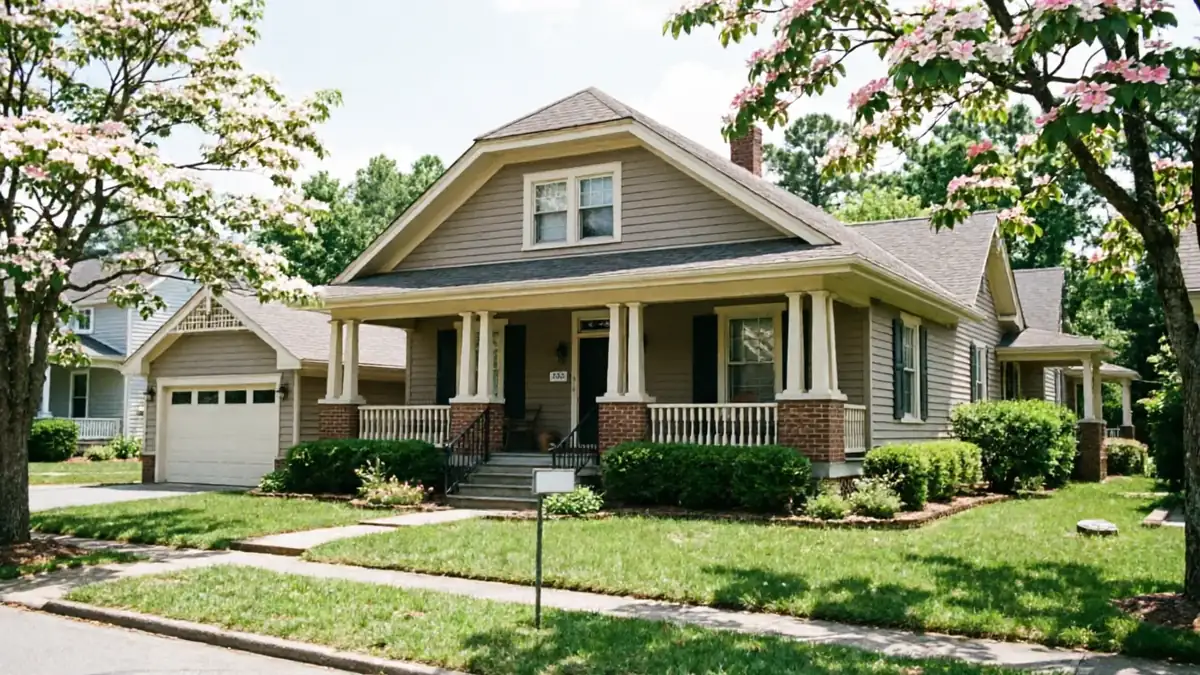
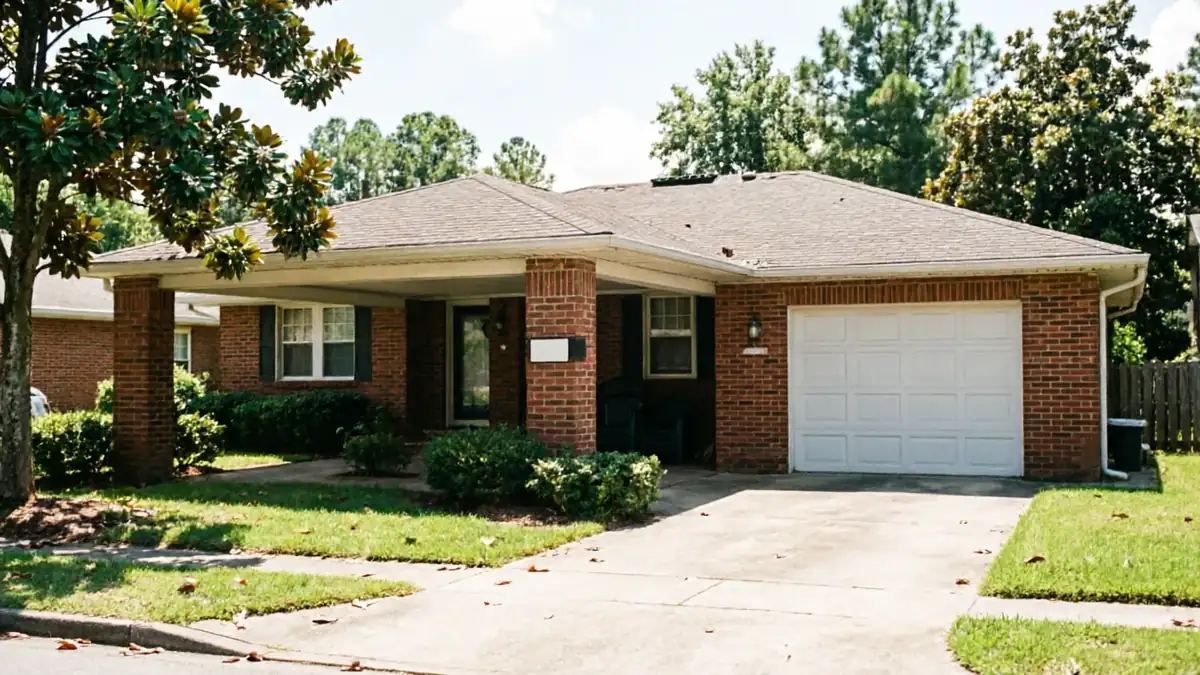
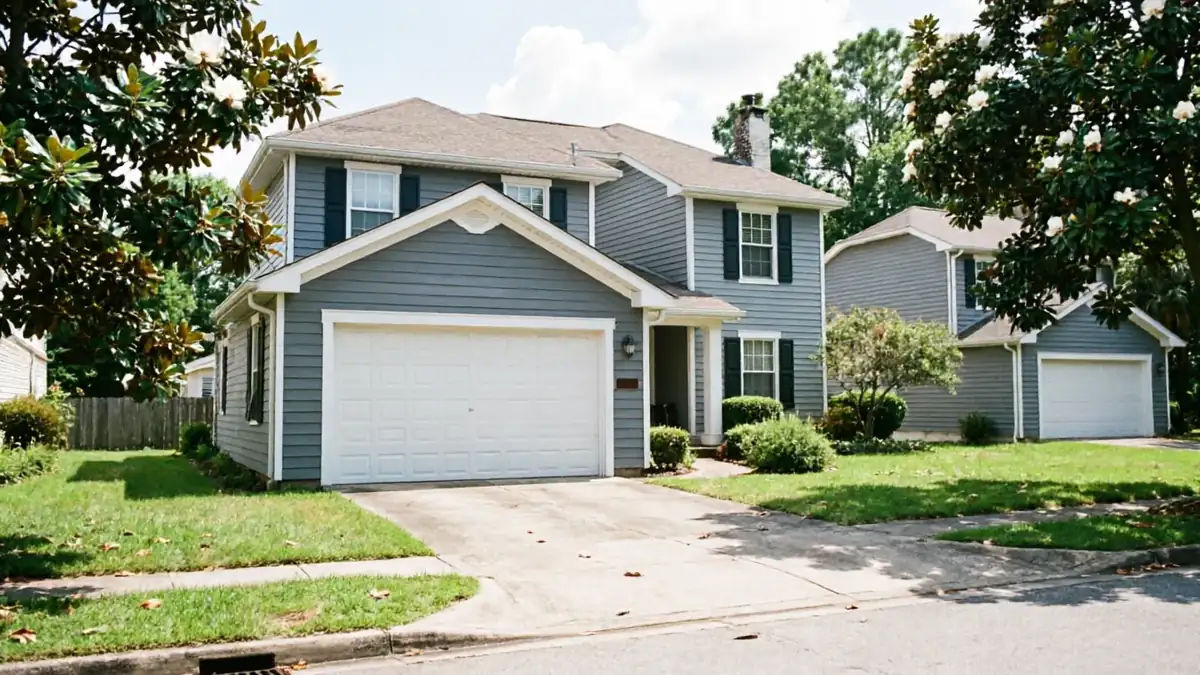
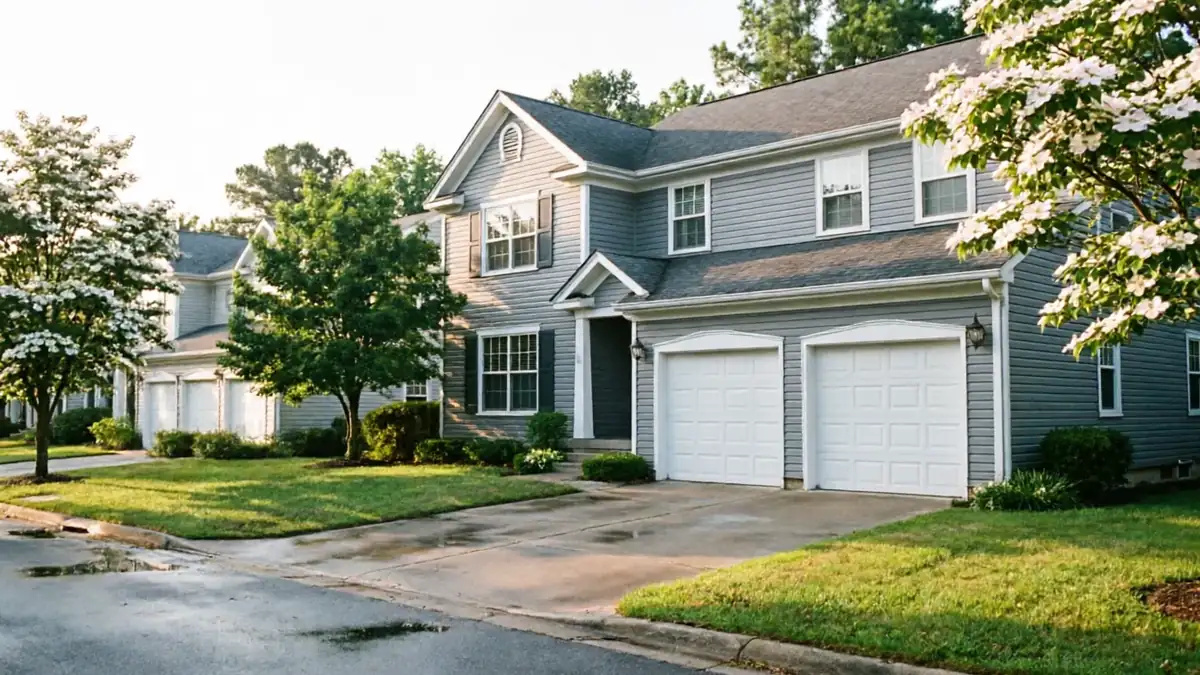
And it reads differently too. Where the broader territory's housing spans 1966 through 2004 across fourteen named areas, Tyrone sits late in that range, built mostly as the area filled in through the 1990s and into 2000. That means more consistent construction standards, more insulated steel doors as original equipment, and less of the oddball hardware mix you find in older, patched-together neighborhoods.
- 2,879 households
Median household income here runs around $133,773
Notably higher than the roughly $73,889 median across the wider service area. In practice that shows up as more owners opting for a full opener upgrade or a insulated door replacement instead of a patch repair, and fewer calls asking us to keep a twenty-five-year-old door limping along. The housing is newer, the budgets run higher, and the failures we see are the ordinary end-of-service-life kind rather than the structural problems that come with genuinely old stock.