The Problem
A garage door makes noise because something is rubbing, slipping, or losing tension that it used to hold without a sound
The trouble is most homeowners lump every noise into one category: "the door's getting old." That's not useful when you're trying to decide if it's a $15 roller or a spring about to let go on you.
A rhythmic thump once per rotation usually means a flat spot on a roller or a bent track section
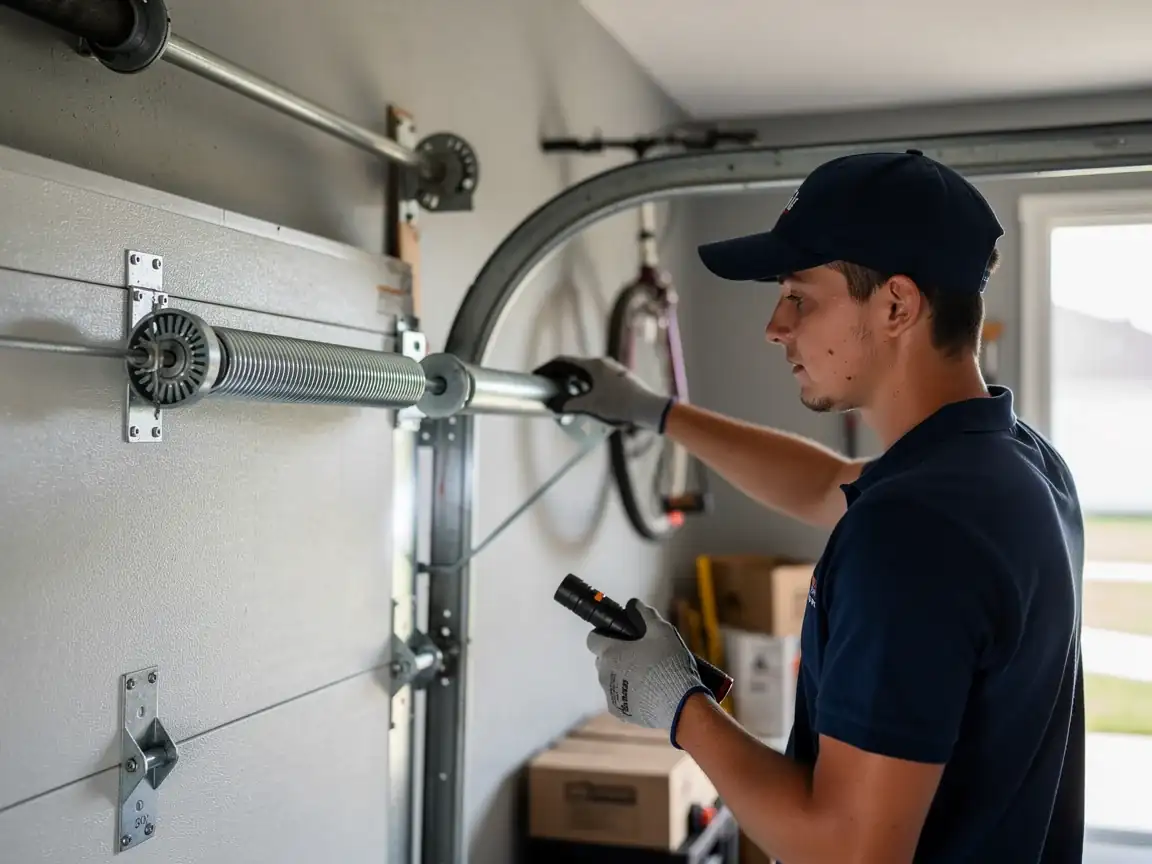
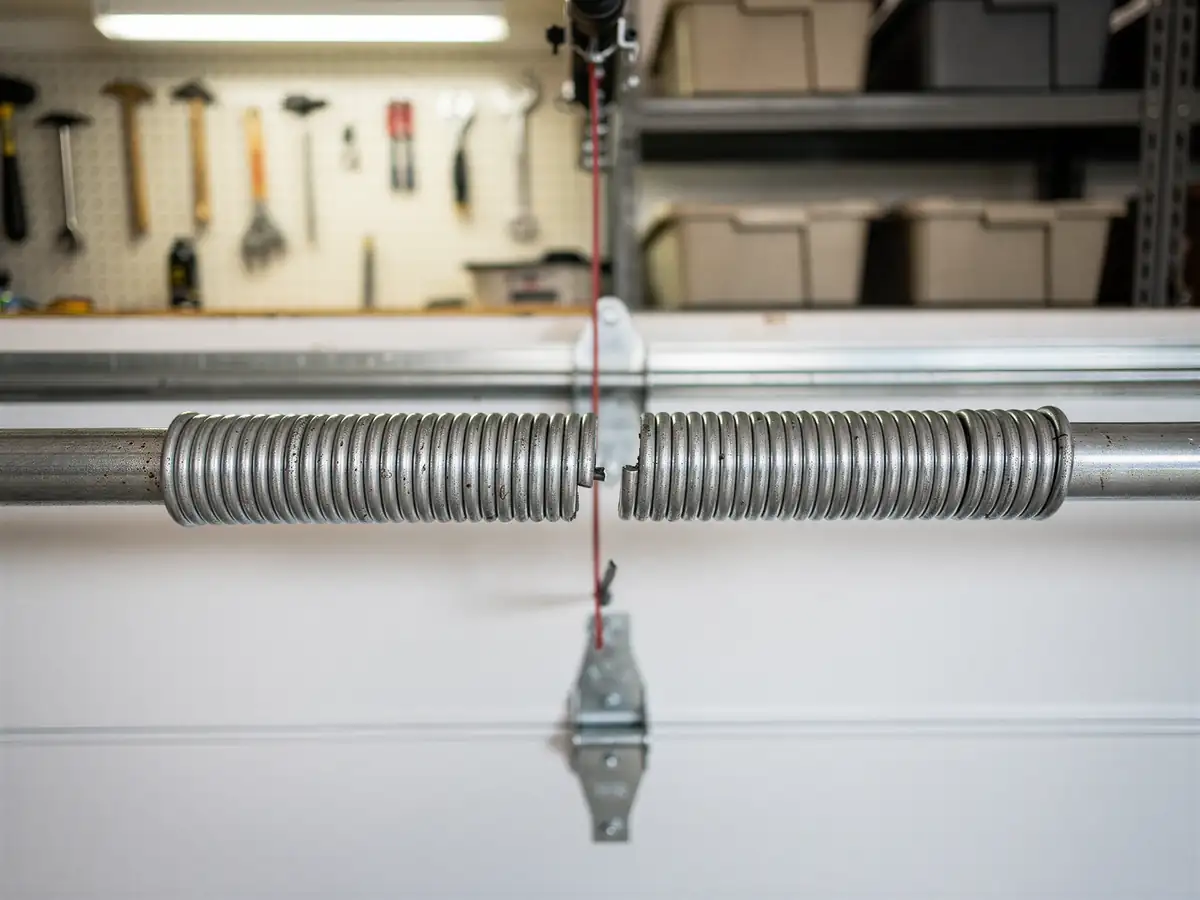
A sharp metallic bang, often loud enough to bring you into the garage at a dead run, is almost always a torsion spring snapping. A steady grinding whine that rises and falls with the door's travel points to a worn bearing plate or a dry torsion tube. A high-pitched squeal on the way up or down is friction, usually a roller that needs grease or a track that's gone slightly out of alignment.
None of these are cosmetic
A door that's noisy today is a door that's one more cycle closer to failing in a way that costs more than it would have cost to fix now. The noise is the warning. Ignoring it doesn't make the part last longer, it just moves the failure to a worse moment.
How Local Conditions Play In
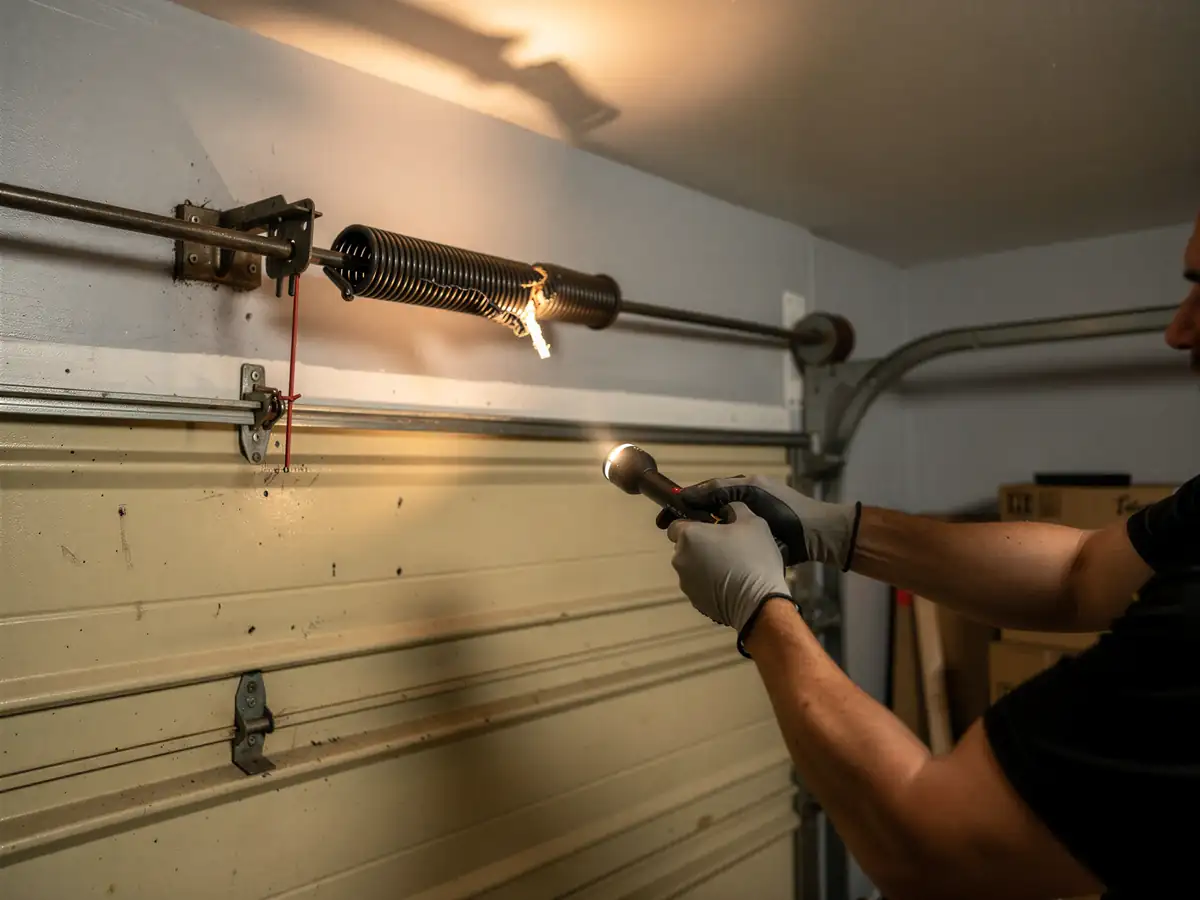
Most of the housing stock in and around Douglasville went up between 1966 and 2004, with the heaviest concentration from the 1980s and 90s. That matters because a huge share of the original torsion springs, drums, and openers installed during that build-out are now 20 to 40 years old and sitting right at or past the end of their rated cycle life. When a spring that old starts making noise, it's not a coincidence of timing, it's the hardware telling you its number is close.
Douglasville also sits in a cold-moderate climate band, which means the garage sees real temperature swings between humid summer afternoons and freezing winter nights. Steel contracts in the cold and expands in the heat, and a track or spring that was already a little loose tightens up or loosens further depending on the season. That's why a door can go quiet for months and then start grinding the first cold snap of the year, or squeal through a humid stretch when lubricant thins out and runs off the moving parts faster than it should.
A door built for this area's original climate and hardware specs from the 80s and 90s was never designed to run silent for 30-plus years without attention. The noise now is the stock catching up to its age.
When It Stops Being a DIY Job
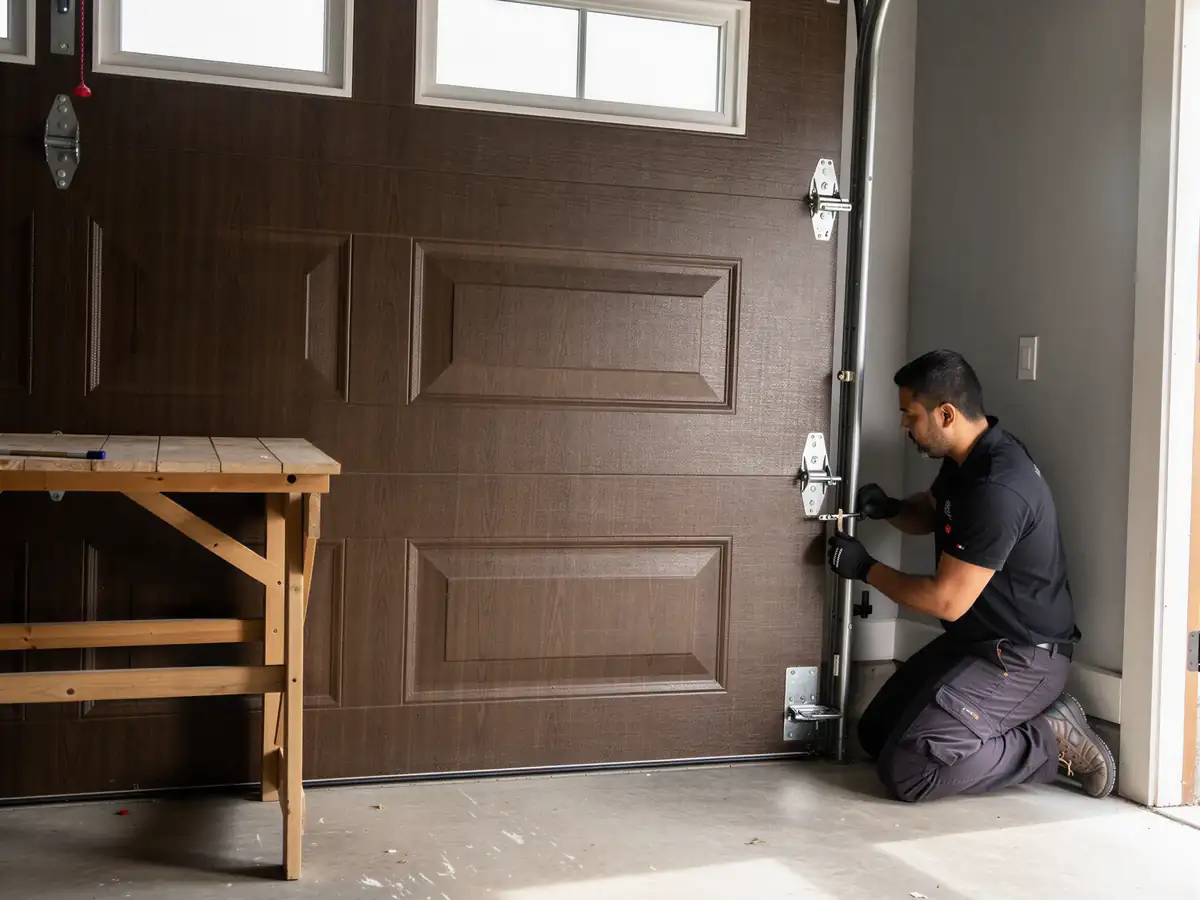
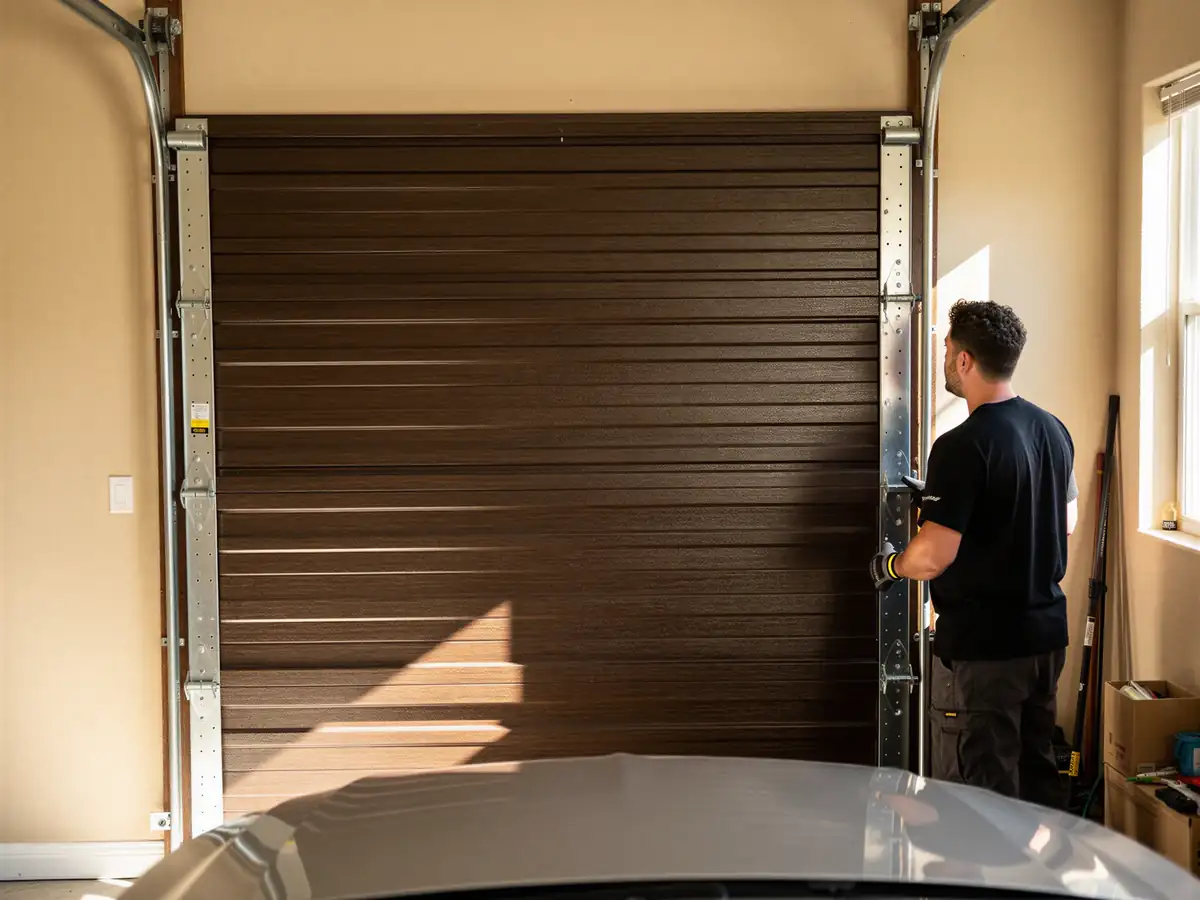
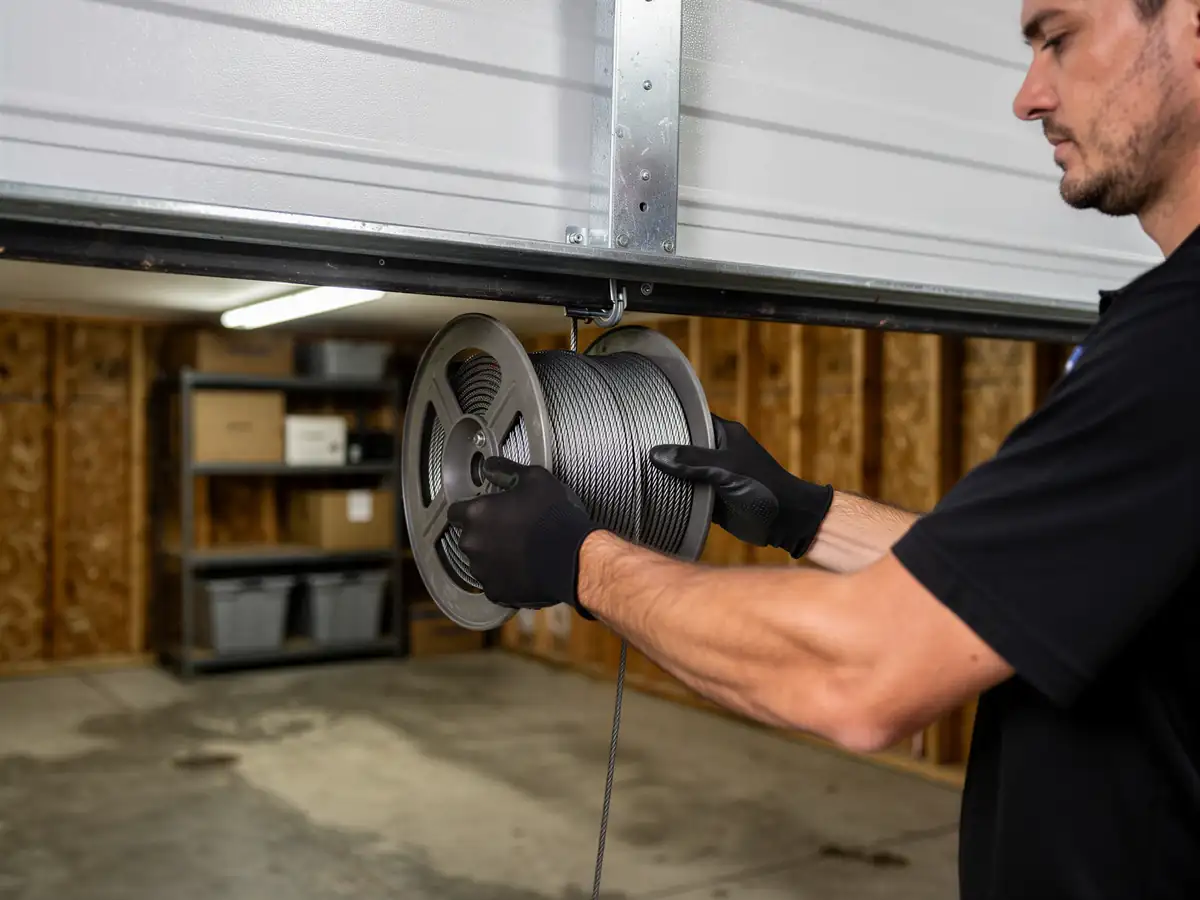
Grease a roller, tighten a loose bolt, clean a track rail, those are fair DIY moves and they fix a real share of the squeals. What you should not touch yourself is anything involving the torsion spring or the cables wound around the drums. A spring under tension that's already showing age, especially one original to a build from the 1966-2004 wave, can let go with enough force to break a hand or worse. That's not a scare tactic, it's why this is a two-person, right-tool job.
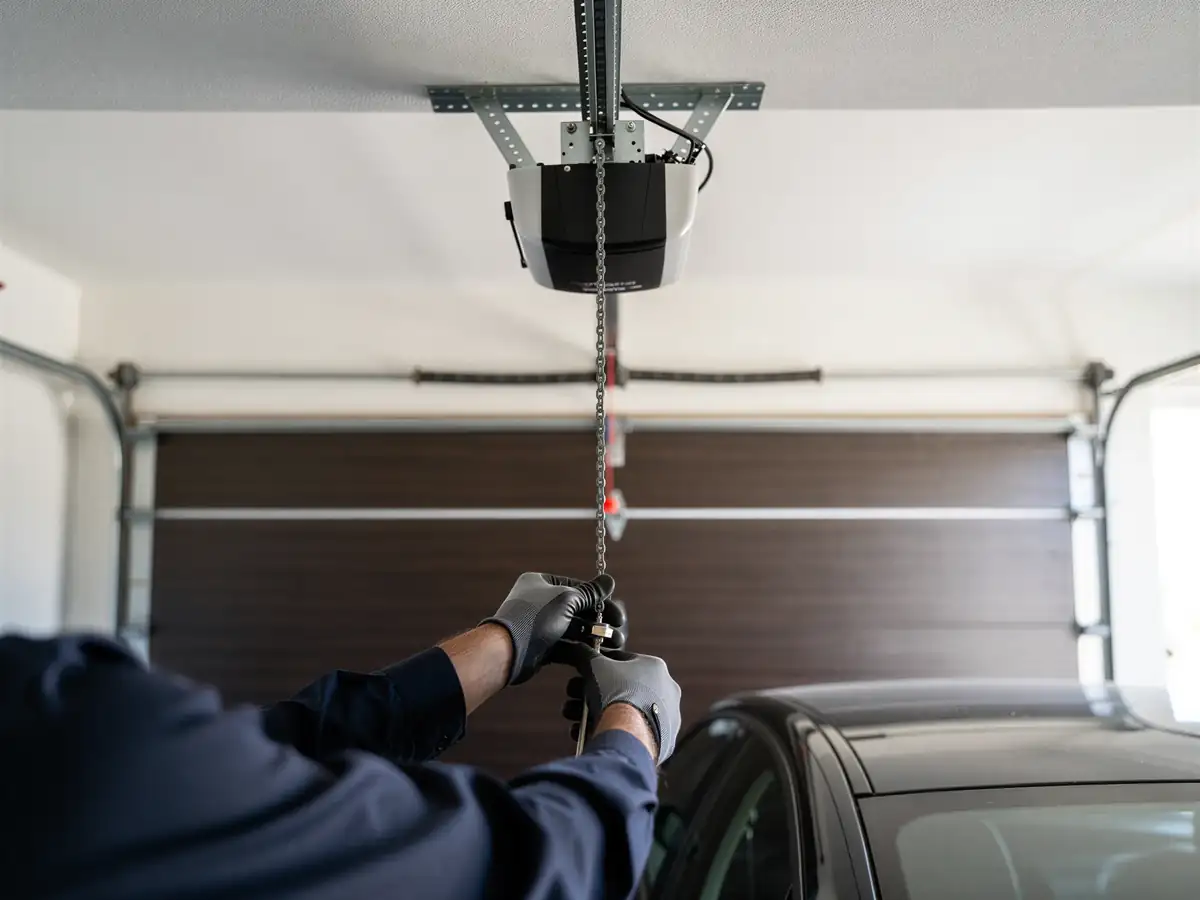
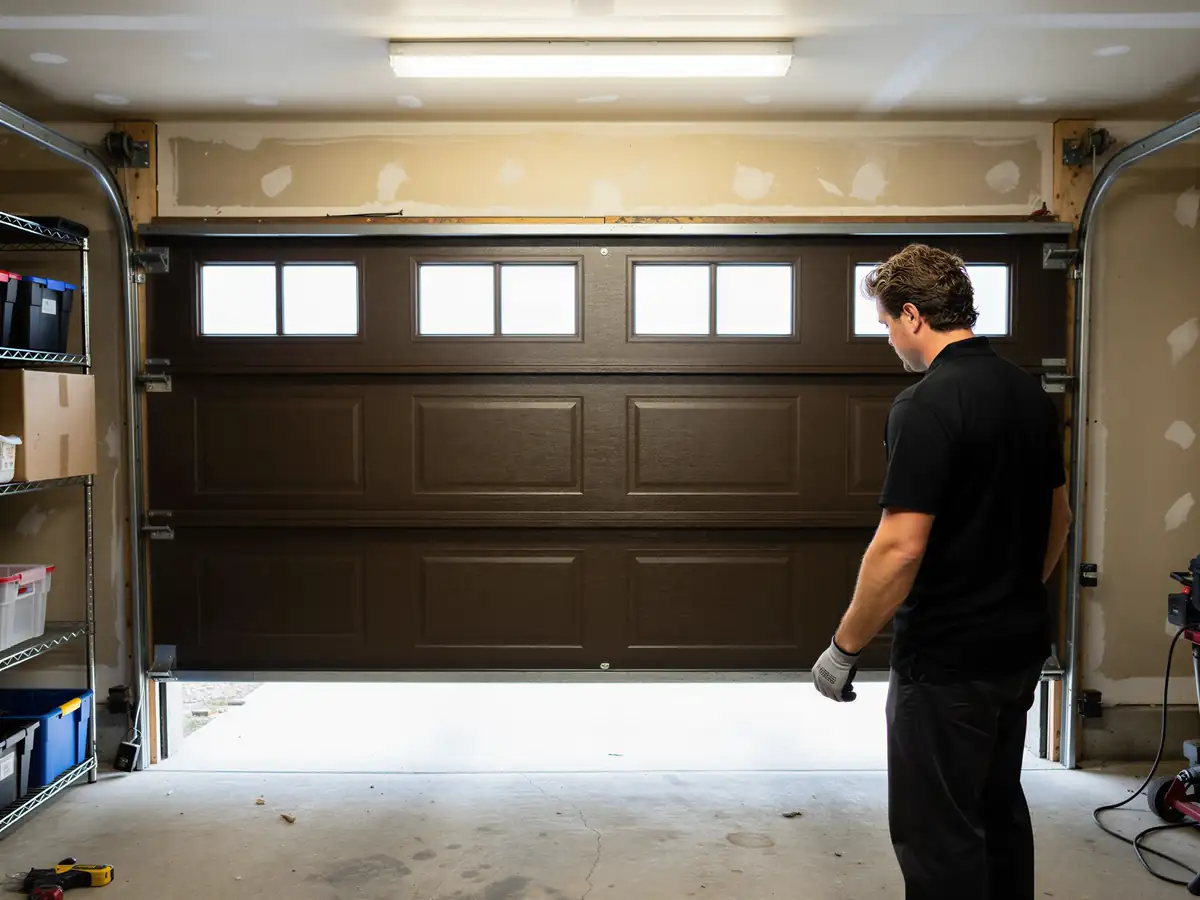
The line to watch for: if the noise is a bang rather than a grind or squeal, stop using the door and call. A bang means something has already broken, not that something is about to. Same goes for a door that's suddenly gotten heavy to lift by hand, or an opener that's straining and groaning on every cycle, since that's often the opener compensating for a spring that's no longer doing its job.
We'll say plainly: we don't recommend DIY spring replacement, full stop, regardless of how many videos make it look simple. It's one of the few repairs where the risk doesn't match the savings.
What You Pay
We're not going to put a number here that isn't accurate for your specific door
Because what you pay depends entirely on what's actually making the noise. A roller swap and a full spring-and-hardware replacement on a door original to the 1980s or 90s build-out are not in the same ballpark, and neither is a simple lube-and-adjust call versus one where we find a bent track that's been rubbing for months.
What we can tell you is that doors from that original housing era often need more than the one part that's making noise
Since springs, cables, and drums tend to age out together. That's worth knowing going in, so a quote for "just the noisy part" doesn't turn into a surprise once we're actually looking at the hardware.
With a median household income of $73,889 across the service area
We know full hardware replacement is a real budget decision for most homeowners here, not a casual add-on. We'll always tell you honestly when a single repair will hold versus when you're better off replacing the whole spring and cable setup at once, because patching an aging system piece by piece usually costs more over time than doing it right the first visit.
- $73,889 median household income