Why This Fails Locally
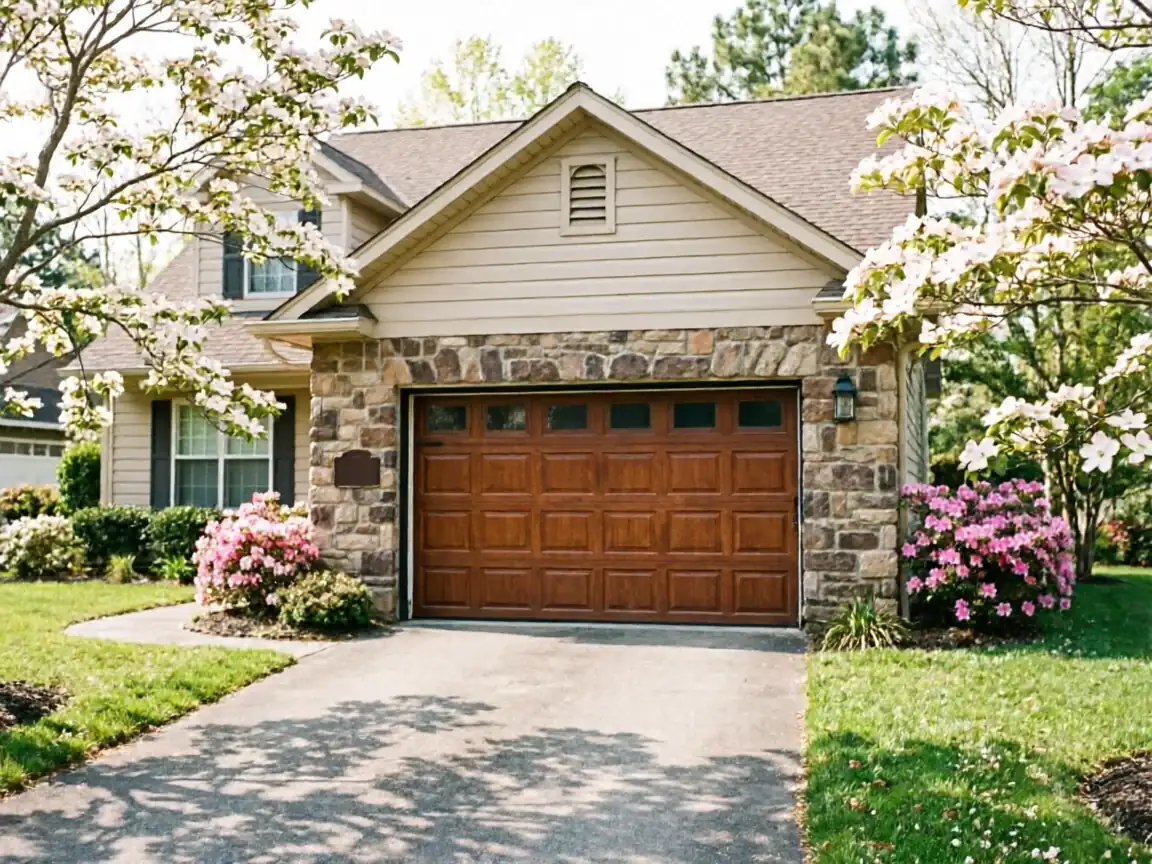
Most houses across Douglasville's named neighborhoods went up between 1966 and 2004
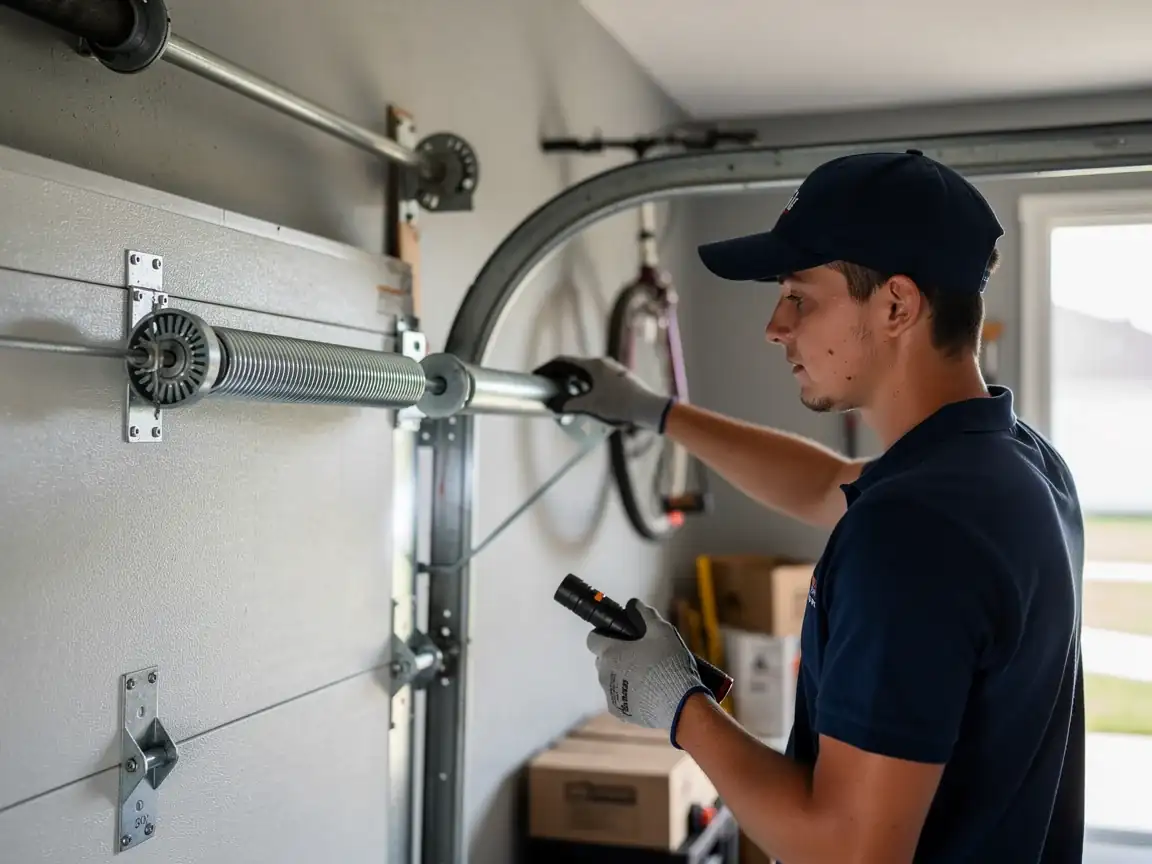
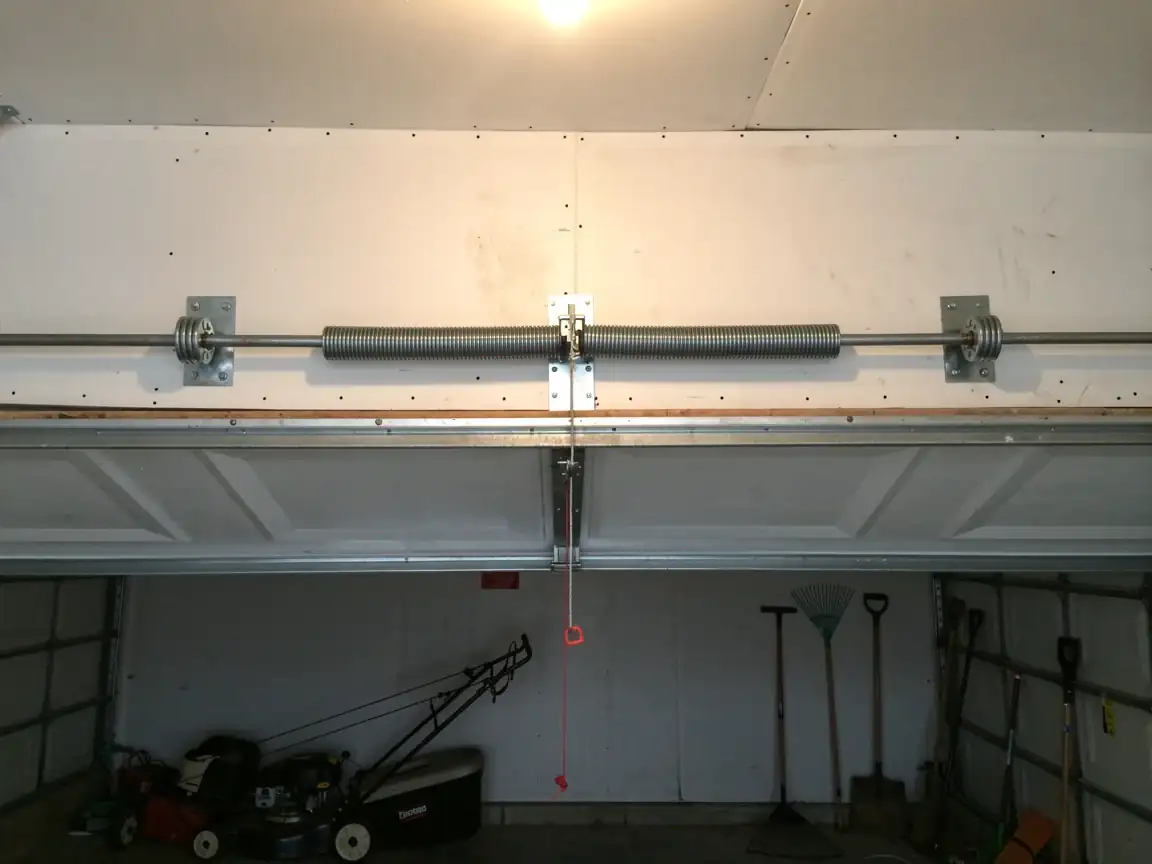
With the bulk clustered in the 1980s and 90s. That matters more than it sounds like it should. A garage door system has a handful of parts that wear on a schedule tied to age and cycle count, not to how the house looks: torsion springs, the opener's gears and belt or chain, rollers, and the cable drums. A house built in 1994 is sitting right at the point where original springs are past their rated cycle life and original openers are deep into the window where capacitors and gear sets fail.
Douglasville also sits in a cold-moderate climate band
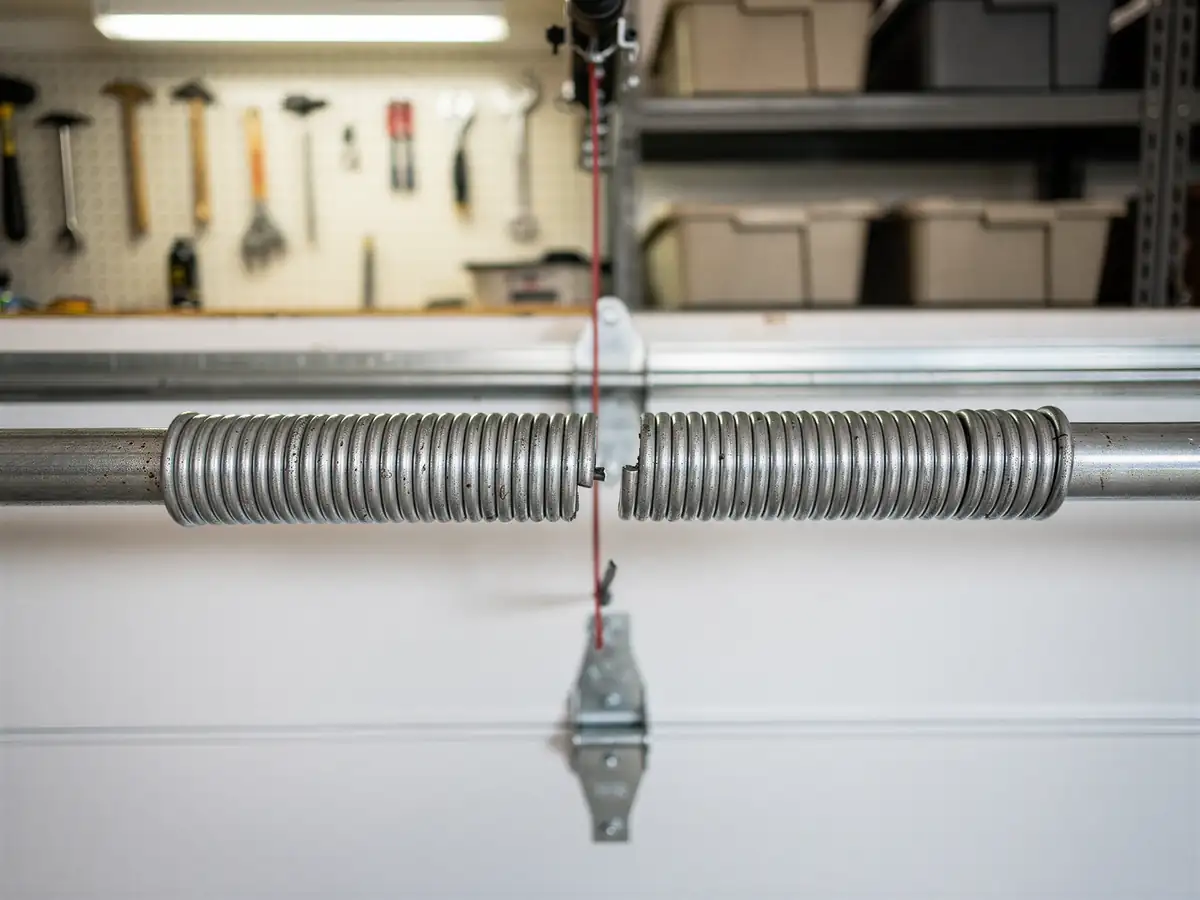
That's not dramatic weather, but it's enough swing between winter mornings and summer afternoons to stress steel coils and dry out factory lubricant faster than a climate with less temperature range. Combine a 25-to-35-year-old spring with that kind of seasonal flex and you get the slow fatigue that ends in a snapped coil, usually on a cold morning when the metal is stiffest. None of this is damage from a storm or a bad install. It's just age plus physics, and it shows up on a predictable timeline across this part of Georgia.
What You Are Seeing
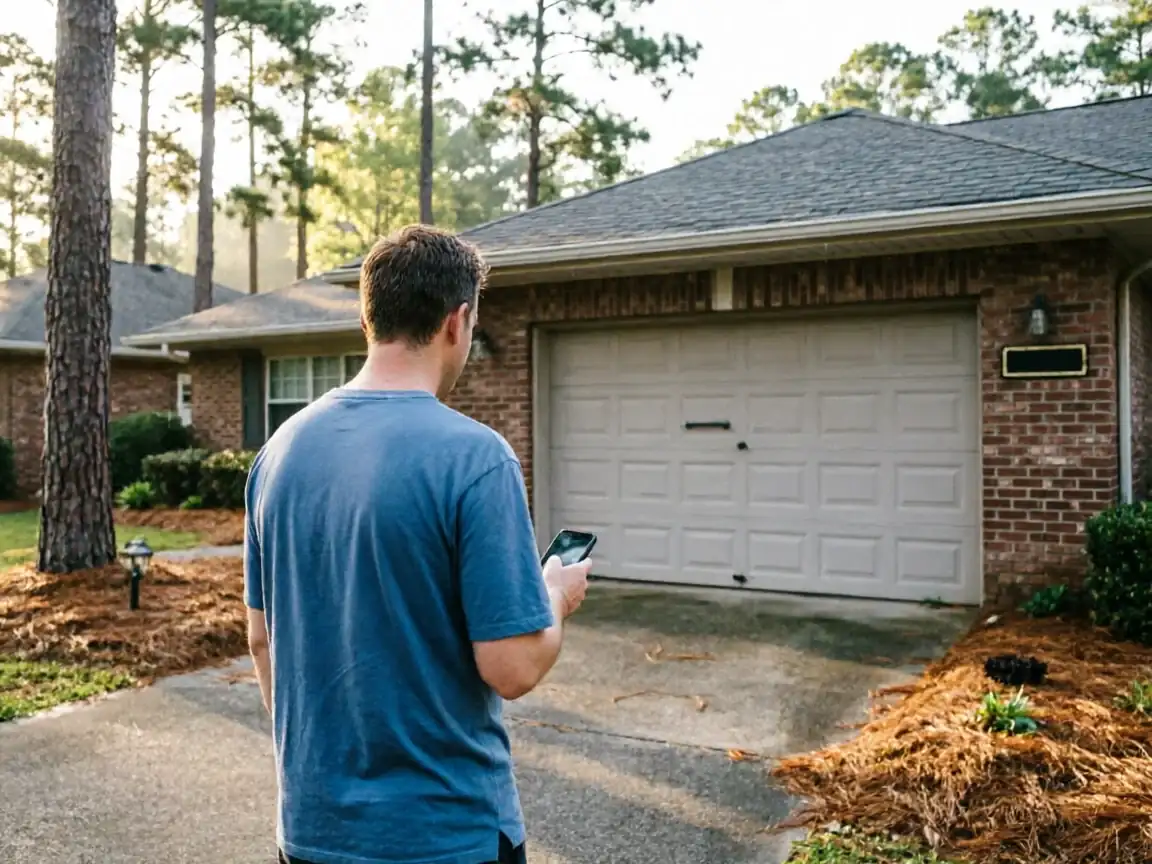
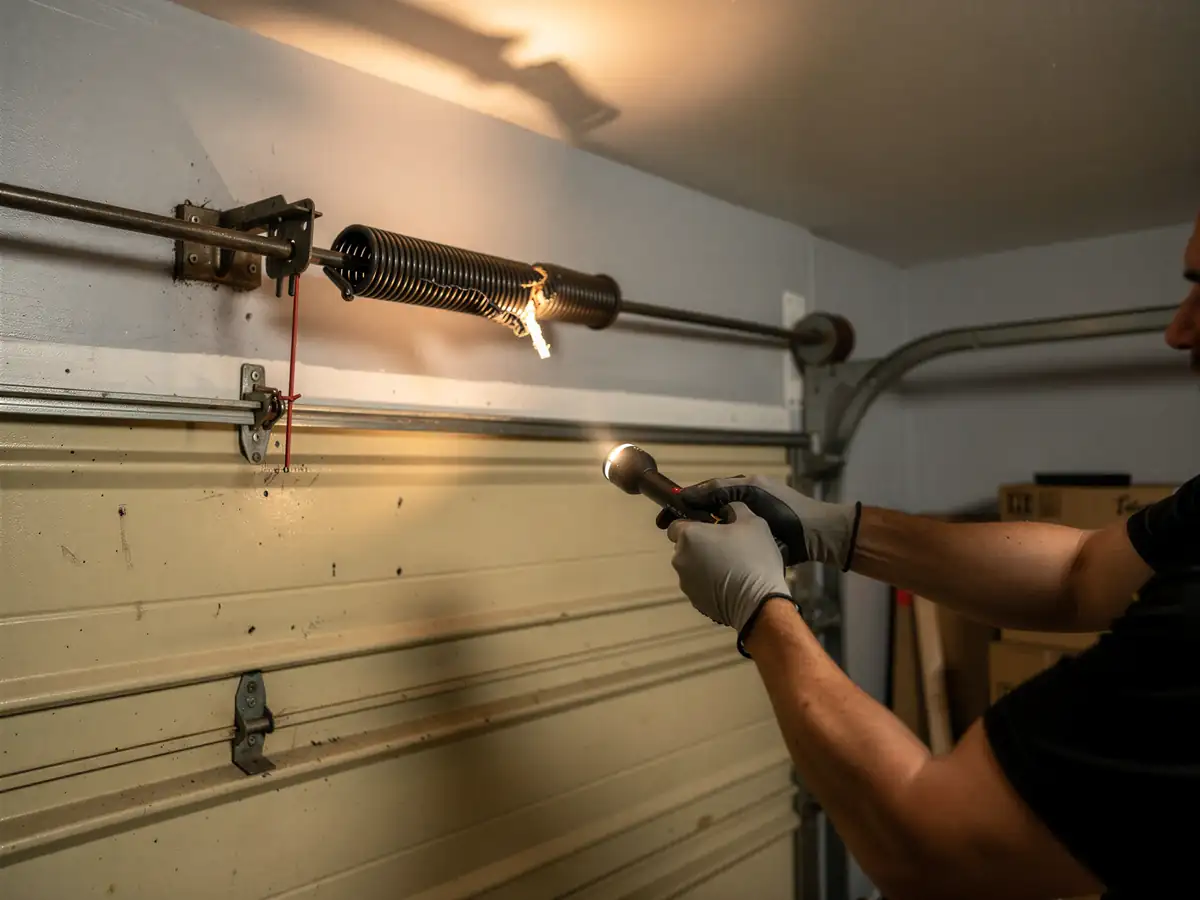
The door is heavier to lift by hand than it used to be, or it won't stay up without you holding it. That's a spring losing tension, not an opener problem, even though people usually blame the opener first. You hear a loud bang from the garage and the door won't move afterward - that's almost always a torsion spring letting go, and on a double door it can snap the drum cable with it.
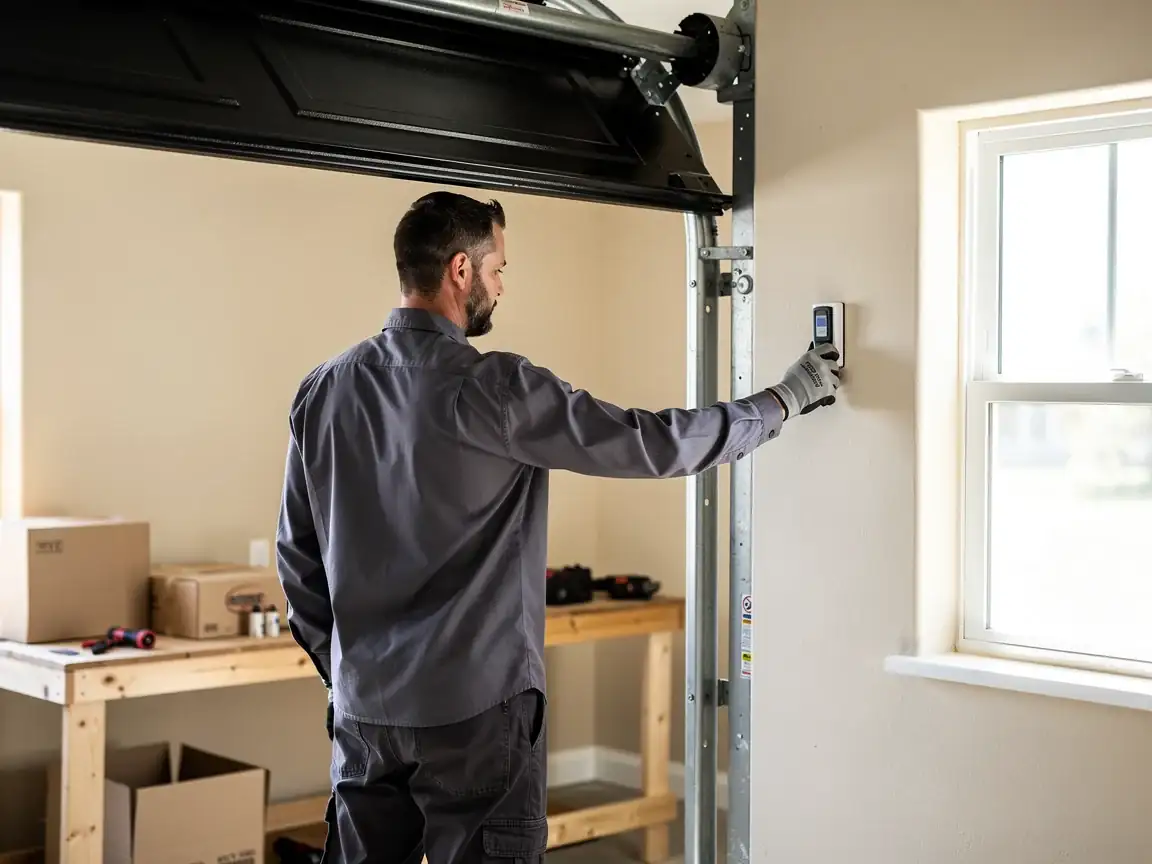
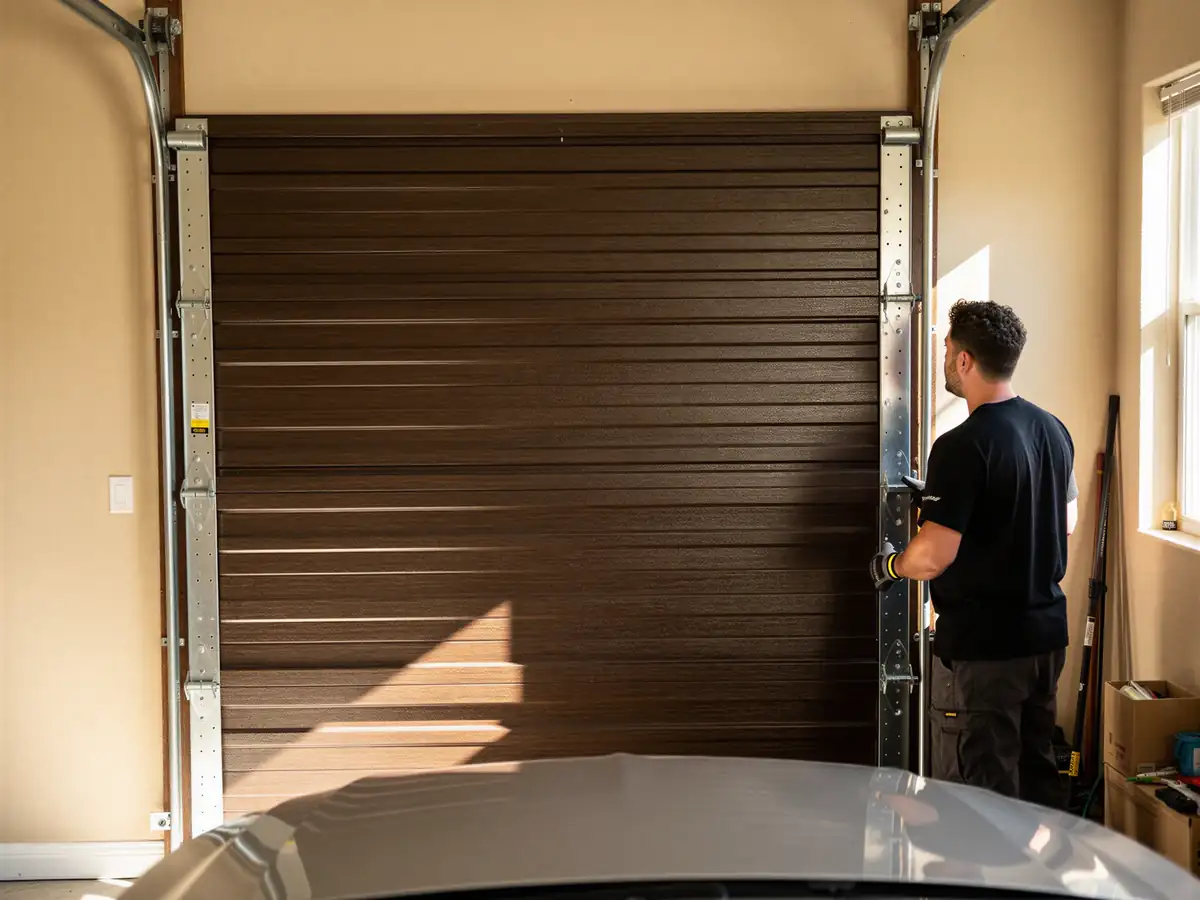
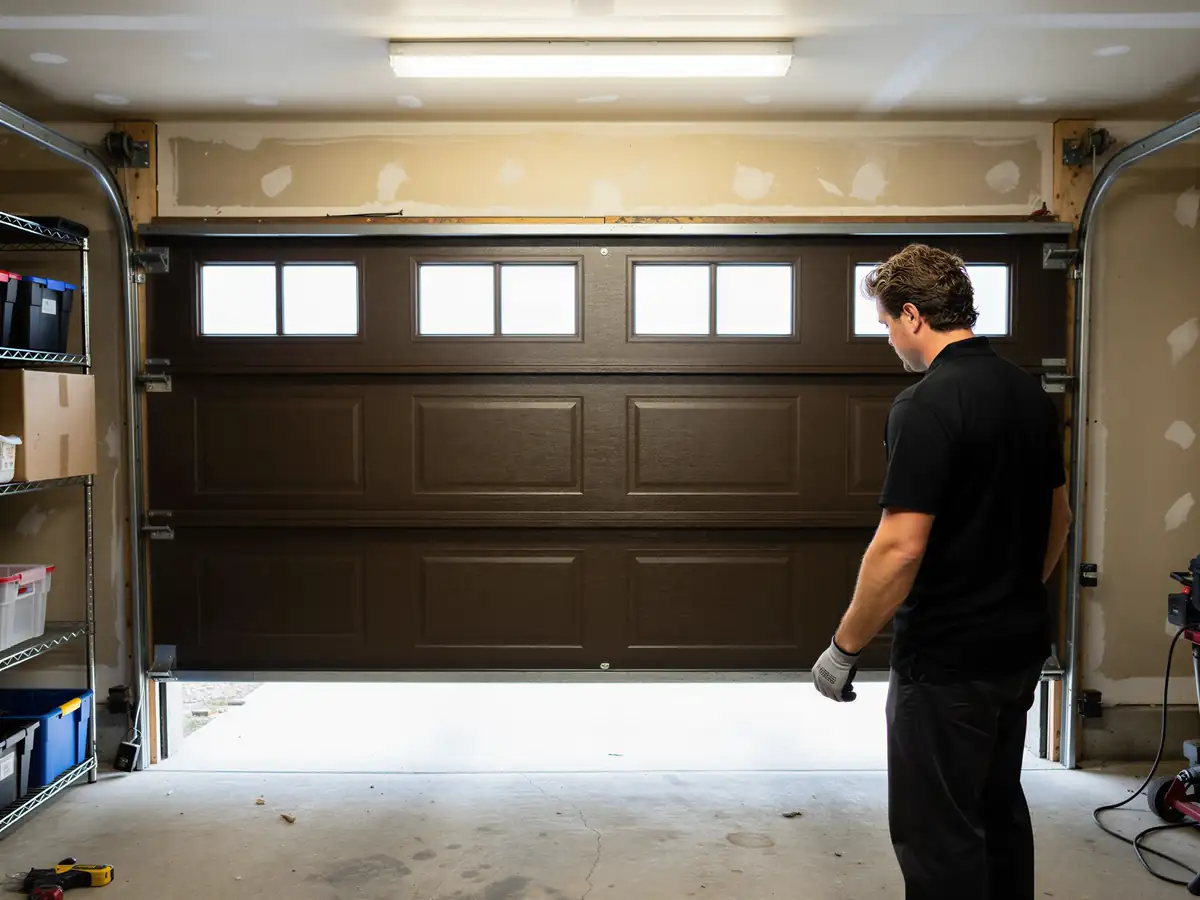
Other patterns: the opener runs but the door barely creeps, or it reverses right after it starts closing. That's usually a worn gear inside the opener head, or a sensor alignment that's drifted after years of the door frame settling slightly, which happens in houses built in the 80s and 90s as foundations cure and shift over decades. A door that shudders or jumps on one side usually means a roller has worn out of round or a track has pulled slightly away from the frame. None of these need a full teardown to diagnose, but they do need someone to actually watch the door cycle before guessing at a fix.
Can You Do This Yourself
Some of this is fine to handle yourself: tightening loose hardware, lubricating hinges and rollers, clearing the sensor eyes, checking that the track bolts haven't backed out. Those are twenty-minute jobs with a socket wrench.
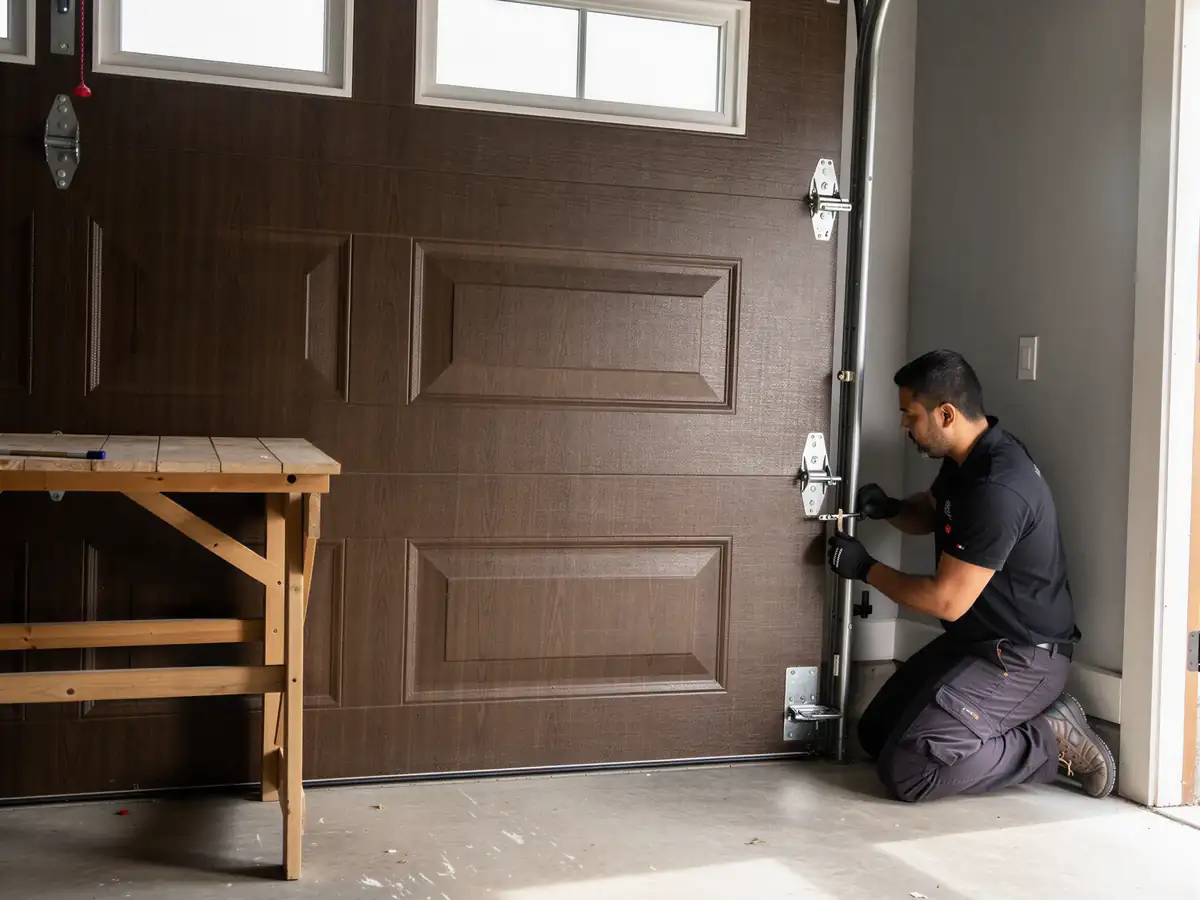
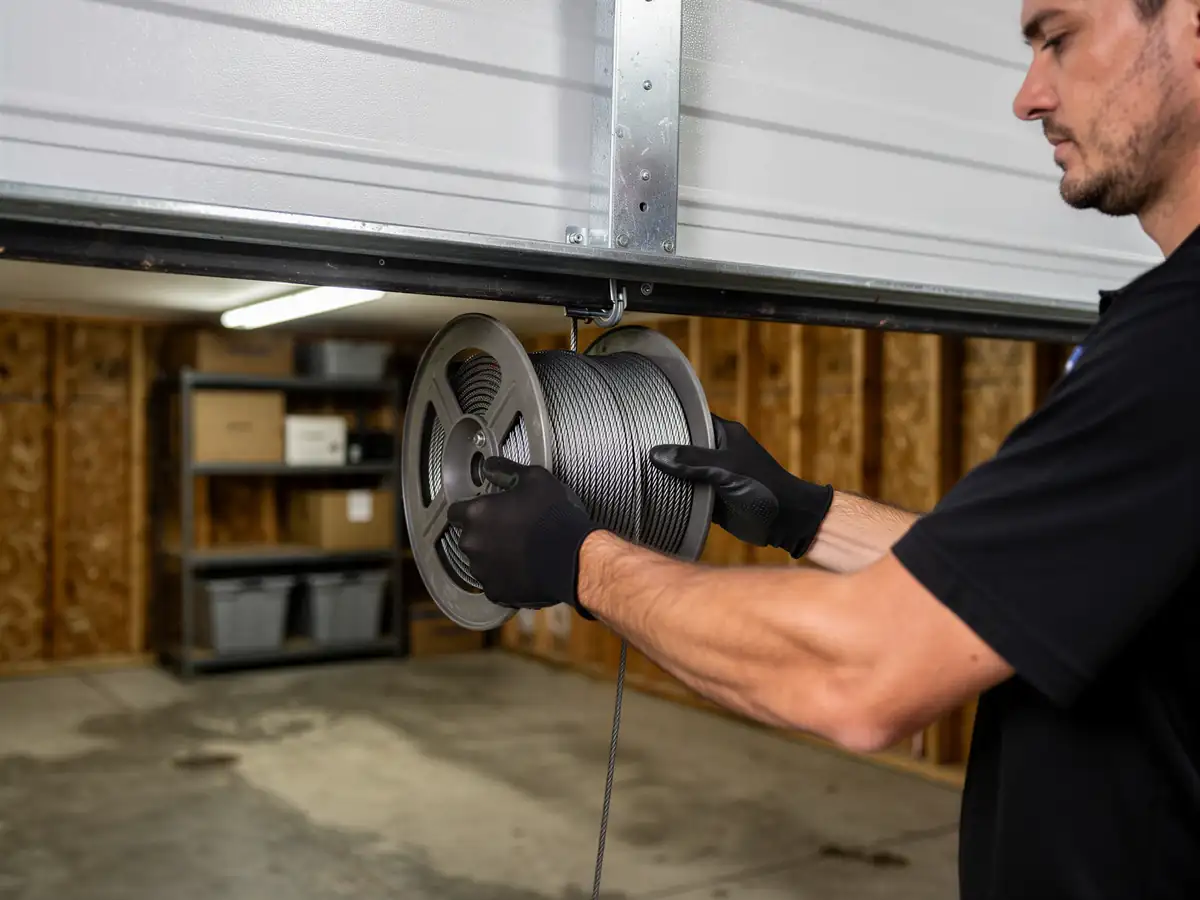
Torsion springs are not in that category, and we won't pretend otherwise. A wound torsion spring holds enough stored force to break a hand or worse if it releases wrong, and the winding bars and gauge needed to do it safely aren't something most homeowners own or have used before. Cable work on the drums has the same problem. If your door is a double door on two springs, the risk goes up because an uneven release can twist the shaft.
The honest limit here: if the fix involves the spring, the cable, or anything under tension, that's a call-a-pro job, not a weekend project. Everything else - hinges, rollers, weatherstripping, sensor alignment - is reasonable to try yourself first.
What the Repair Takes
A spring replacement on a single door usually means matching the wire gauge and wind direction to the original
Since a mismatched spring either won't lift the door properly or wears out again fast. On houses from the 1980s and 90s stock common across Douglasville, that often means swapping both springs even if only one failed, because the other one is the same age and close behind it.
Opener work depends on what's actually wrong
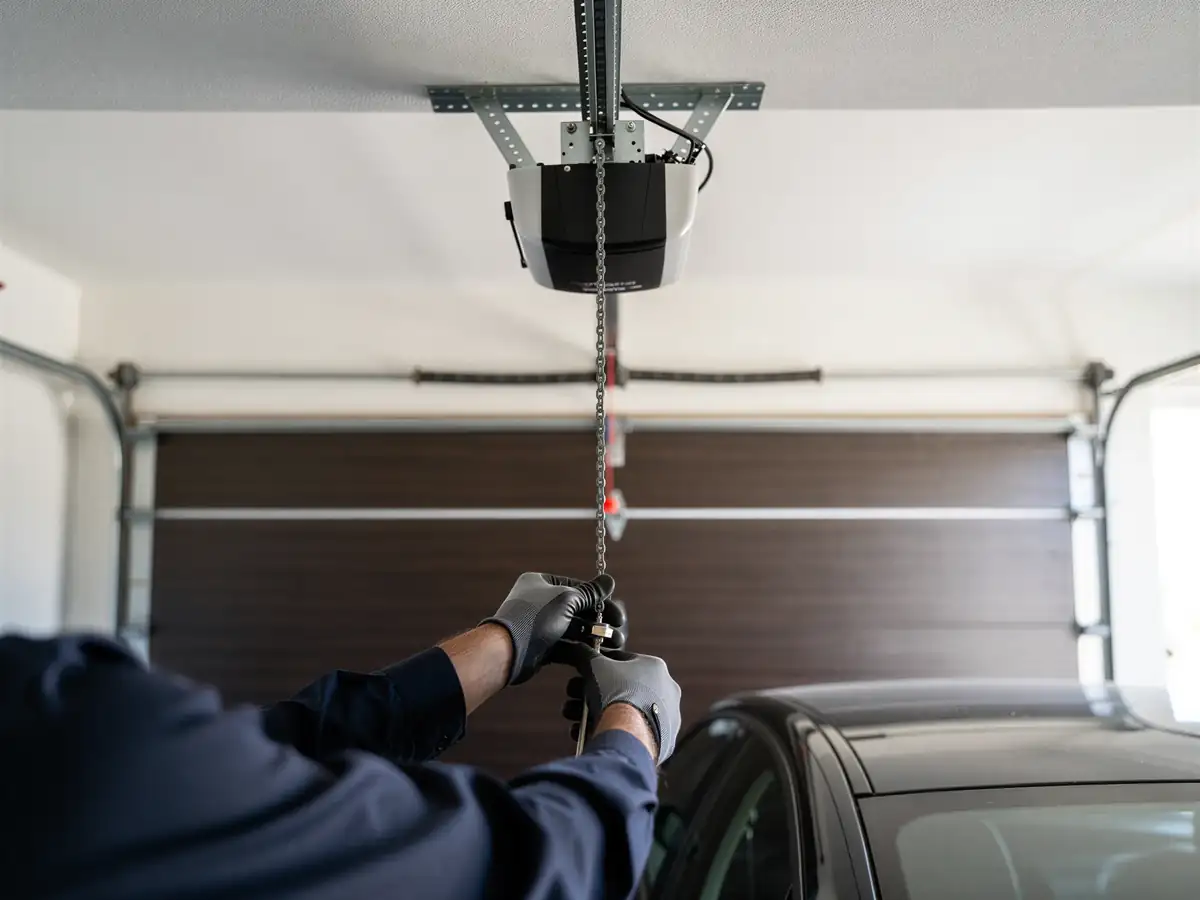
A dead capacitor or a worn gear set can sometimes be repaired in place; a motor that's failed outright usually means a new unit, especially once you're past the point where the manufacturer still stocks parts for a model that old. Roller and track work is more straightforward - swap worn rollers, square up the track, check the cable tension while it's open.
We don't carry parts for every opener model ever sold
And on some units from that era the manufacturer has stopped making the board entirely. When that's the case, replacement is the honest answer, not a patched-together fix that fails again in six months.