What You Pay
We don't post a flat number for Temple because the job depends on what's wrong and what parts the door takes
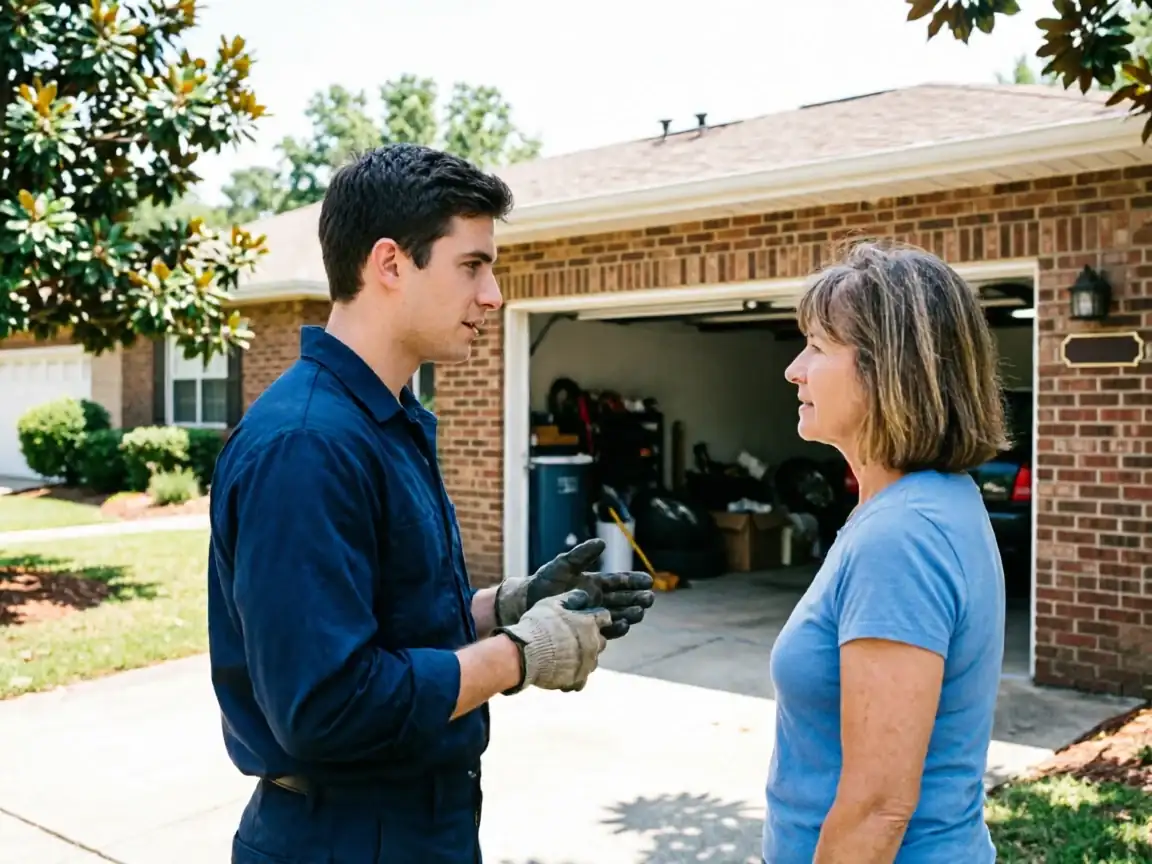
But the pattern here is consistent: most of the service calls we get from this side of the county are tune-ups, not repairs - lubrication, hardware tightening, and opener sensor adjustment on doors that are 18 to 23 years old. That's cheaper than a spring swap or a panel replacement, and it's the whole point of catching things early. We travel from Douglasville, about 19 miles out, so we bundle the drive into a full maintenance visit rather than a quick fix - there's no walk-in branch here, just the truck and the appointment.
- 23 years
- 19 miles
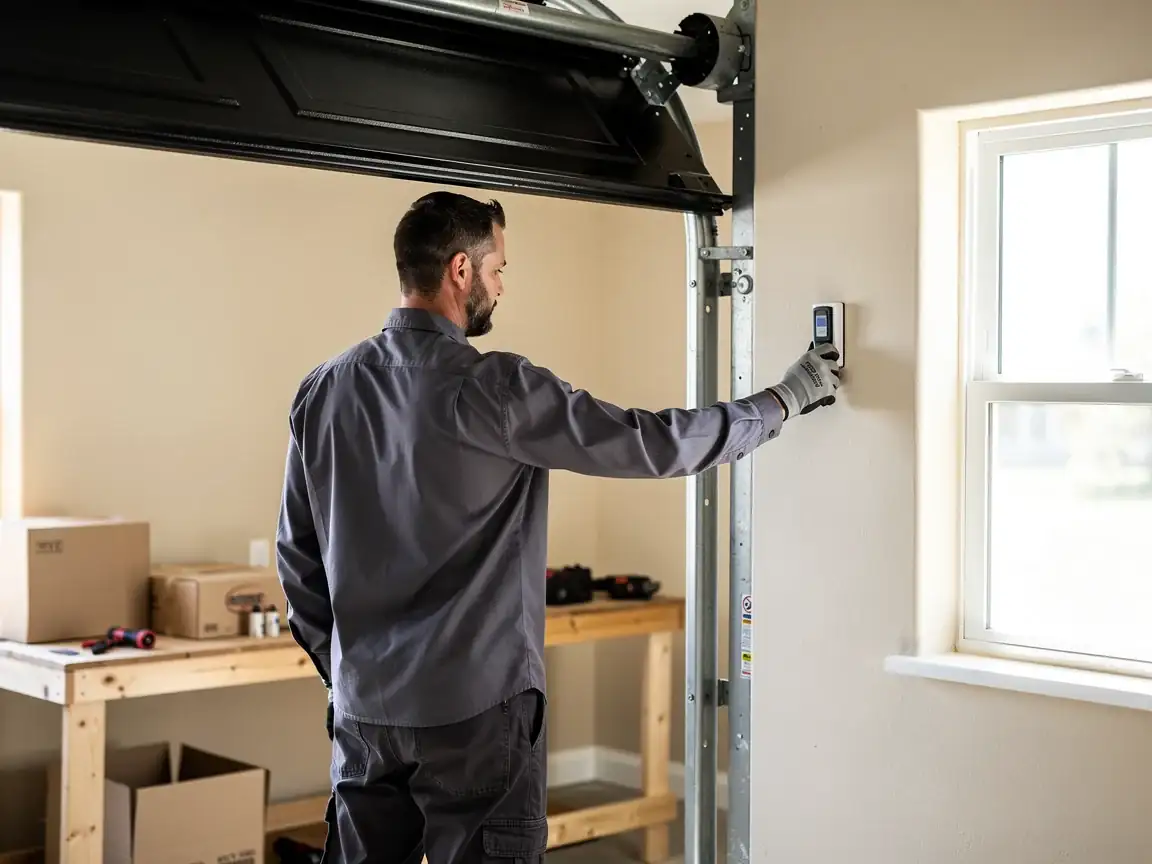
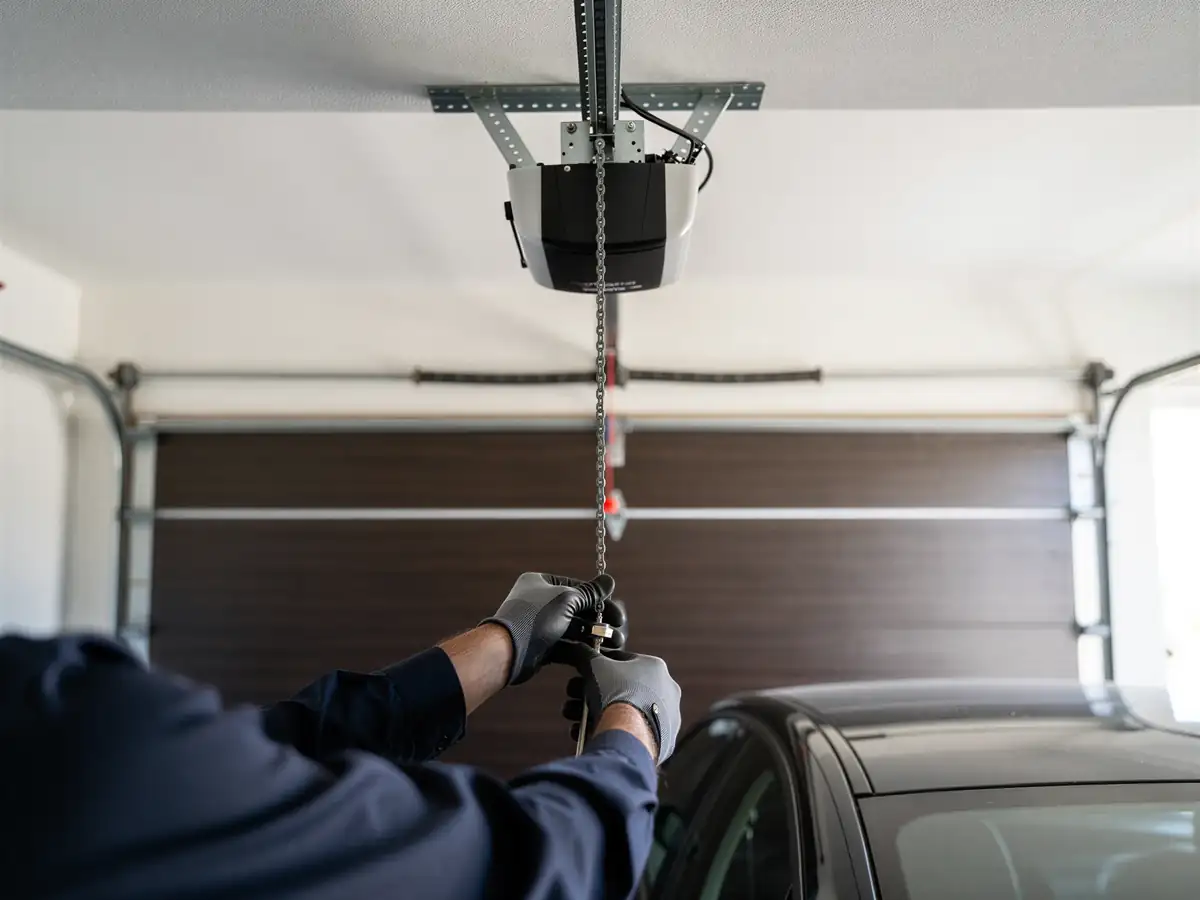
If your opener's circuit board is original to the house, parts for that specific board may already be discontinued
And we'll tell you that up front instead of hunting for a part that doesn't exist anymore. Replacement opener versus repair is a real conversation at this age, not an upsell.
What You Are Seeing
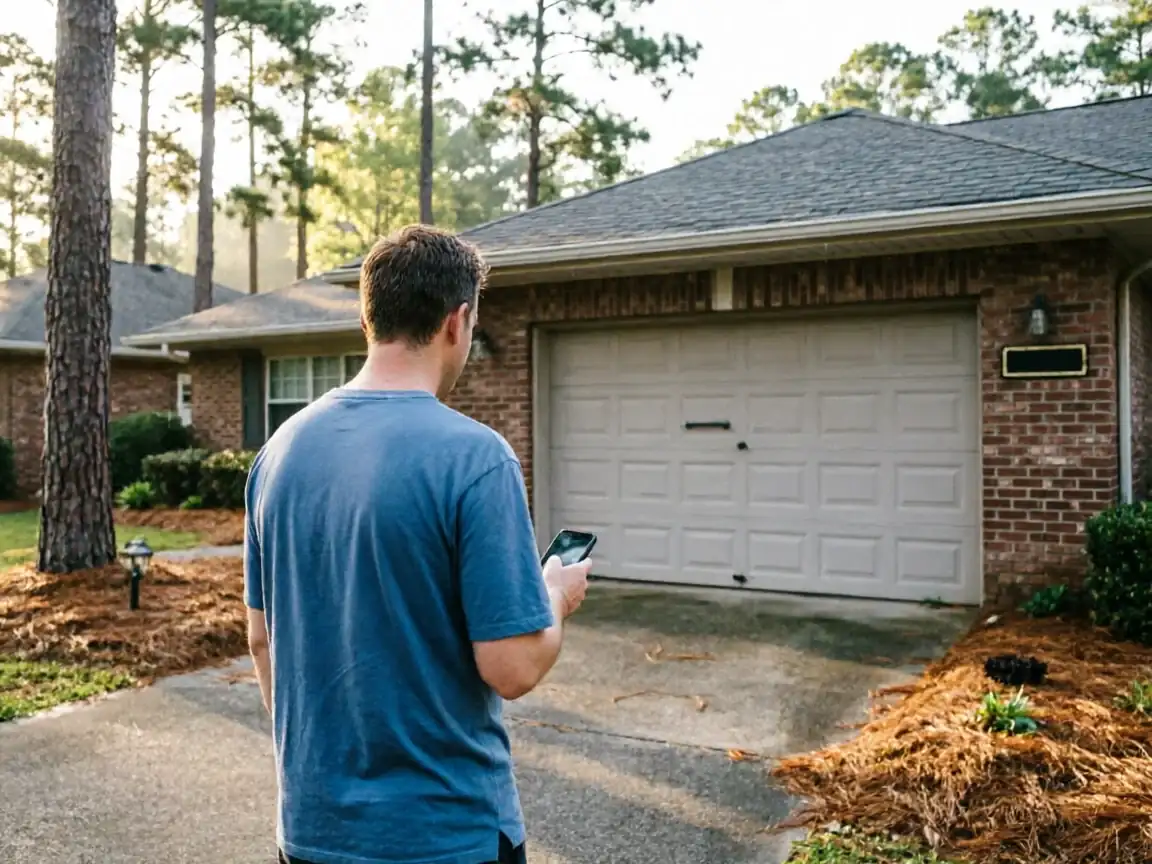
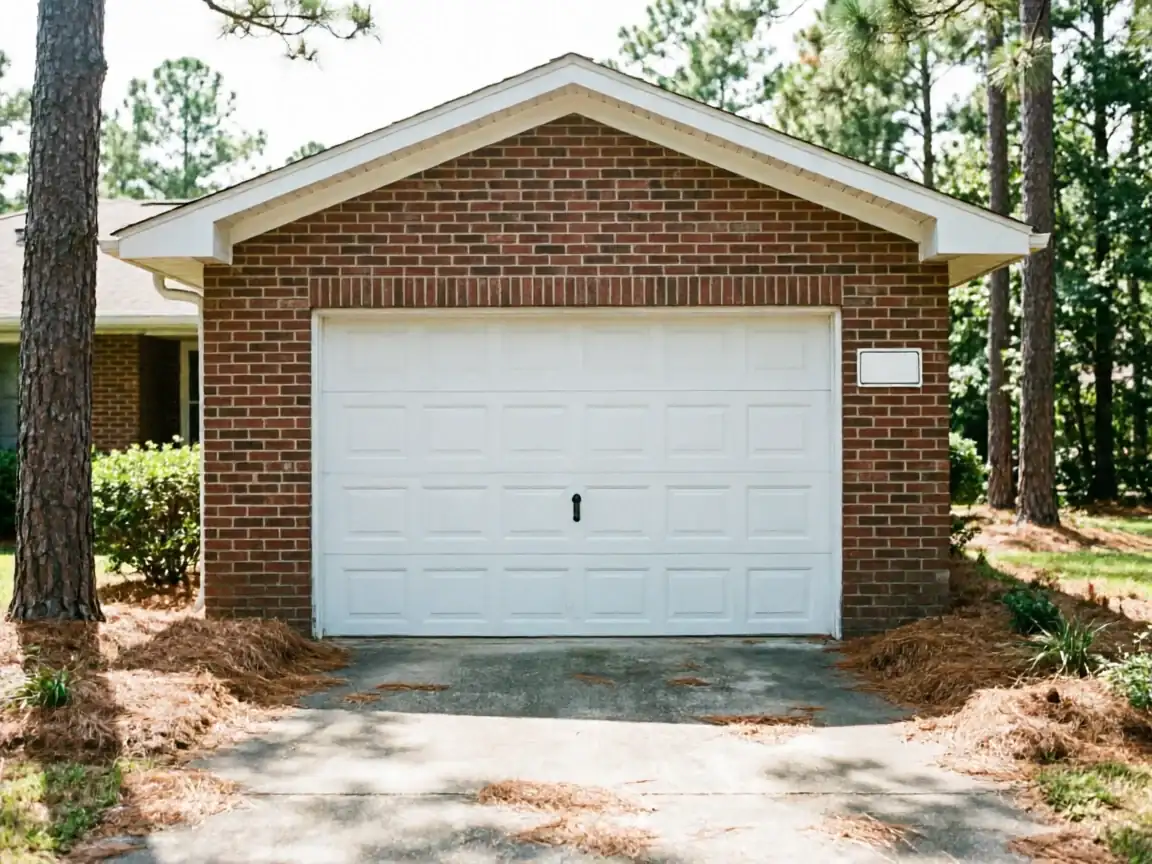
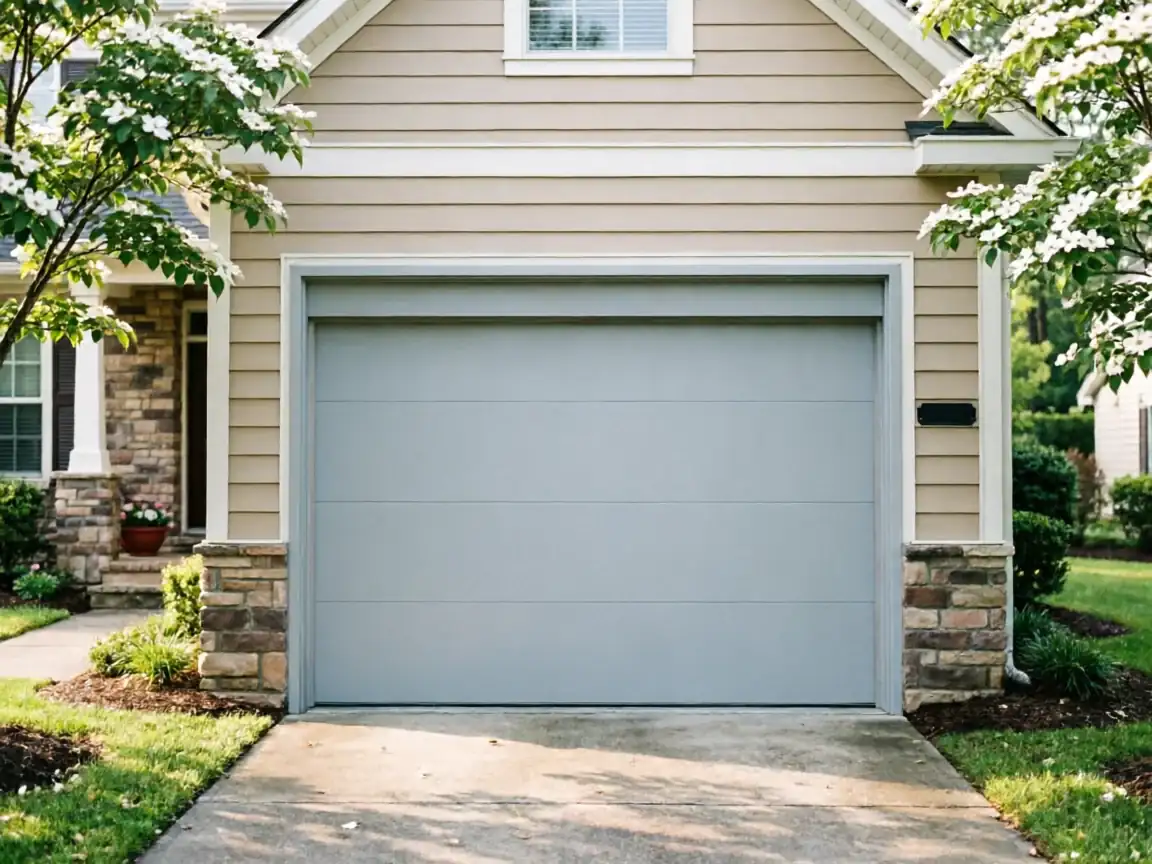
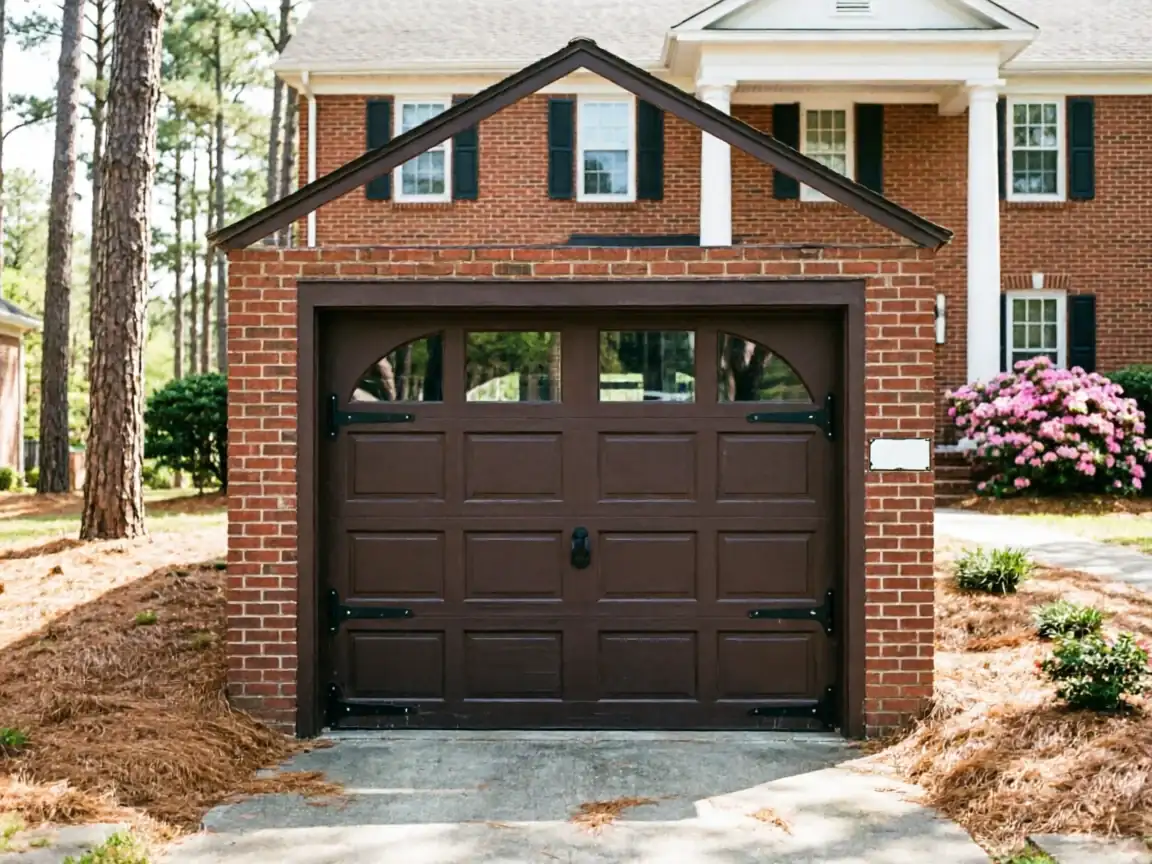
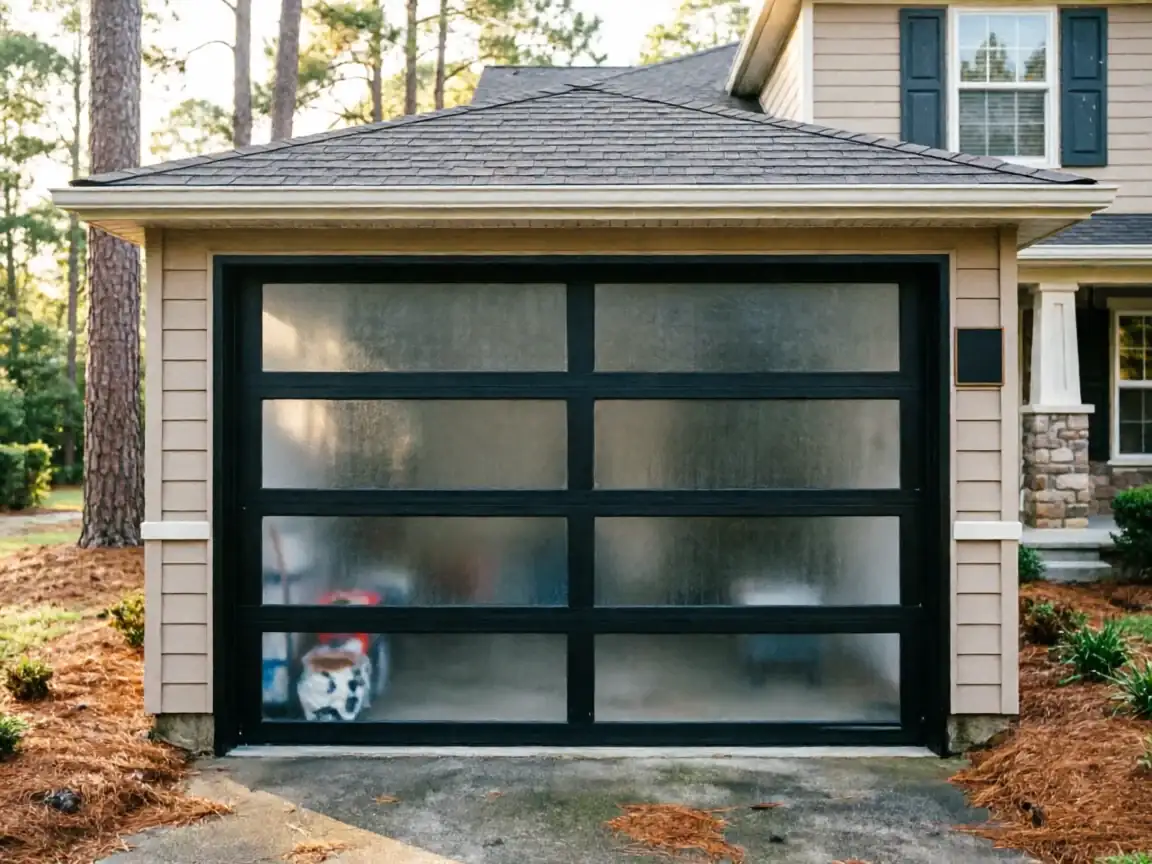
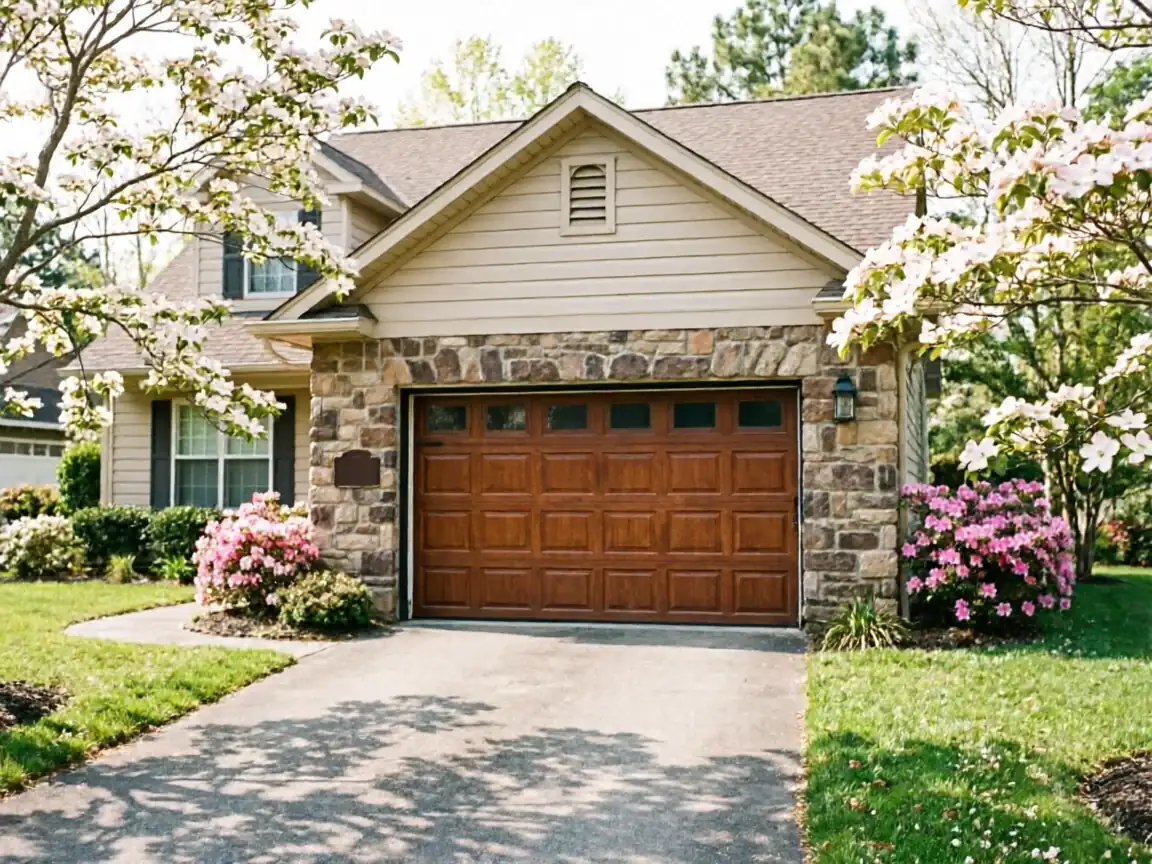
Temple's housing stock skews newer than a lot of what we service - most of these homes went up right around 2002, which puts the garage door hardware squarely in its early-2000s builder-grade window. That means steel doors with factory lubrication that was never reapplied, nylon rollers that have worn their bores oval, and openers with the plastic drive gear that was standard before manufacturers switched to metal. None of that is a defect. It's just what 20-plus years without service looks like.
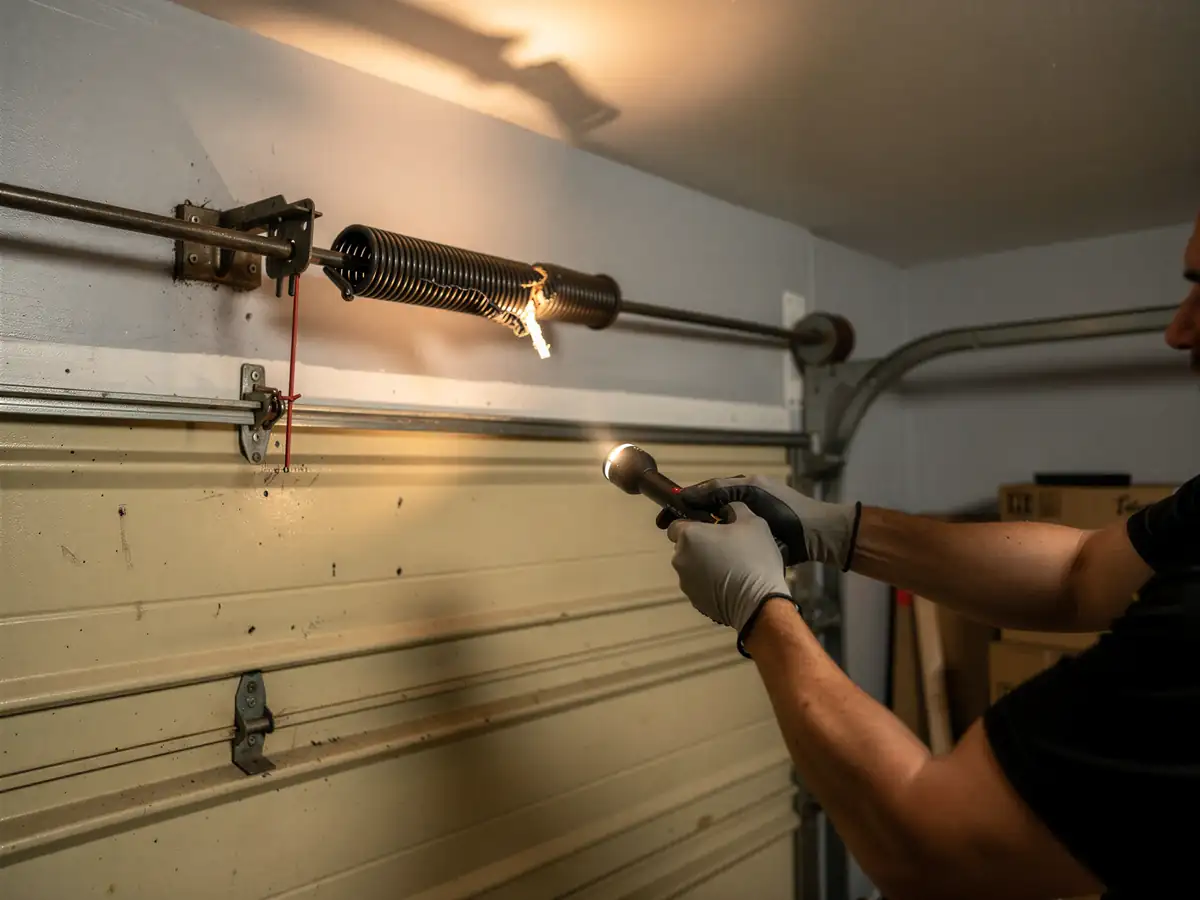
The symptom owners usually notice first is noise - a grinding or slapping sound on the way up - followed by the door hesitating partway through its travel. Both point to the same root cause: dry rollers and a track that's drifted slightly out of alignment, which is normal settling in a house this age, not damage.
Why This Fails Locally
A door built in 2002 was engineered for a service interval its owner probably never scheduled. Nobody hands you a maintenance card with a new garage door, so the first time most Temple homeowners think about the opener is when it stops working on a cold morning. Georgia's winters aren't severe, but cold does stiffen grease and tighten steel cable just enough to turn a marginal roller into a seized one.
Household incomes in this part of the service area run higher than the regional average, and what we see with that is more owners who bought the house new and have genuinely never had the door serviced - there's no reason to call a repair company when nothing's visibly broken. That's exactly the gap maintenance is for: catching the roller before it seizes, not after.
Can You Do This Yourself
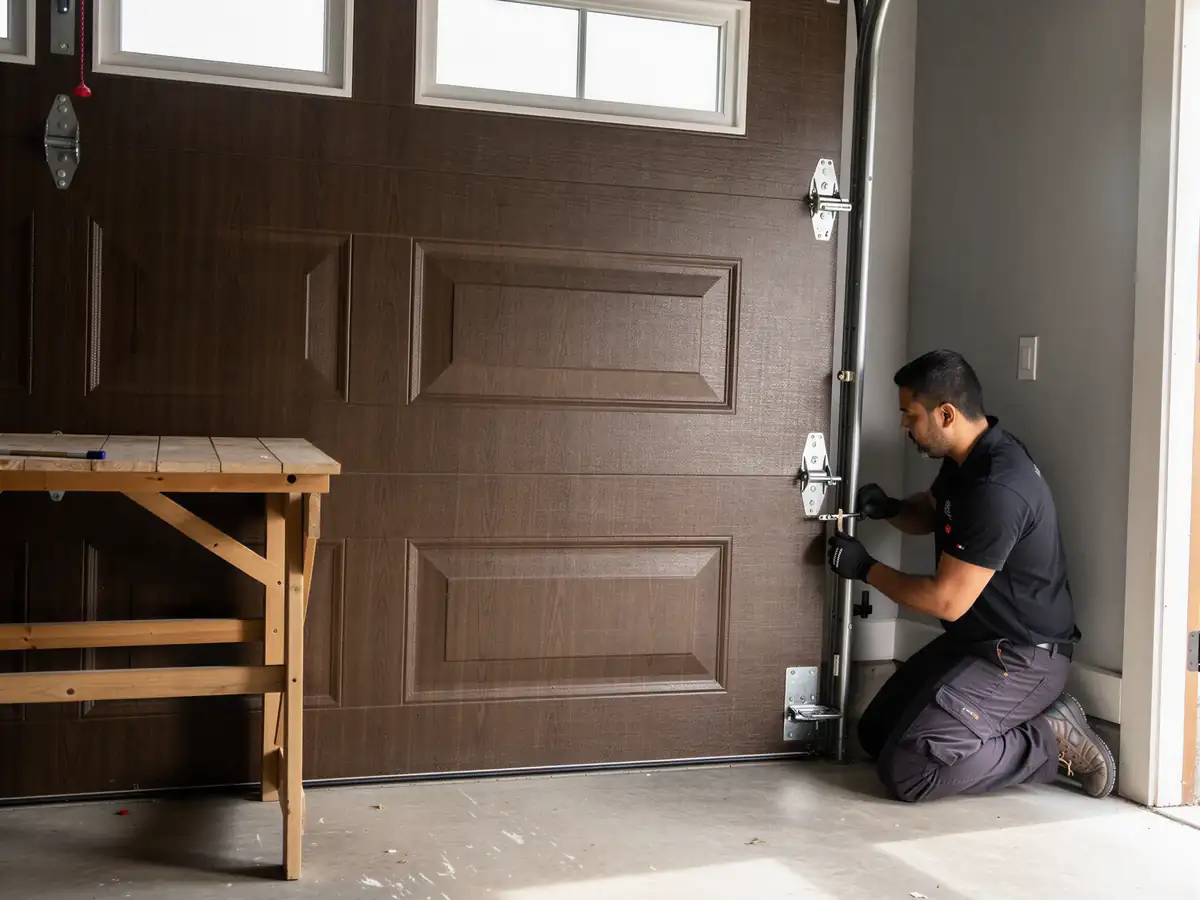
Some of this is reasonable to do on your own. Wiping down the tracks and applying a light lithium or silicone-based lubricant to the rollers and hinges - not WD-40, which attracts dust - is a ten-minute job most owners can handle twice a year. Checking that the photo-eye sensors near the floor are clean and aligned is similarly low-risk.
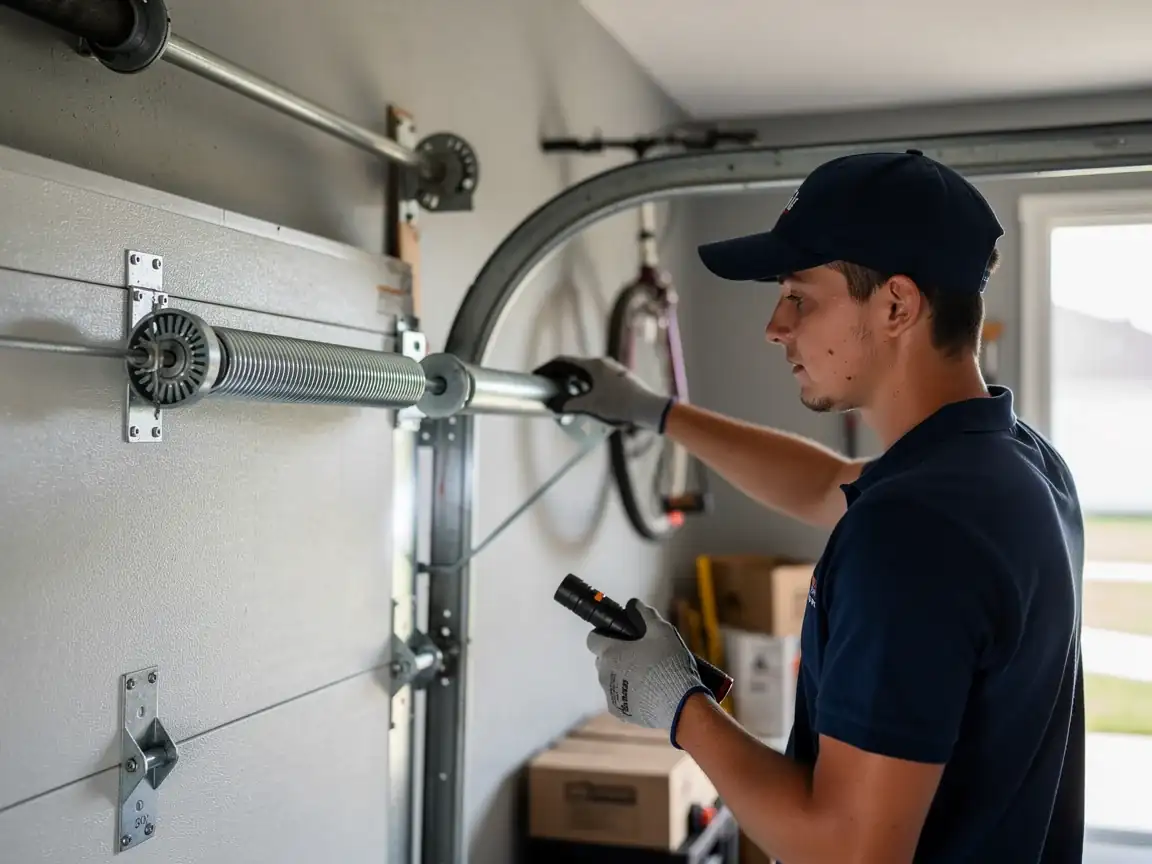
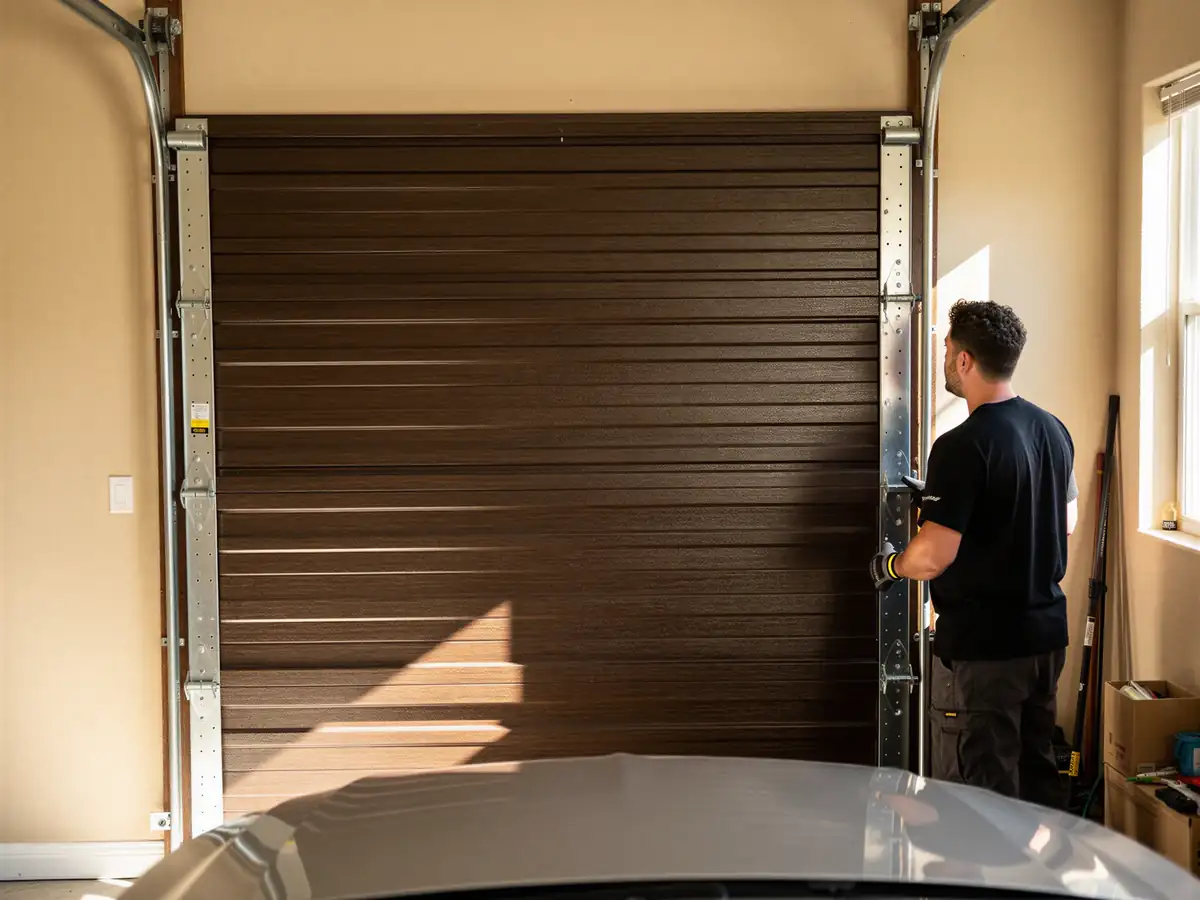
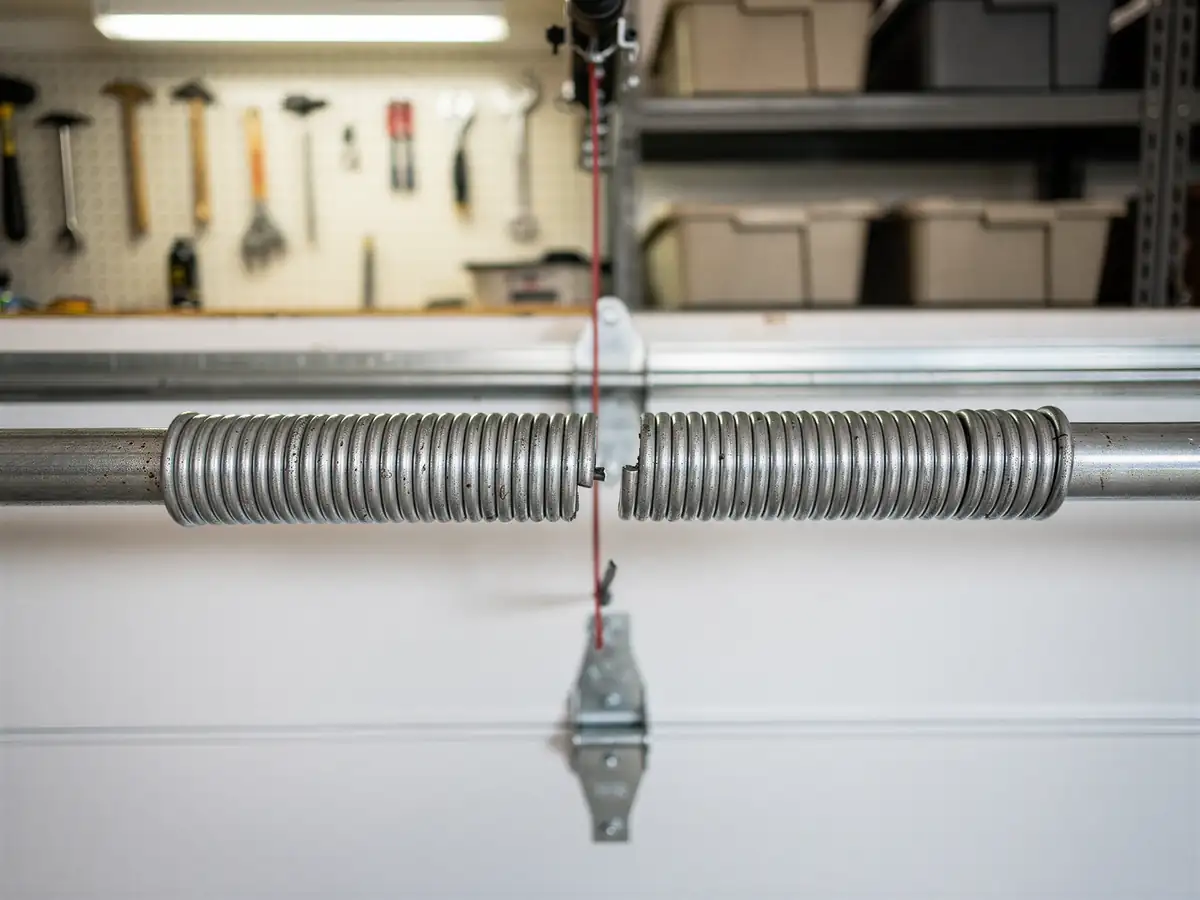
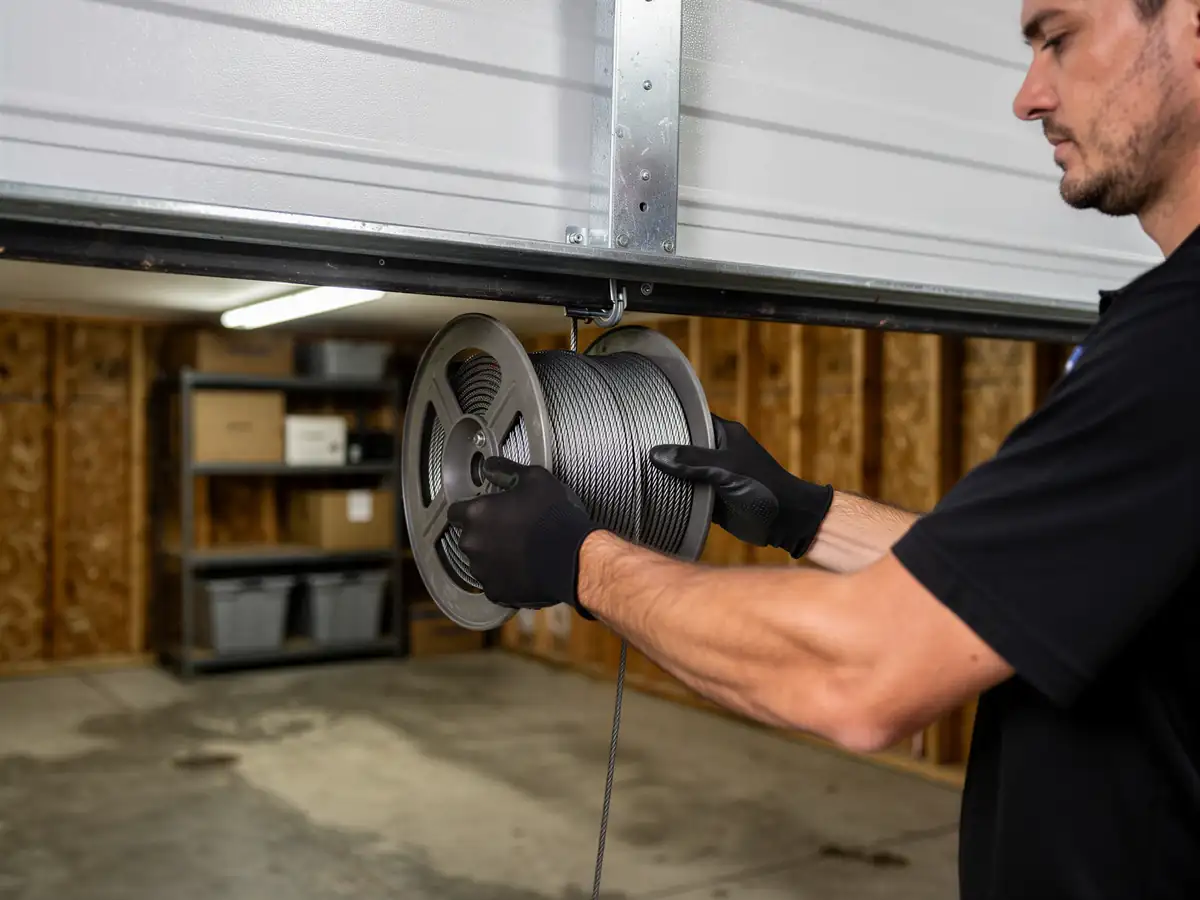
What we don't recommend doing yourself: adjusting spring tension, touching the torsion bar, or reseating cables. On a door this age, hardware that looks fine can be more worn than it appears, and a spring under tension is not a place to learn on the job. If your door is making noise or binding and you're not sure why, that's the point to call rather than keep adjusting things yourself.