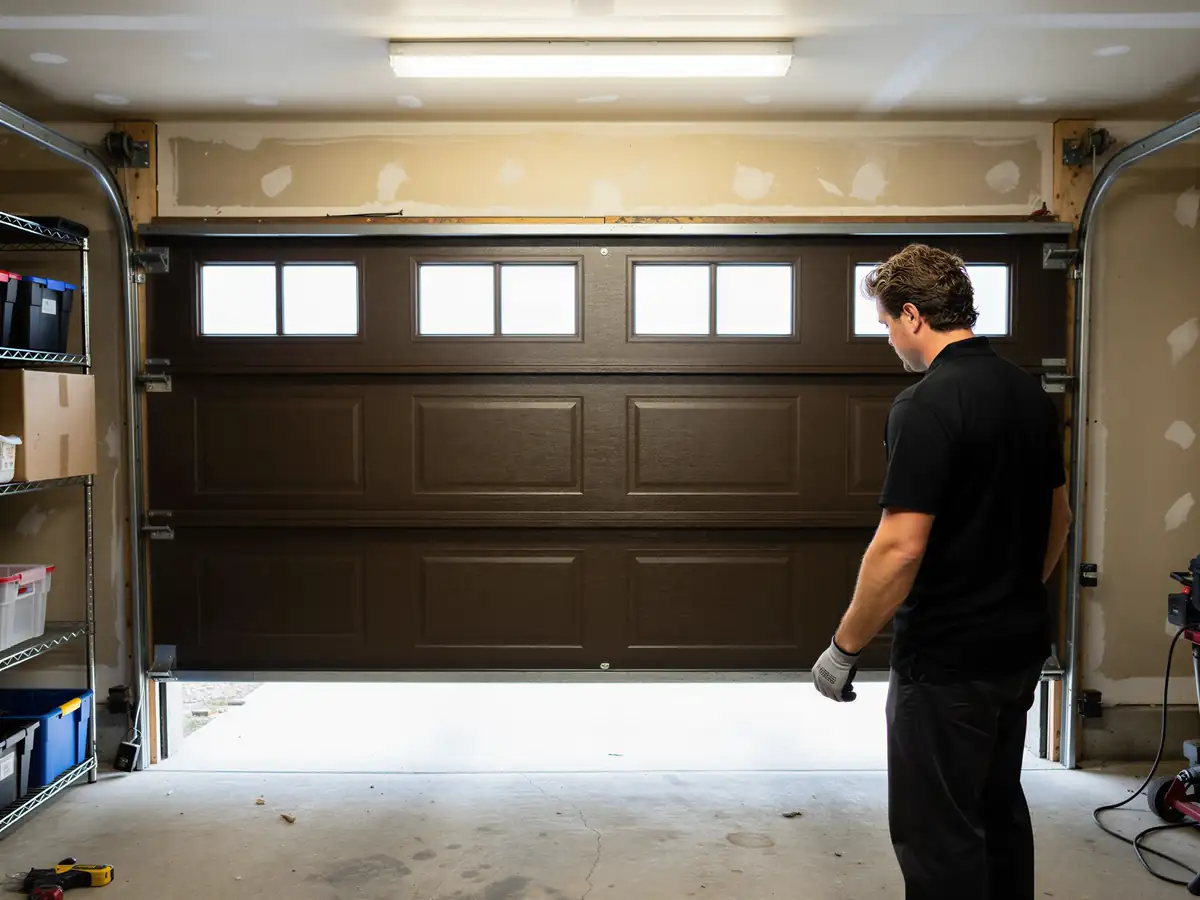
Why This Fails Locally
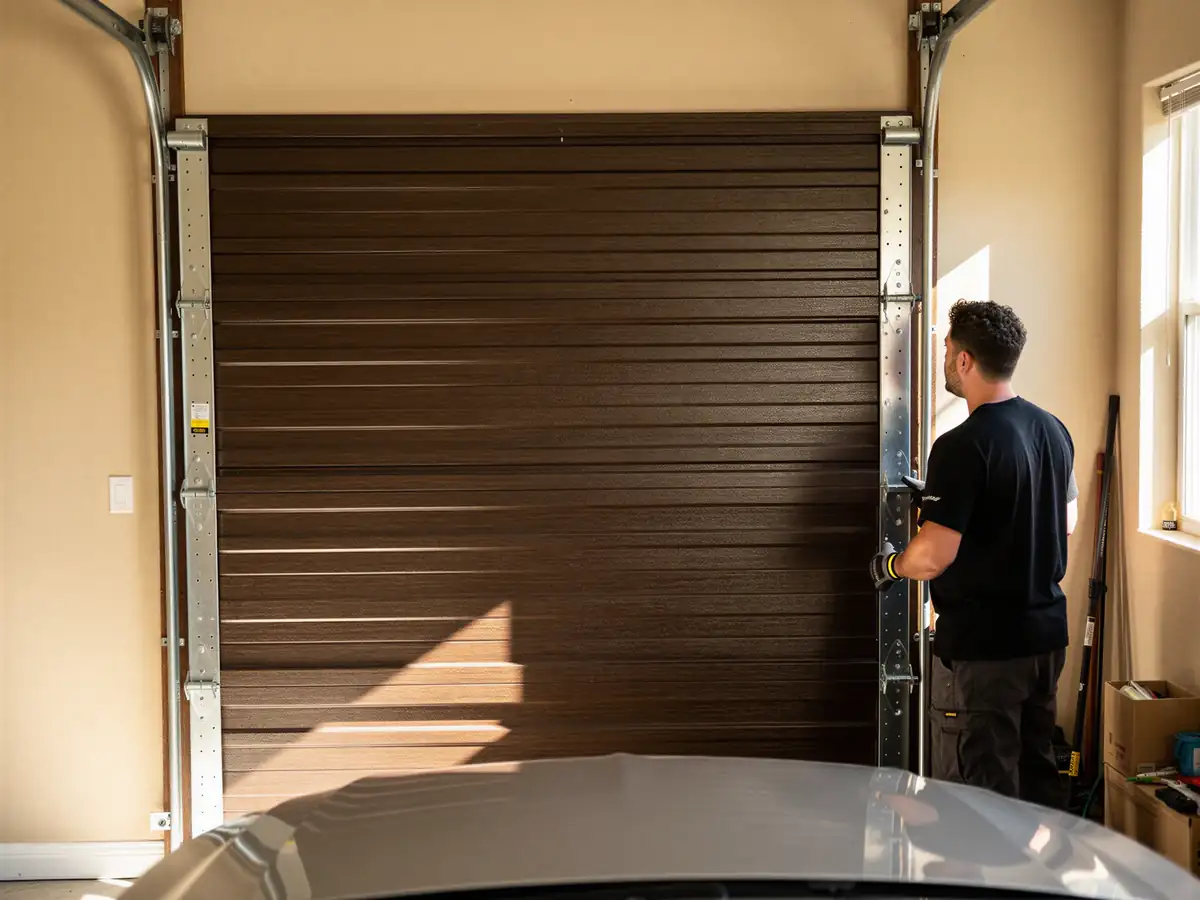
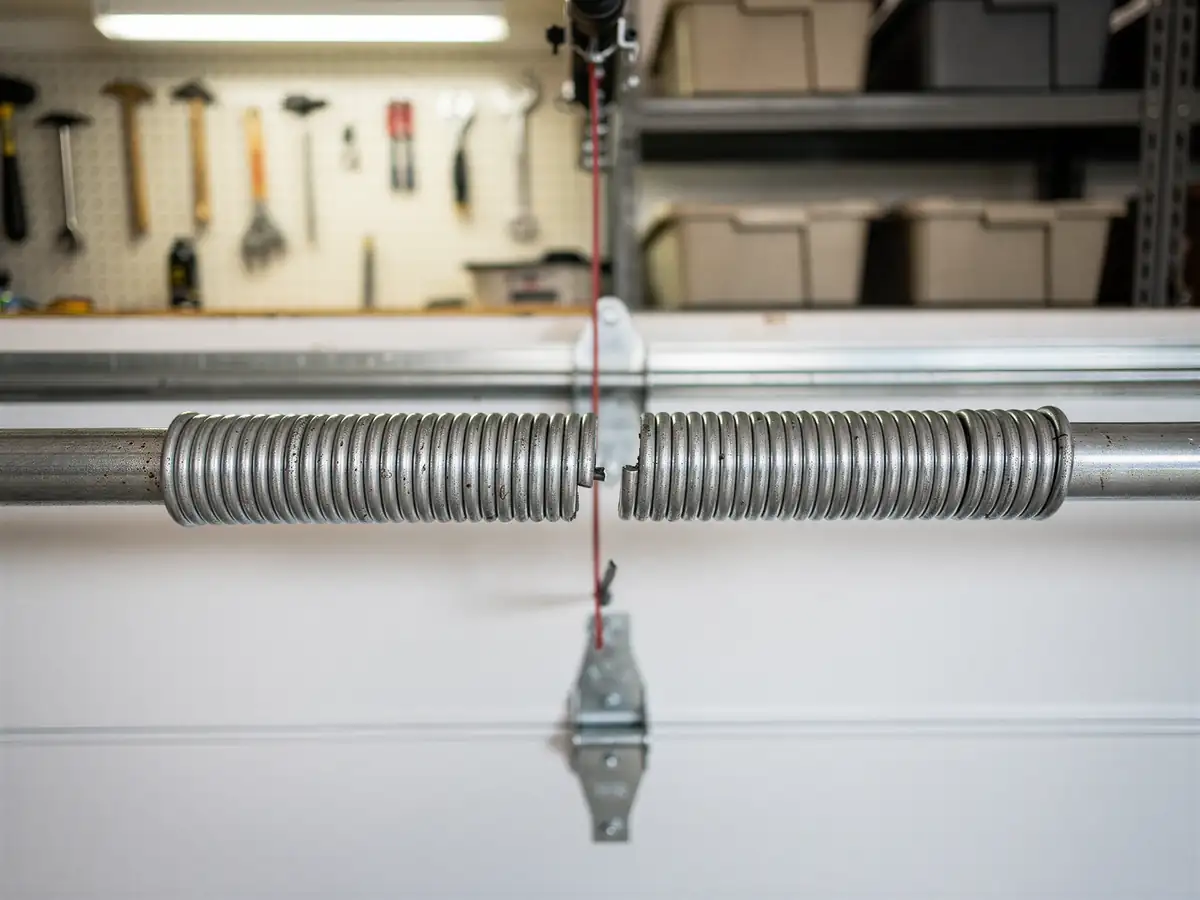
Powder Springs sits in a cold-moderate climate band, which means the hardware goes through real freeze-thaw cycling every winter without the deep-freeze conditions that force heavier-gauge springs further north. That's a problem for doors from the 1990s specifically: the galvanized coating on a 30-year-old spring was never built for three decades of that cycling, and the zinc layer thins out well before the steel underneath fails outright. You get a spring that looks fine and then snaps on an ordinary Tuesday. Track alignment suffers the same way - slab movement from freeze-thaw nudges the vertical tracks out of plumb a little at a time, and on a door this old the rollers have enough wear that a track out of alignment by even a quarter inch starts binding instead of just complaining.
What You Are Seeing
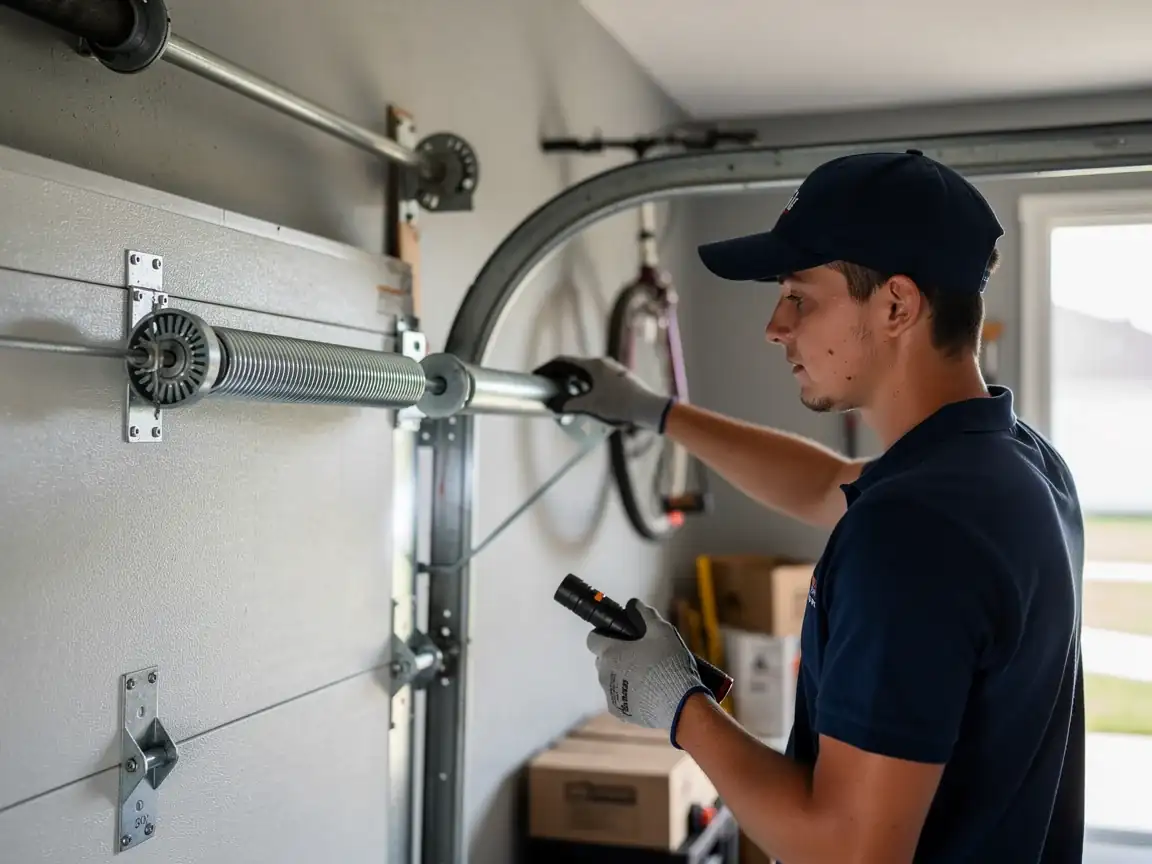
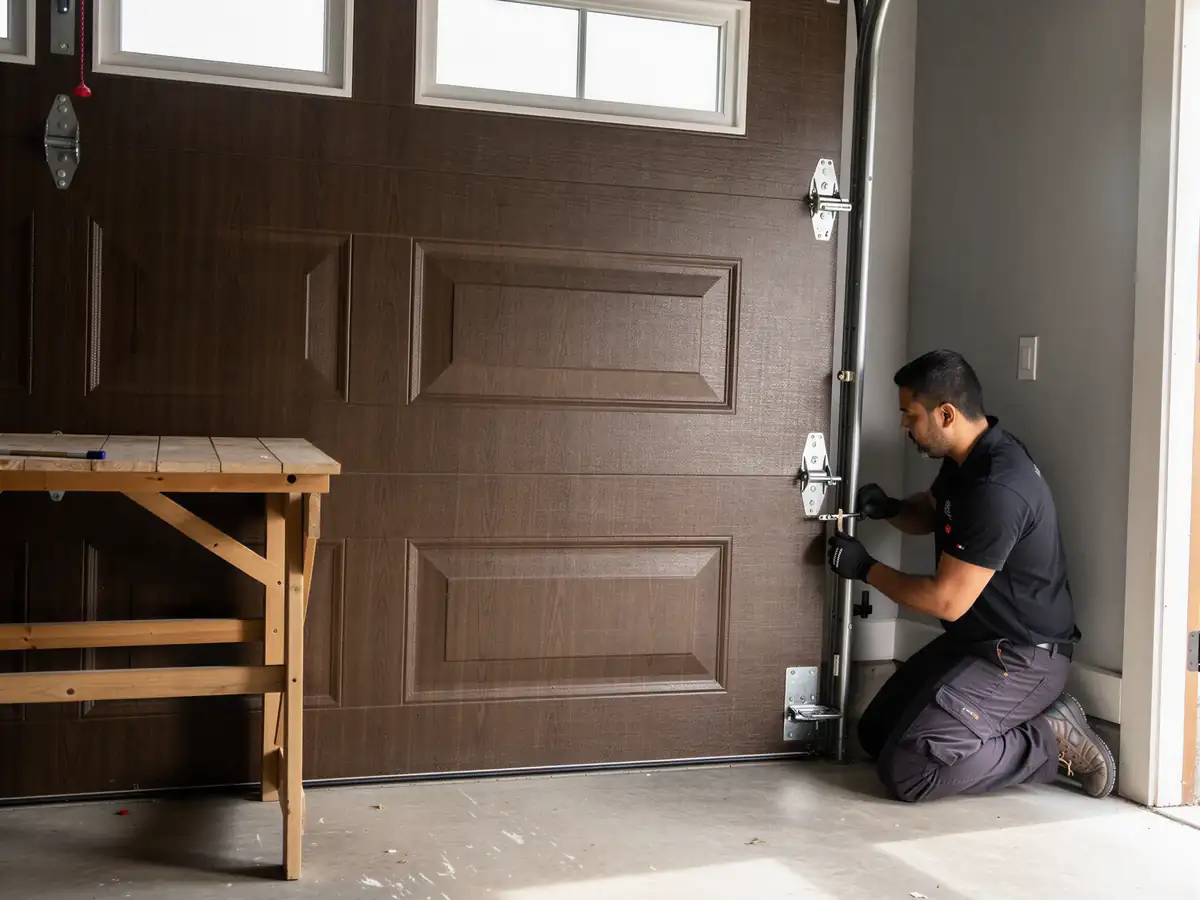
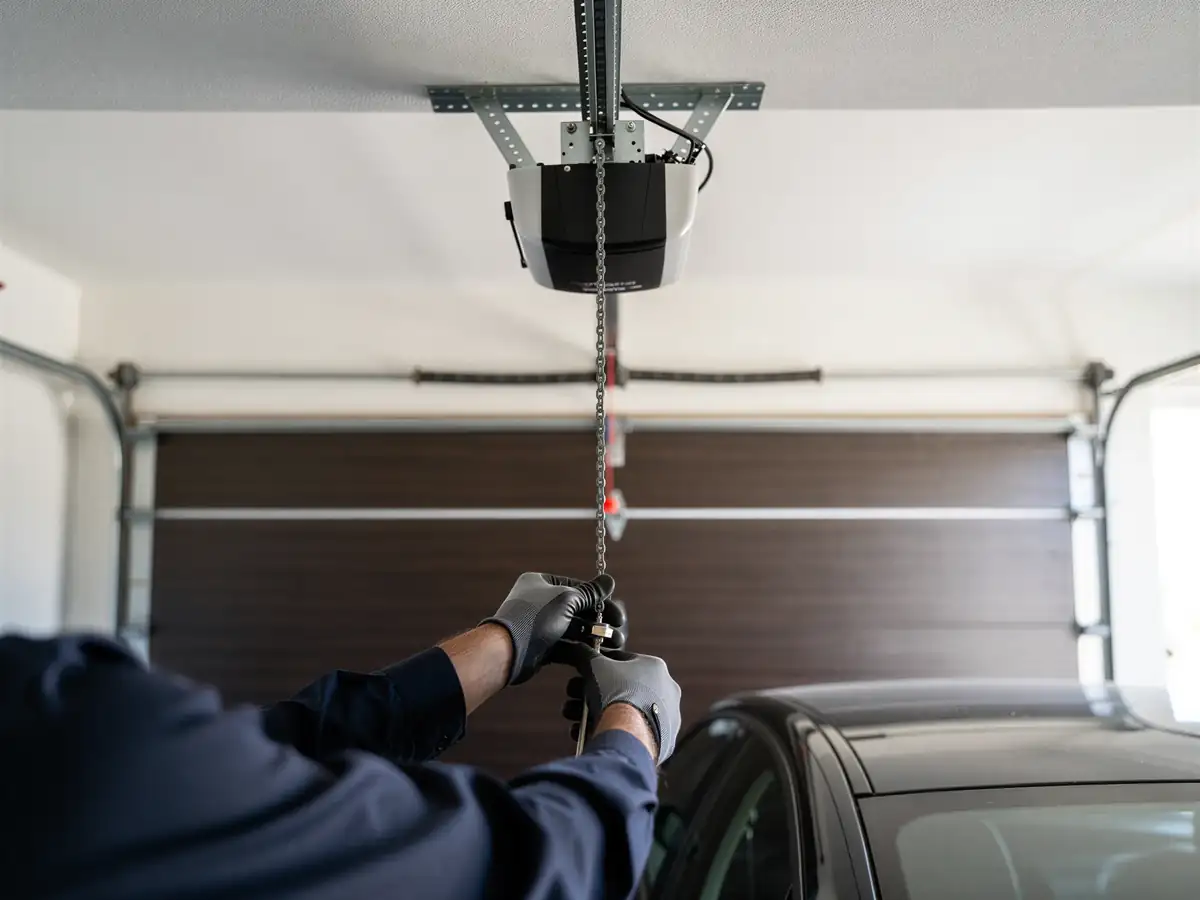
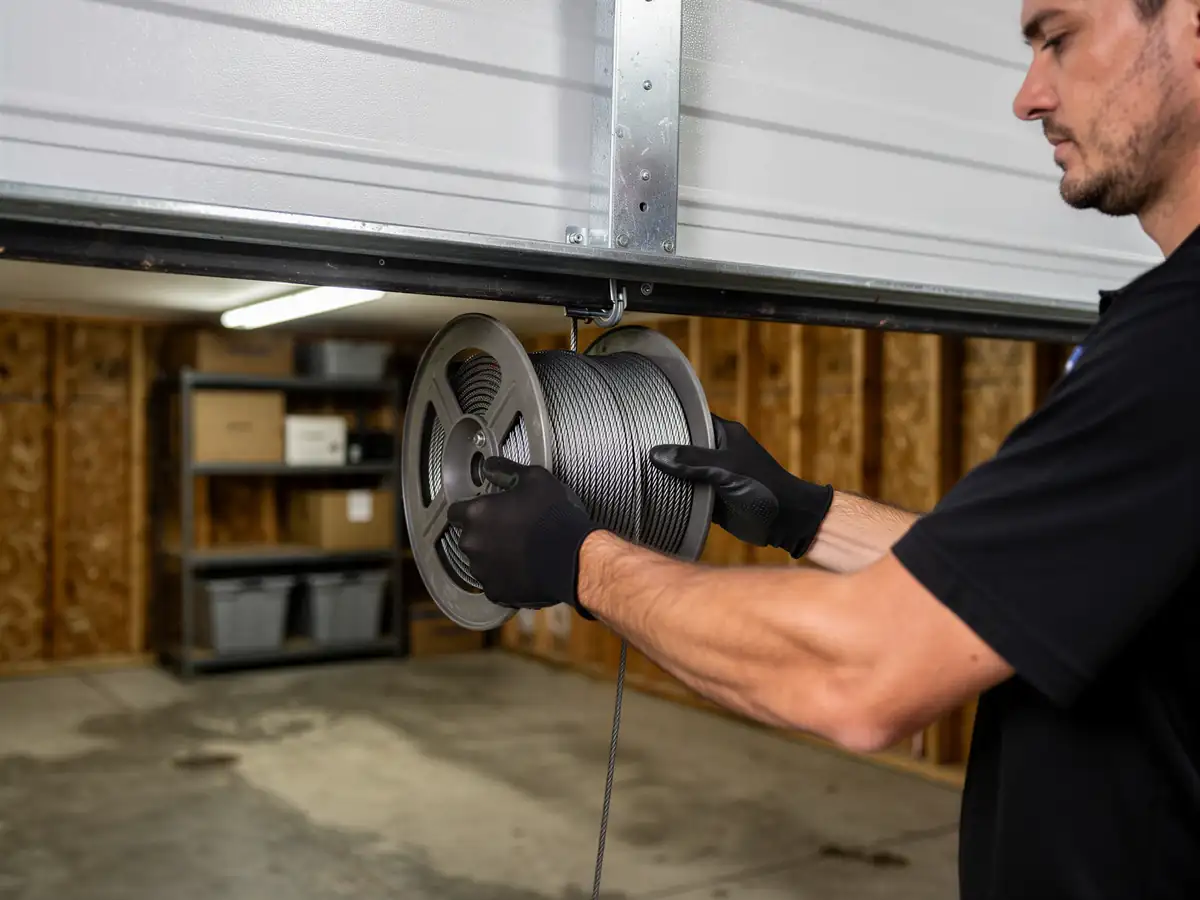
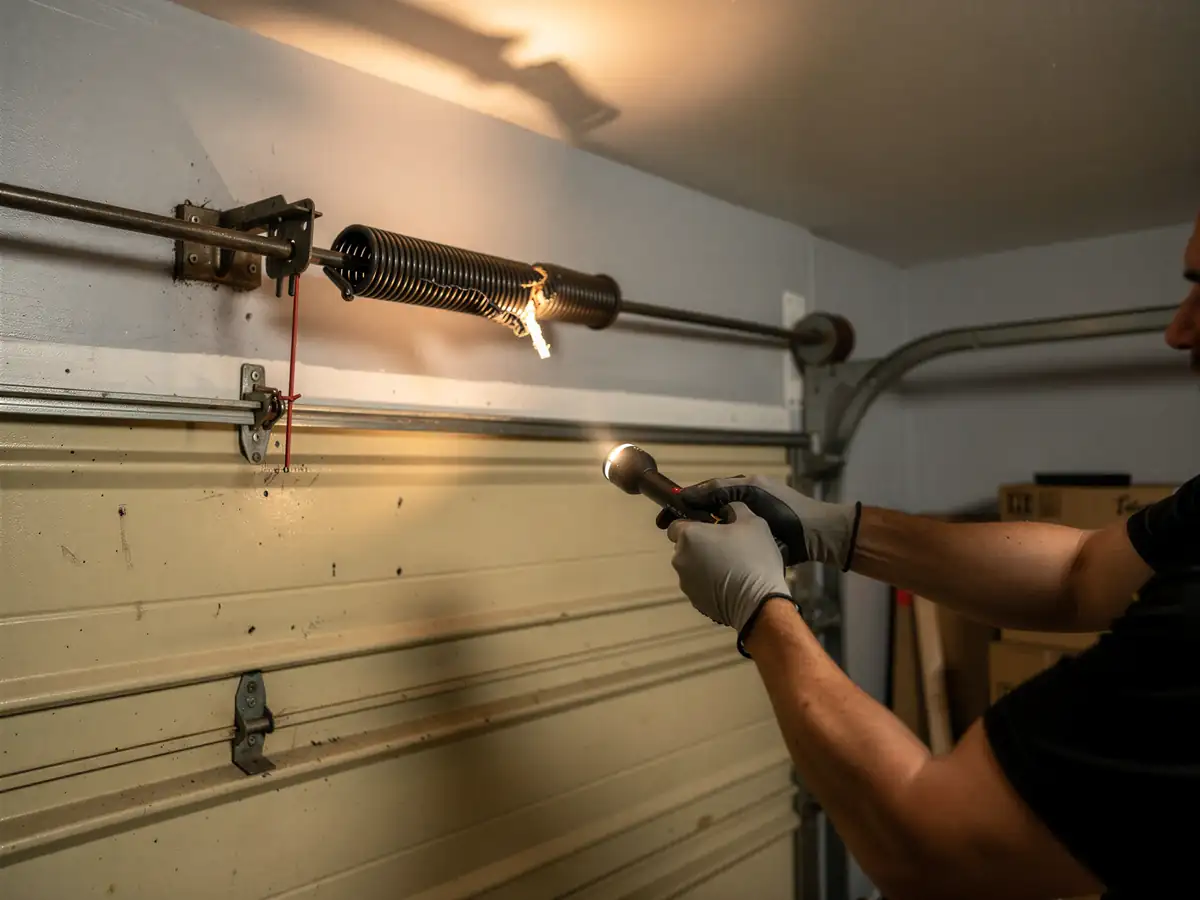
If your door is fighting you on the way up, or the opener strains and reverses for no reason, it's usually the torsion spring losing tension rather than the opener itself failing. On a 1995-era door, we also see a lot of brittle plastic idler pulleys that were standard on openers from that decade - they crack rather than wear smooth, and when one lets go the chain jumps the sprocket. A door that drops the last foot instead of lowering evenly usually means a cable has started to fray off the drum, which on original 1990s hardware is common enough that we check it on every visit rather than waiting for a complaint.
What You Pay
We don't publish a flat maintenance price for Powder Springs separately from the rest of the service area, because the scope changes with what the door needs - a straightforward lube-and-inspect is different money than a visit where we're also replacing a cracked idler pulley or re-tensioning a spring. What we can tell you is that the job starts with the same inspection checklist every time, and we price the actual parts and labor after we've had eyes on the door, not before. Powder Springs is about 9 miles from our Douglasville base, so a visit here doesn't carry a special travel charge beyond what any job in the service area runs.
Can You Do This Yourself
Lubricating hinges and rollers with a garage-door-specific lubricant is fine to do yourself, and so is visually checking the cables for fraying. What you should not touch is the torsion spring itself - on a door that's been running since the mid-1990s, the spring is under decades of accumulated wear and winding or unwinding it without the right bars is one of the more common ways people get seriously hurt in their own garage. If the door is hard to lift by hand with the opener disconnected, that's a spring tension problem, and that's the point where this stops being a weekend project.